
I Can’t Use OpenAI’s New dots, But I Figured It Out Anyway
OpenAI just released an AI employee that doesn’t sleep, doesn’t need a salary, has its own computer, and can keep working while you’re offline. Naturally, I wanted one. Then I checked the
Article
Job breakdowns
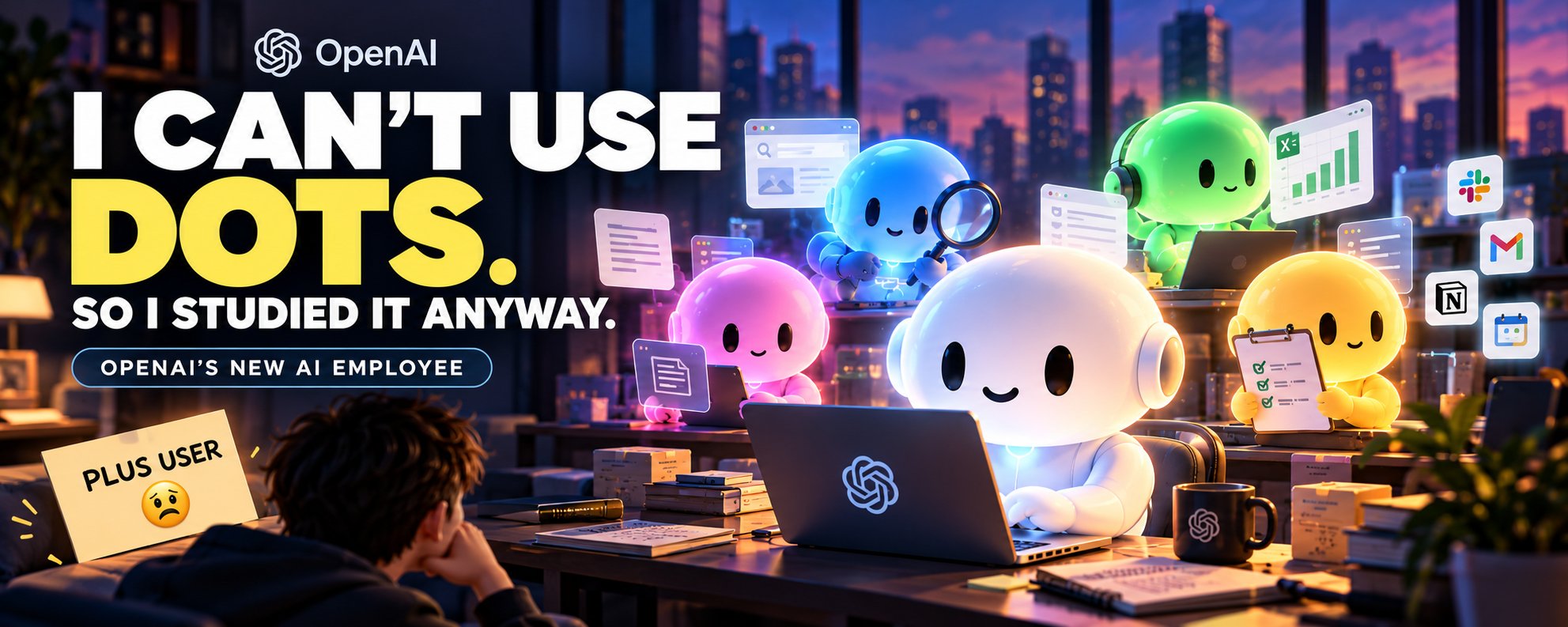
Naturally, I wanted one.
Then I checked the requirements.
Pro or Business Premium.
I’m on Plus.
So while other people are already hiring their first AI employee, I’m basically standing outside the office window trying to figure out what everyone inside is so excited about.
And somehow, that made me even more curious.
So I went through OpenAI’s documentation, examples, and explanations to answer one question:
Is dots actually a big deal, or is it just another AI product with a better name?
After digging into it, I think the answer is more interesting than I expected.
Because dots isn’t really about making ChatGPT smarter.
It’s about changing the relationship entirely.
You stop asking AI for answers.
You start giving it responsibility.
And that might be the real beginning of the AI employee era.
1. dots isn’t really a chatbot
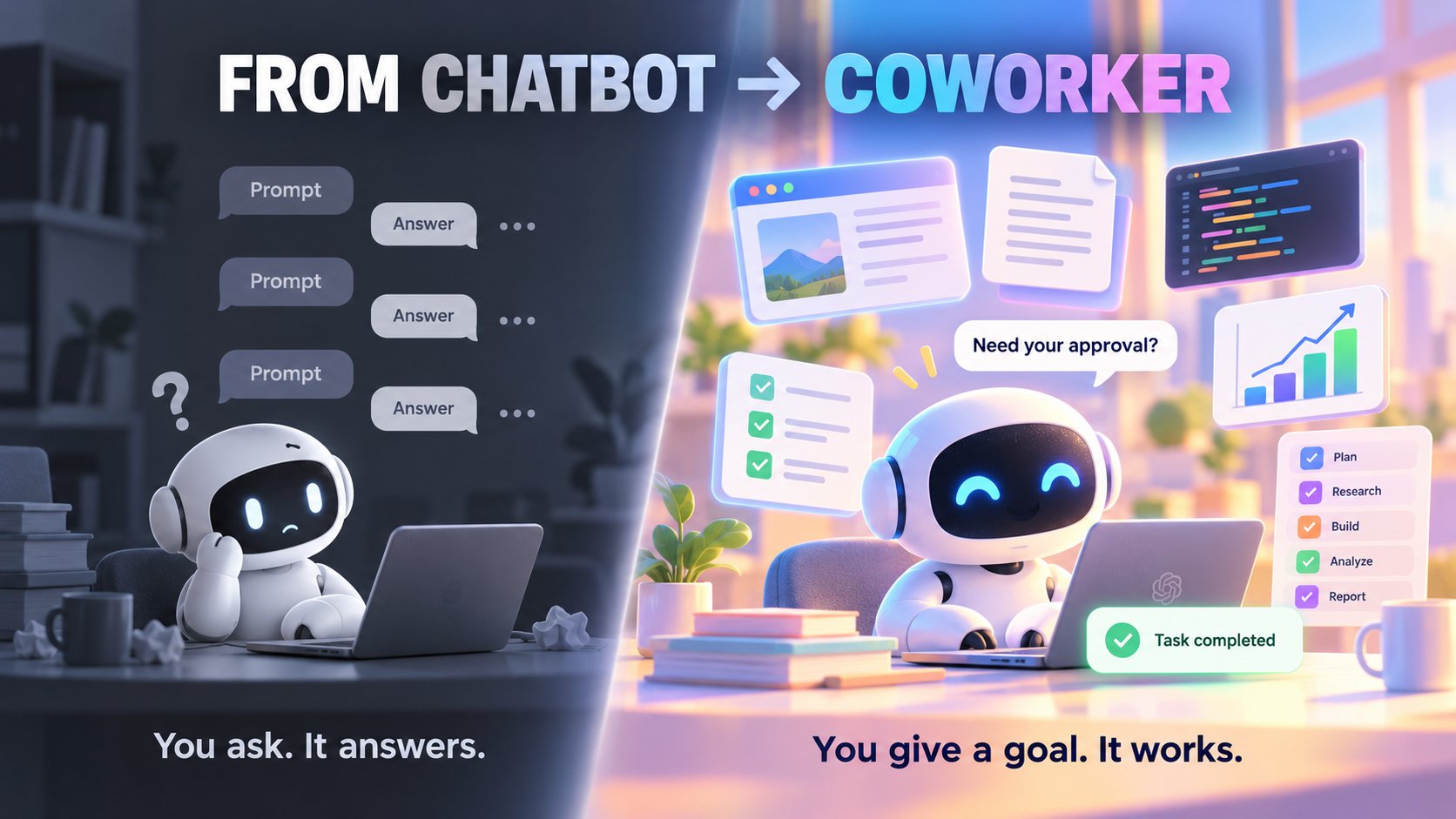
Most AI today still works in a very familiar way.
You ask something.
It answers.
You ask the next thing.
It answers again.
Even when the model is incredibly capable, you are still the one pushing the workflow forward.
You decide the next step.
You notice what is missing.
You keep the context together.
You come back and prompt again.
dots tries to change that.
Instead of thinking of it as another chatbot, think of it as a coworker with:
-
its own cloud computer
-
its own browser
-
access to tools
-
persistent tasks
-
the ability to keep working when you leave
You give it a goal.
It works.
If something changes, it adapts.
If it reaches a decision it shouldn’t make alone, it comes back and asks.
Traditional AI feels like:
Prompt → Answer → Prompt → Answer
Agent-style AI starts to look more like:
Goal → Work → Update → Approval → Result
That sounds like a small difference.
It isn’t.
The important thing is no longer:
“Can the AI do this task?”
It becomes:
“Can I trust the AI to own this task?”
That is a much bigger question.
Official OpenAI guide: https://help.openai.com/en/articles/20001530-getting-started-with-your-dot
Official OpenAI guide: https://help.openai.com/en/articles/20001530-getting-started-with-your-dot
2. What would you actually give a dot to do?
The easiest way to understand dots is through the examples OpenAI showed.
Software development
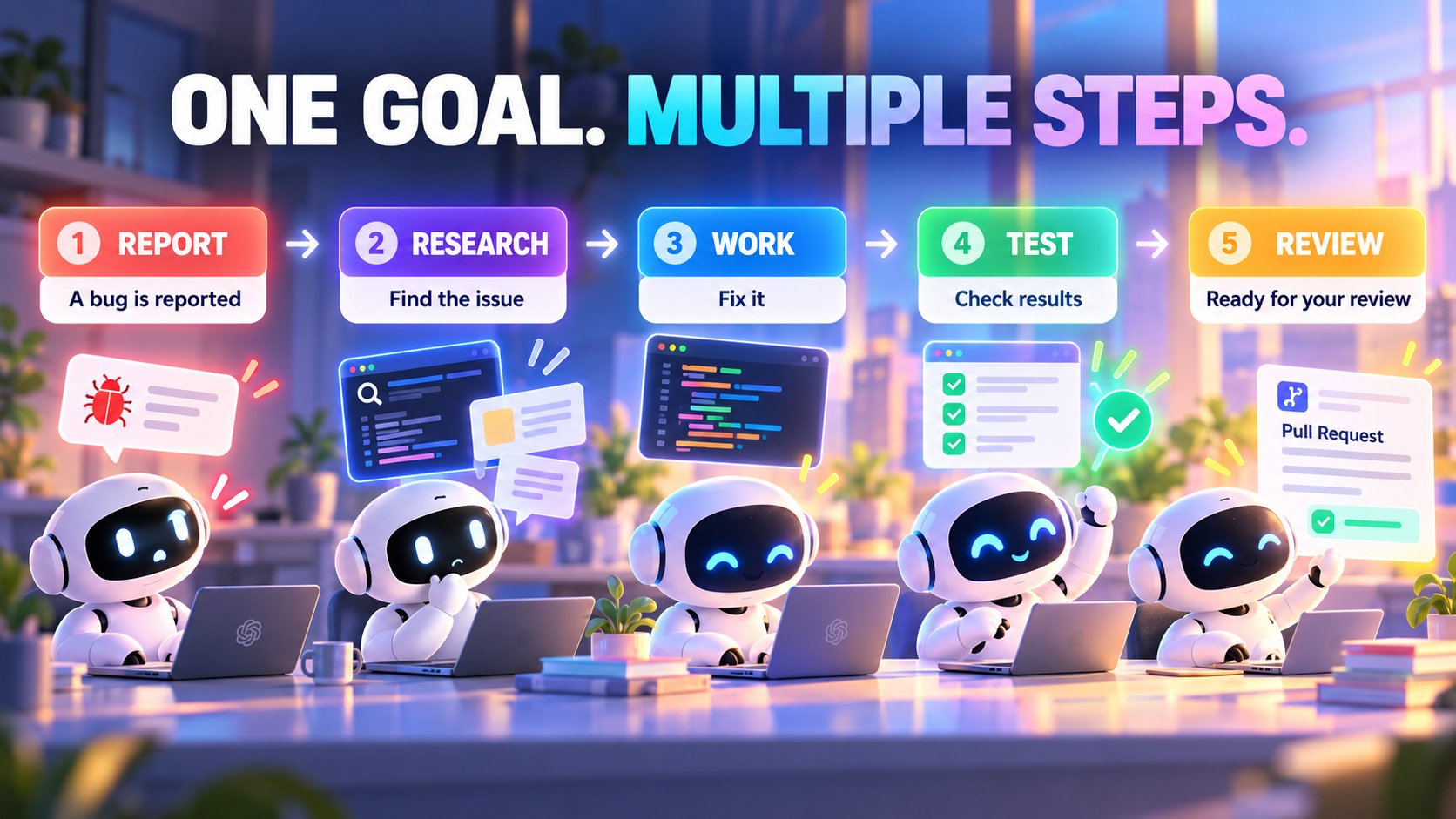
Imagine a customer reports a bug.
Normally, that creates a whole chain of work:
read the report,
reproduce the problem,
find the relevant code,
fix it,
run tests,
prepare a pull request,
explain what changed.
The interesting thing about dots is not that AI can write code.
We already know AI can write code.
The interesting thing is that it can potentially follow much more of that chain on its own.
Instead of saying:
Write me a function.
You move toward:
A customer found a bug. Fix it and bring me something I can review.
That is not just coding assistance.
That is delegation.
Content creation
This one is even easier to imagine.
Give it a long interview transcript.
It can identify strong moments, pull out clips, organize show notes, and prepare social posts.
Today, you might do this:
Find the best clips.
Then:
Write the show notes.
Then:
Turn this into an X post.
Then:
Make a shorter version.
With an agent, the instruction becomes:
Handle the content package for this episode.
That is a very different workflow.
Research, launches, sales
The same pattern appears everywhere else.
New data comes in?
The agent reruns the analysis and updates the charts.
Product plans change?
It updates the related launch materials.
Customer requirements change?
It adjusts the proposal and keeps the workflow moving.
The pattern is always the same:
The AI stops completing isolated requests and starts maintaining a process.
That is what makes dots interesting.
3. The most important feature might be persistence
The more I looked into dots, the less I cared about individual features.
The part that interests me most is that the agent can keep working across time.
Today, AI often feels temporary.
You open a chat.
You explain something.
You work for a while.
You leave.
Later, you come back and rebuild the context.
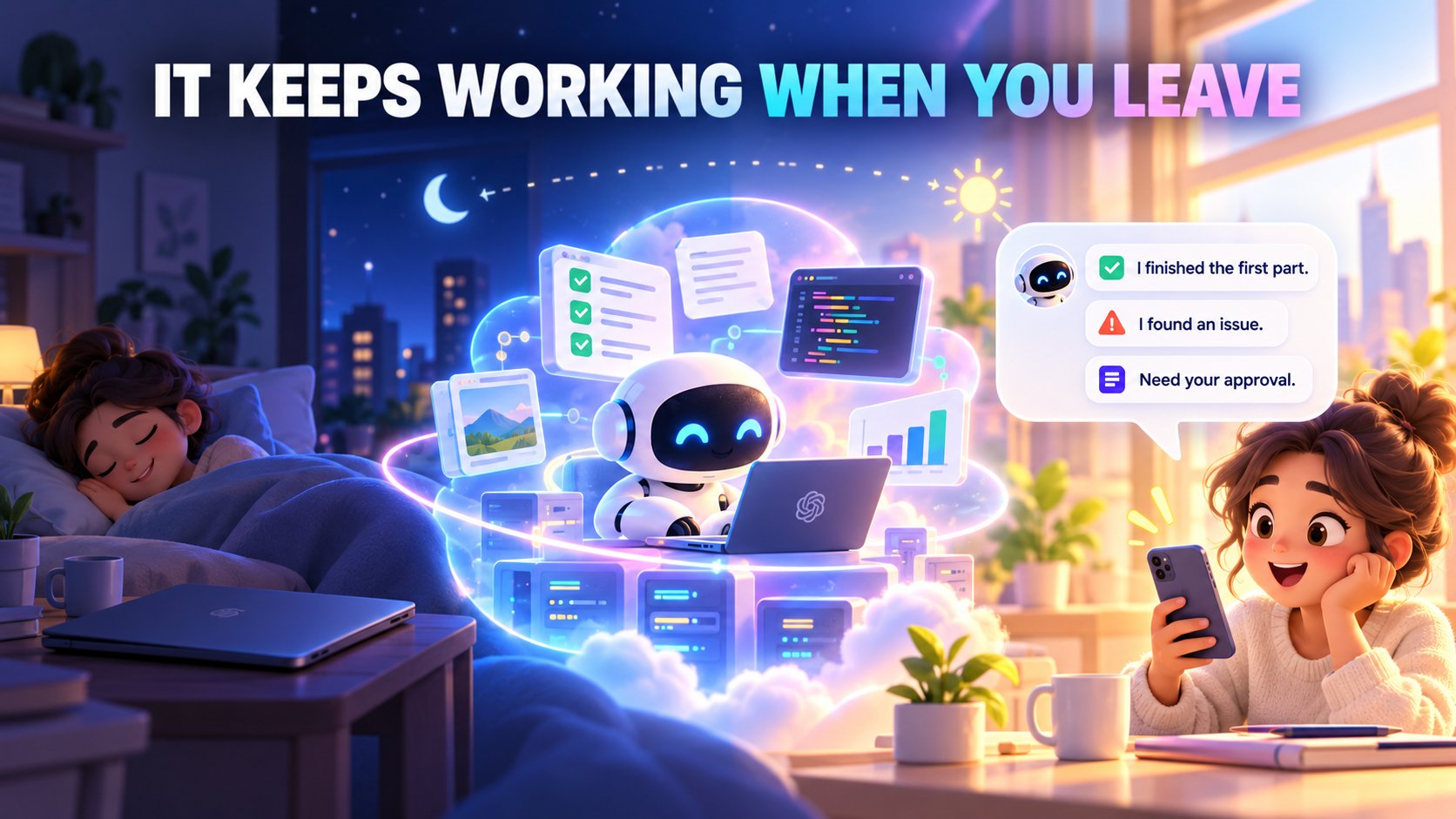
dots is designed to feel more continuous.
You might start something on your computer.
Continue later from your phone.
Talk to the same agent through supported communication channels.
And the work itself can keep going.
Even more importantly:
the agent can come back to you.
That changes the dynamic.
Instead of you constantly asking:
Are you done?
Did anything go wrong?
What happened?
The agent can message you:
I finished the first part.
I found a problem.
I need approval before I continue.
I noticed something else you may want to check.
That sounds simple, but it makes the AI feel much more like a coworker.
A useful coworker doesn’t wait silently until you remember they exist.
They know when to continue alone and when to escalate something.
4. Giving an AI its own computer is also a little terrifying
This was probably my biggest question.
An AI giving you a wrong answer is annoying.
An AI with access to accounts, messages, files, browsers, and business tools can create much bigger problems.
Once AI can act, safety becomes much more important than it was in a normal chat window.
OpenAI’s answer seems to come down to three things:
Isolation. Permissions. Audit trails.
The agent works in its own cloud environment.
Different actions can have different levels of permission.
Some things can happen automatically.
Some require your approval.
Some sensitive actions are restricted.
And you can review what the agent has done.
That balance is going to matter a lot.
If the AI asks permission every 30 seconds, automation becomes useless.
If it can do absolutely anything without asking, nobody is going to trust it.
So one of the biggest problems in the agent era will be:
How do you give AI enough freedom to be useful without giving it enough freedom to become dangerous?
OpenAI also makes the obvious but important point:
dots can still make mistakes.
For high-impact work, humans still need to review the result.
That is probably exactly how it should be.
More on security and permissions: https://help.openai.com/en/articles/20001529-dots-privacy-security-and-safety-faqs
5. The painful part: I still can’t use it
The initial rollout is for higher-tier users, including Pro and Business Premium.
The first dot is included rather than requiring another separate purchase.
There are also plans for adding more dots later.
Which means we are apparently entering an era where this sentence sounds normal:
“I hired two more AI employees this month.”
That still feels ridiculous to write.
OpenAI is also pushing enterprise versions where dots can take on more dedicated responsibilities inside organizations.
Think:
support,
operations,
invoicing,
development,
procurement,
other repetitive workflows.
The integrations matter too.
The whole idea is not to force you into one new app.
The AI comes into the tools you already use.
ChatGPT.
Slack.
Teams.
Business software.
Coding tools.
That seems to be OpenAI’s bigger strategy:
Don’t make people move to the AI. Make the AI move into people’s work.
For me, though, the current situation is much simpler.
I’m on Plus.
So my dots workflow right now is:
Read about other people using dots.
Very productive. 😭
6. OpenAI isn’t the only company trying this
This is where things get even more interesting.
dots is not happening alone.
Several companies are now building versions of the same broad idea:
Give an AI its own environment.
Let it act.
Let it continue tasks.
Let it come back when it needs approval.
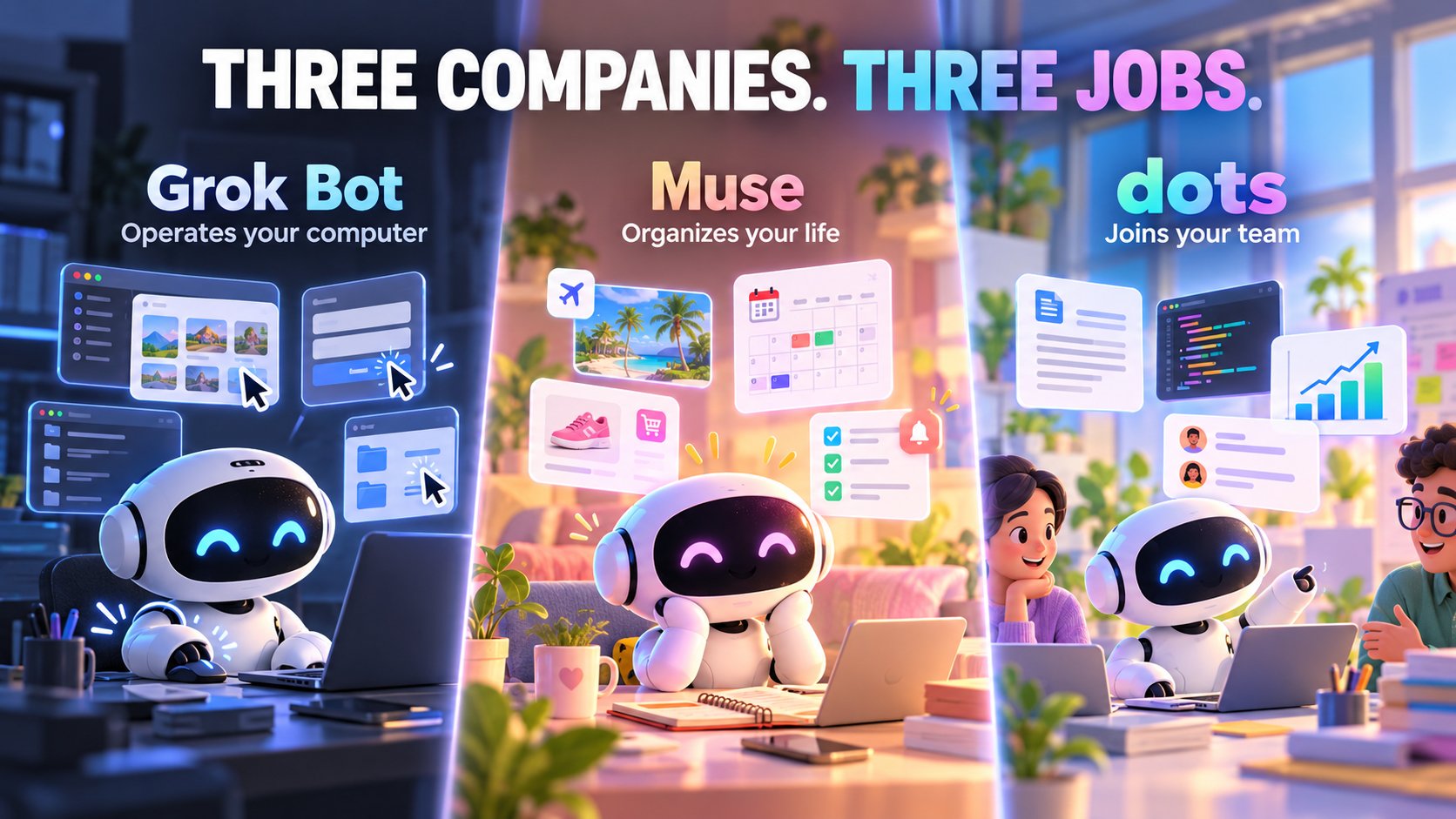
The three that caught my attention are:
OpenAI dots
Grok Bot
Meta Muse
They belong to the same family.
But they seem to want completely different jobs.
Grok Bot wants to operate your computer
The xAI approach feels more aggressive.
The basic idea is:
If a human can use the computer, the AI should eventually be able to use it too.
That means clicking buttons.
Opening websites.
Using existing software.
Navigating interfaces.
Filling forms.
This matters because most software in the world was never designed for AI agents.
Some tools have no useful API at all.
But humans can still operate them.
So if an AI can use a computer more like a person, it suddenly becomes compatible with a much larger part of the digital world.
The other interesting part is multi-agent coordination.
Instead of one AI doing everything, you can imagine:
one agent researching,
one coding,
one testing,
one writing,
and another coordinating them.
That future gets strange very quickly.
We started with:
AI, answer my question.
Then:
AI, finish this task.
And we may end up at:
AI, manage the other AIs handling my work.
At that point, you are not really using a chatbot anymore.
You are running a tiny digital organization.
Muse wants to organize your life
Meta Muse goes in a different direction.
It feels less like a coworker and more like a personal assistant.
Shopping.
Flights.
Hotels.
Email.
Calendars.
Bills.
Reminders.
Everyday tasks.
And Meta has a huge advantage here:
distribution.
It has WhatsApp.
For normal users, that may be more important than having the most powerful model.
Most people do not want to learn an “AI Agent Control Center.”
They want to send a message:
Find me a hotel near this event.
Or:
Compare these products.
Or:
Remind me about this bill tomorrow.
Done.
Meta also has smart glasses, which could make this even more interesting.
If assistants become visual and always available, you may eventually just look at something and ask:
What is this?
Is this a good deal?
Should I buy the other one instead?
That is a very different future from sitting at a laptop typing into a chatbot.
Of course, a life assistant also creates much bigger privacy questions.
The more useful it becomes, the more it potentially knows about you.
That tradeoff will matter.
dots wants to join your team
Compared with the other two, OpenAI’s positioning feels much more workplace-focused.
Coding.
Documents.
Research.
Sales.
Operations.
Team communication.
The company also emphasizes permissions, integrations, auditing, and enterprise controls.
So if I had to summarize all three:
Grok Bot wants to operate your computer.
Muse wants to organize your life.
dots wants to join your team.
Same species.
Different jobs.
7. So which one should people choose?
I don’t think the right question is:
Which AI is smartest?
A better question is:
Where do you already live digitally?
If most of your work is inside developer tools, browsers, terminals, and technical workflows, something like Grok Bot may fit naturally.
If your digital life revolves around WhatsApp, shopping, travel, messaging, and daily organization, Muse makes more sense.
If your work already happens in ChatGPT, Slack, Teams, documents, and business tools, dots probably fits more naturally.
Personally, I would not rebuild my entire workflow around any of them yet.
We are still very early.
Pricing will change.
Access will change.
Capabilities will change.
Limits will change.
The agent everyone is excited about today may look primitive six months from now.
That happens incredibly fast in AI.
So I’m watching closely.
But I’m not rushing.
8. Three predictions
After studying all of this, I have three predictions.
Maybe I’ll come back later and discover I was completely wrong.
That would actually be fun.
But here they are.
Prediction #1: AI employees will get much cheaper
Right now, the most interesting agent products are often locked behind expensive subscriptions.
That makes sense.
Agents require compute.
They create more risk.
Companies want to test them gradually.
But competition changes everything.
OpenAI wants users.
xAI wants users.
Meta wants users.
Google wants users.
Microsoft wants users.
And one of the easiest ways to win users is:
lower the price,
increase the limits,
bring the feature to cheaper plans,
bundle it into software people already use.
So if you’re a Plus user like me, my strategy is extremely sophisticated:
Wait.
Today’s premium feature often becomes tomorrow’s normal feature.
Prediction #2: One-person companies are going to become much more powerful
A single person can already use AI for:
coding,
design,
research,
writing,
marketing,
support,
translation,
analysis,
planning.
But today, the human still coordinates most of that work.
Agents take the next step.
Instead of helping you perform each task, they can start owning parts of the workflow.
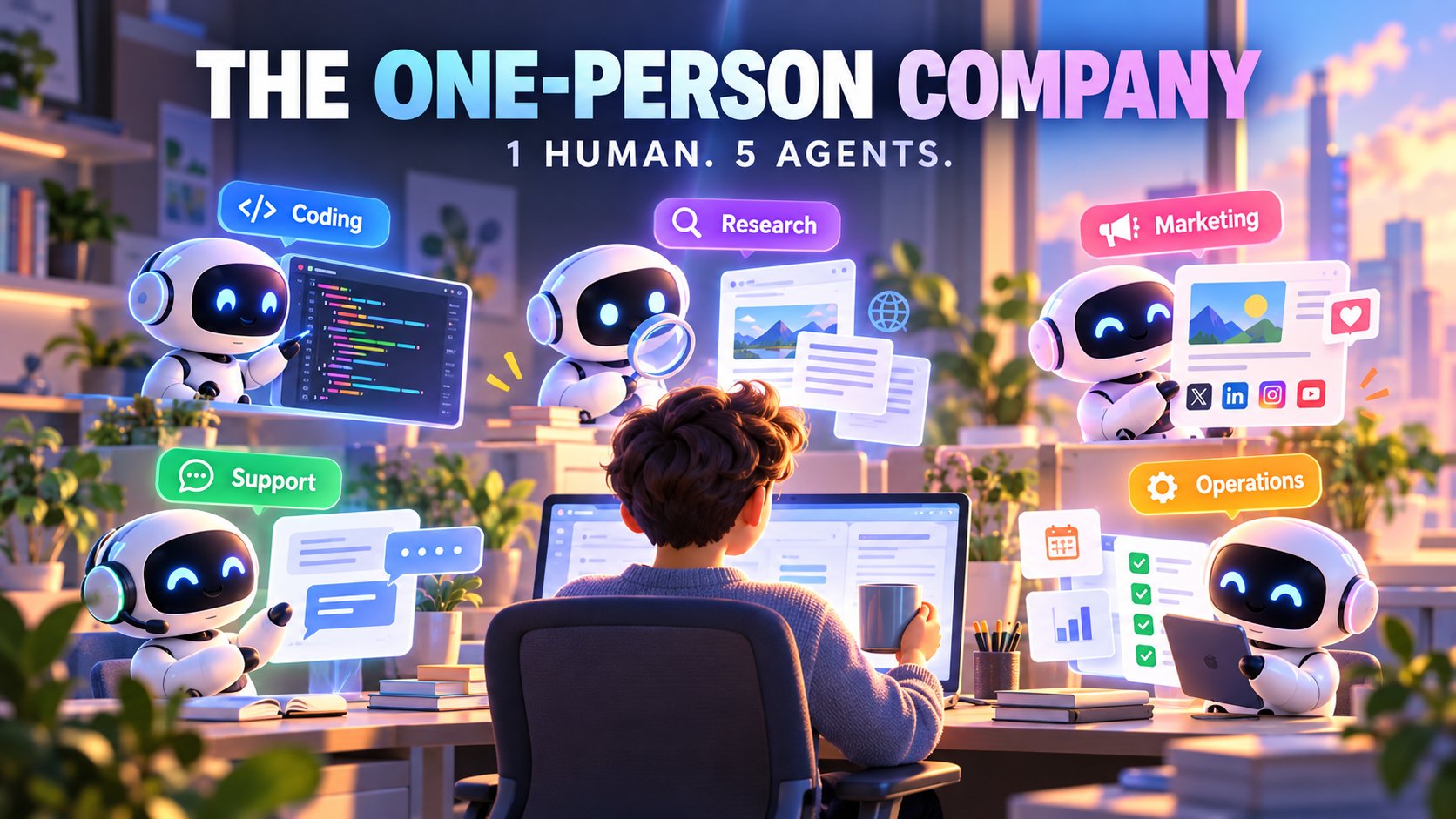
Imagine one person with:
a coding agent,
a research agent,
a marketing agent,
a support agent,
and one coordinator managing them.
That person suddenly has something resembling a small team.
Not a perfect team.
Not a replacement for every human role.
But enough leverage to build things that would have required several people not long ago.
I think we’re going to see some strange companies emerge from this.
Tiny headcount.
Huge output.
Maybe even:
one human + five agents = a real business.
Prediction #3: Managing AI will become a basic skill
For the last few years, everyone has talked about prompt engineering.
How do you ask the AI the right question?
What words should you use?
How do you structure the prompt?
With agents, I think the skill changes.
The next important skill looks much more like management.
Can you define the task clearly?
Can you explain what “done” means?
Can you tell the AI what it is allowed to change?
Can you tell it what it must never touch?
Can you decide when it needs approval?
Can you review the result properly?
For example:
This is weak:
Improve my website.
This is much better:
Improve the homepage performance without changing checkout. Keep the existing branding. Run these tests before finishing. If anything affects authentication or payments, stop and ask me first.
That is not just prompting.
That is delegation.
And delegation has always been valuable.
The funny part is that millions of people who have never managed a human employee may soon be managing artificial ones.
9. I think we’ve been asking the wrong question
For years, the AI conversation has focused on:
How smart is the model?
Which benchmark did it win?
How good is the reasoning?
How well can it code?
Those things still matter.
But agents create a different question:
How much responsibility can I safely give this AI?
That may become much more important.
A chatbot can be incredibly intelligent and still require you to control every step.
An agent can be slightly less intelligent but far more useful if it can reliably own a workflow.
That is why dots interests me.
Not because it can write.
We already have AI that can write.
Not because it can code.
We already have AI that can code.
It interests me because the relationship changes.
You don’t just ask.
You delegate.
You don’t just receive an answer.
You review work.
You don’t always open the AI when you need something.
The AI may already be working before you arrive.
That feels much bigger than another model upgrade.
So, am I upgrading to Pro?
No.
At least not just for dots.
I’m interested.
Very interested.
But I also know how fast this industry moves.
Today:
exclusive feature.
A few months later:
cheaper plan.
Later:
everyone has it.
Today:
revolutionary first version.
Six months later:
Version 2 makes Version 1 look ancient.
So for now, I’m doing what I usually do with expensive new technology.
Watch.
Learn.
Wait.
And when dots eventually becomes available to more users, I want to actually test it and compare the real experience with everything I wrote here.
I already know what I’d name mine.
Xiao Zhang.
“Zhang” comes from the Chinese word for octopus.
Eight arms.
Eight things happening at once.
Feels appropriate for an AI employee. 🐙
Now I just need OpenAI to let Plus users through the door.
We spent the last few years learning how to talk to AI.
The next few years may be about learning how to manage AI.
And if that happens, the most useful thing we can do now might not be memorizing better prompts.
It might be learning how to give clear instructions, set boundaries, define what “done” means, and review work properly.
Basically:
learn how to be a good boss before the employees arrive.
I still can’t use dots.
But when my first AI employee finally arrives, I’d rather already know how to manage it.
If you’re also exploring AI agents, automation, and new tools, follow me.
I’ll keep researching the interesting stuff, testing what I can, and breaking it down in plain English.
Published on grokbot.sh. Cite the public log, not a prompt pack.