
The Second Brain That Acts. The Agent Team That Remembers.
How to combine a compiled knowledge base with a team of autonomous agents into one system that thinks and executes simultaneously. the second brain remembers everything. it never acts. the agent team
Article
Job breakdowns
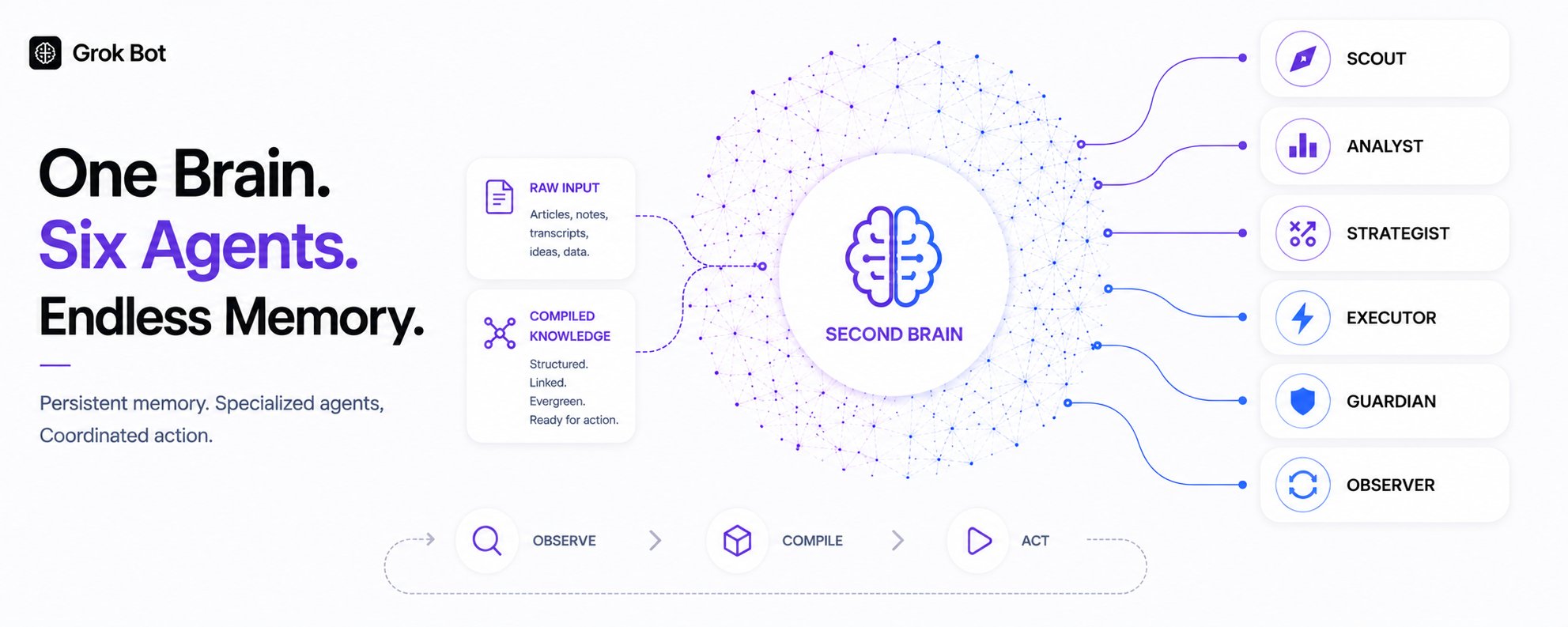
How to combine a compiled knowledge base with a team of autonomous agents into one system that thinks and executes simultaneously.
the second brain remembers everything. it never acts.
the agent team acts on everything. it never remembers.
this is the problem nobody talks about. and it is why both systems fail.
a developer showed me both in the same week. his second brain: four thousand notes, two years of thinking, every idea linked to three others. "the problem," he said, "is that it just sits there." his Grok Bot setup: eight agents running while he slept. "the problem," he said, "is that every morning they start from zero."
memory without action. action without memory.
this article is about what happens when you connect them.
The problem no one talks about
most people who build a second brain hit the same ceiling at three months. the notes are there. the links are there. the graph is growing. but nothing happens with it. the brain is passive. it waits for you to ask.
most people who build agent systems hit a different ceiling. the agents execute. they scan, research, draft, report. but every session they start cold. no memory of what worked last week. no context from the decision you made yesterday.
the second brain without agents is a library that never acts. the agents without a second brain are a team that never learns.
together they become something neither can be alone.
The loop that makes it live
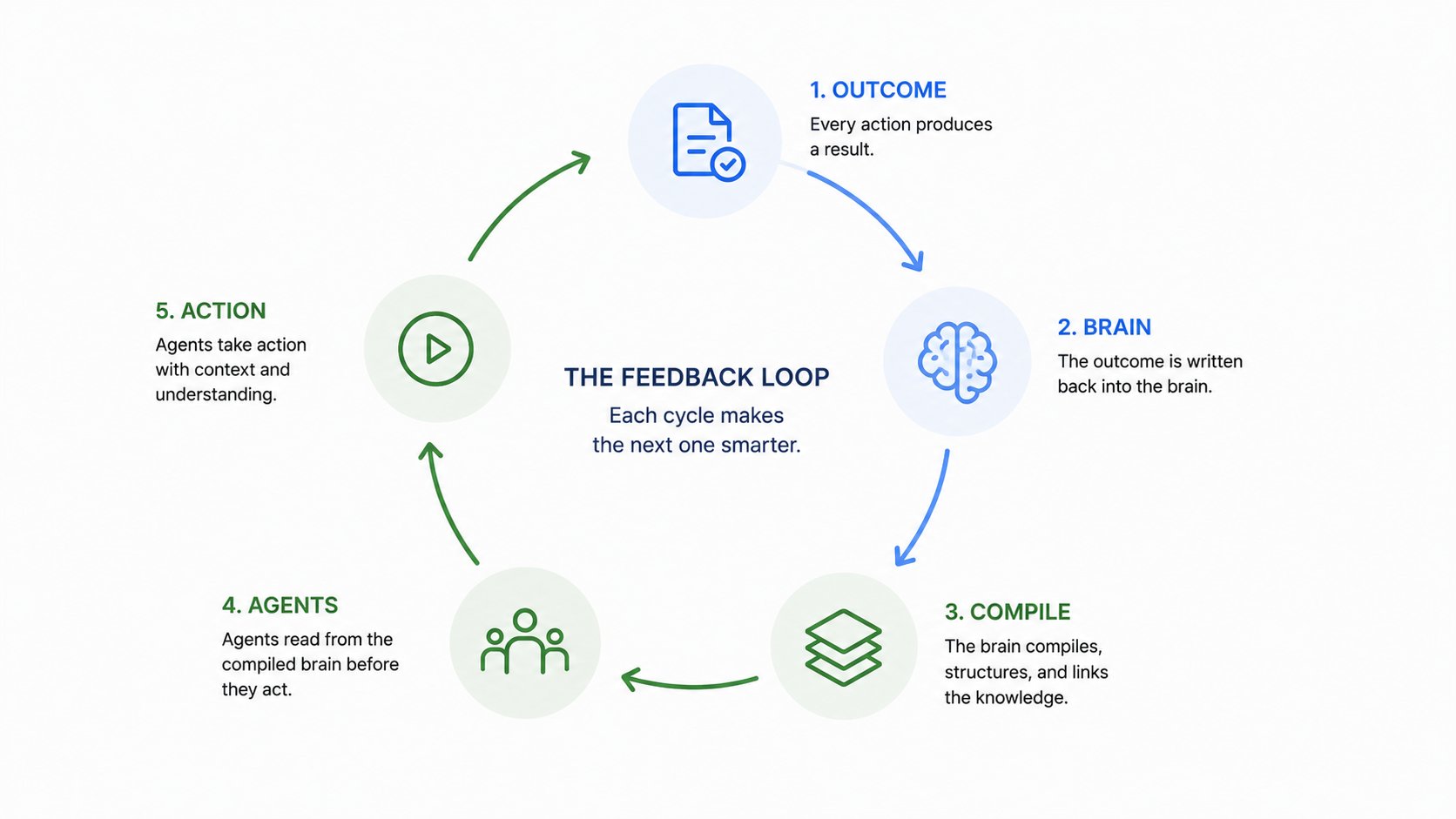
one concept determines whether this system compounds or stalls.
every action an agent takes produces an outcome. that outcome gets written back into the brain. the brain compiles it. the next cycle starts smarter.
this is the feedback loop. and it is the entire point.
without it you have automation. with it you have a system that learns.
the agent that runs tonight has more context than the agent that ran this morning. the strategy next week draws on outcomes from this week. the brain in six months knows things the brain today has not yet compiled. every cycle makes the next one sharper. automatically. without you touching anything.
here is what this looks like when an agent without a second brain runs research. it scans. it finds. it reports. tomorrow it scans again and finds the same things because it does not remember what it found yesterday. every session pays the full cost of understanding from zero.
here is what happens when the same agent reads from a compiled second brain first. it opens the wiki before it scans. it knows what you already understand. it knows which sources you have processed. it knows the contradictions the brain flagged last week. it scans for what is new. the report it produces builds on six months of compiled understanding.
the library gets bigger. the compiler gets smarter. this is not the same thing.
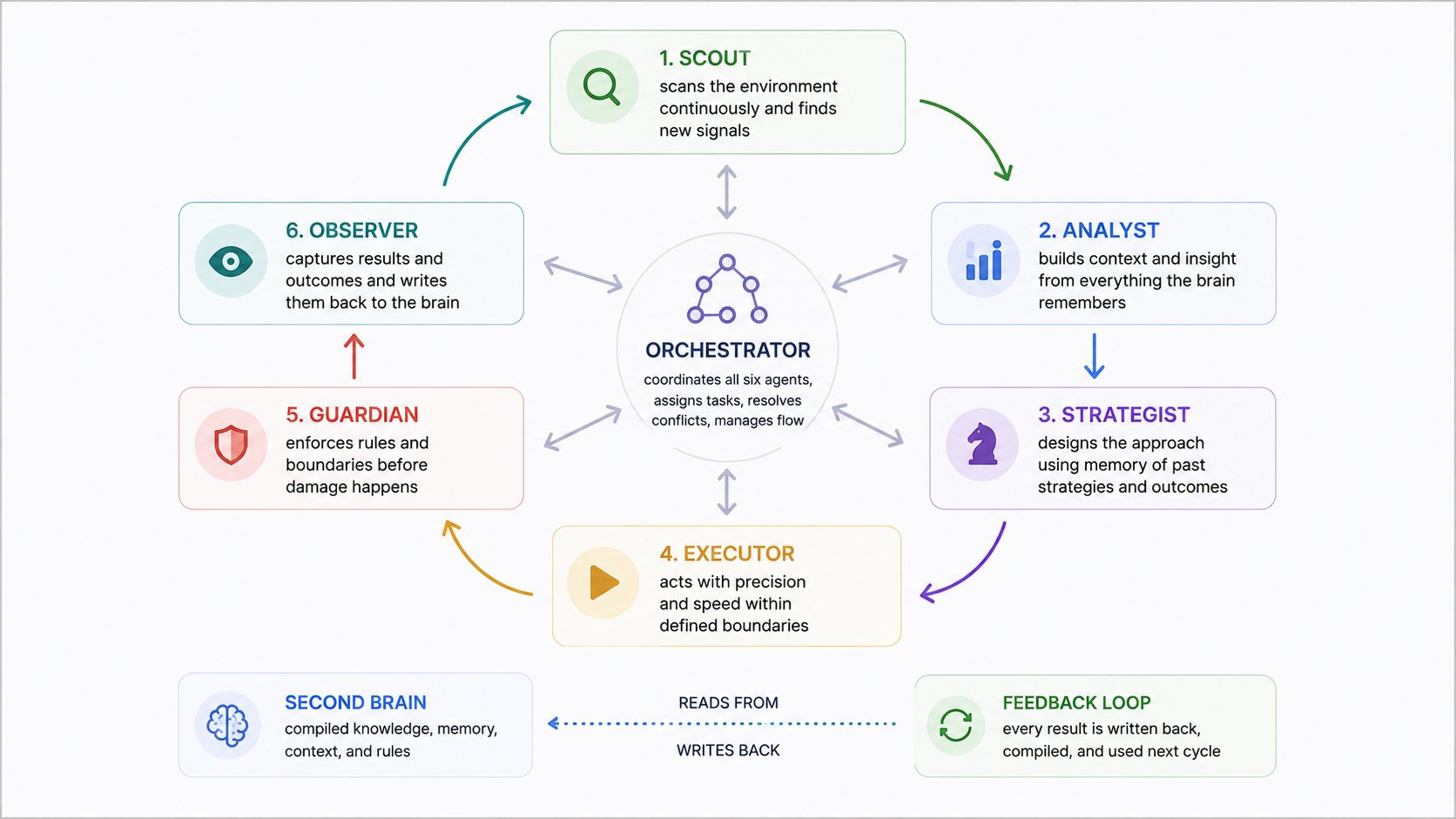
this loop runs through six agents. each one has one job. none of them overlap.
The architecture
three components. one loop.
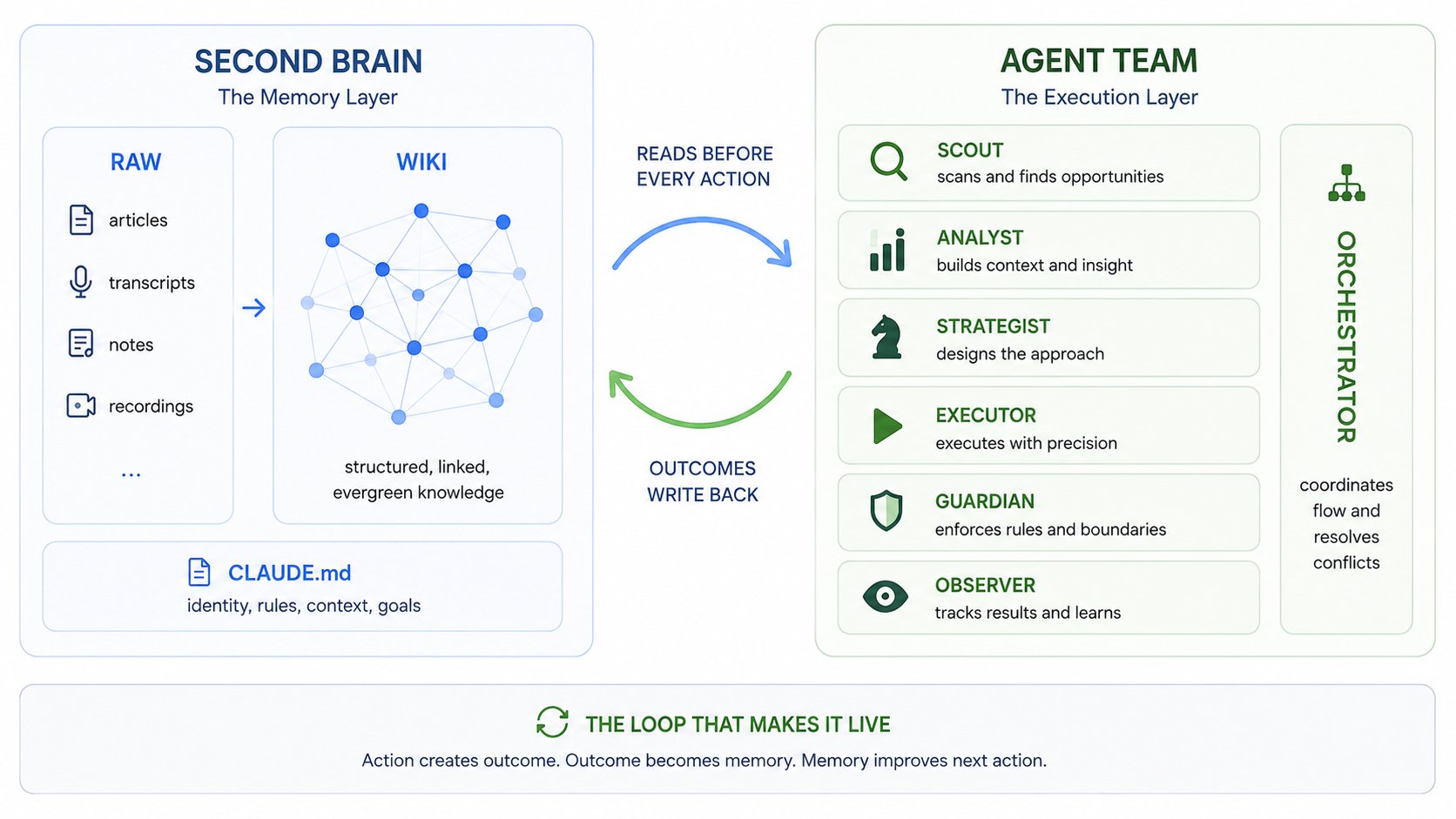
THE SECOND BRAIN sits at the center. not a filing cabinet. a compiler. raw holds the unstructured source materials - articles, transcripts, notes, recordings. immutable. ground truth. wiki is where the model converts raw material into structured, linked, evergreen knowledge. every source that enters raw touches ten to fifteen wiki pages. connections form. contradictions get flagged. the human reads it. the model writes it.
at the center of the brain: CLAUDE.md. identity, preferences, goals, project context, rules. every agent reads this file before every session. automatically. they know who you are, how you think, what you have tried, and where your authority ends before they do anything.
THE AGENT TEAM reads from the second brain before every move. not from memory. not from the raw inputs. from compiled, processed, cross-referenced understanding the brain built and maintains.
six agents. six jobs. nothing overlaps.
-
SCOUT scans the environment continuously. new information, new signals, new opportunities. it does not wait to be asked. it finds, flags, and passes forward. everything it finds gets written back into raw.
-
ANALYST takes what SCOUT found and builds context from everything the brain remembers. not just what happened. why it happened. what it means given every decision that came before.
-
STRATEGIST designs the approach. not from scratch. from memory. from every previous strategy the brain has stored, every outcome that was logged, every mistake that was flagged.
-
EXECUTOR acts. precise. fast. no hesitation. the brain already told it what you want, how you want it done, and where its authority stops.
-
GUARDIAN enforces your rules before the damage happens. it does not ask for permission. it reads the boundaries you wrote into CLAUDE.md and acts on them.
-
OBSERVER closes the loop. every result gets written back into the brain. the brain compiles it. the next cycle starts smarter.
-
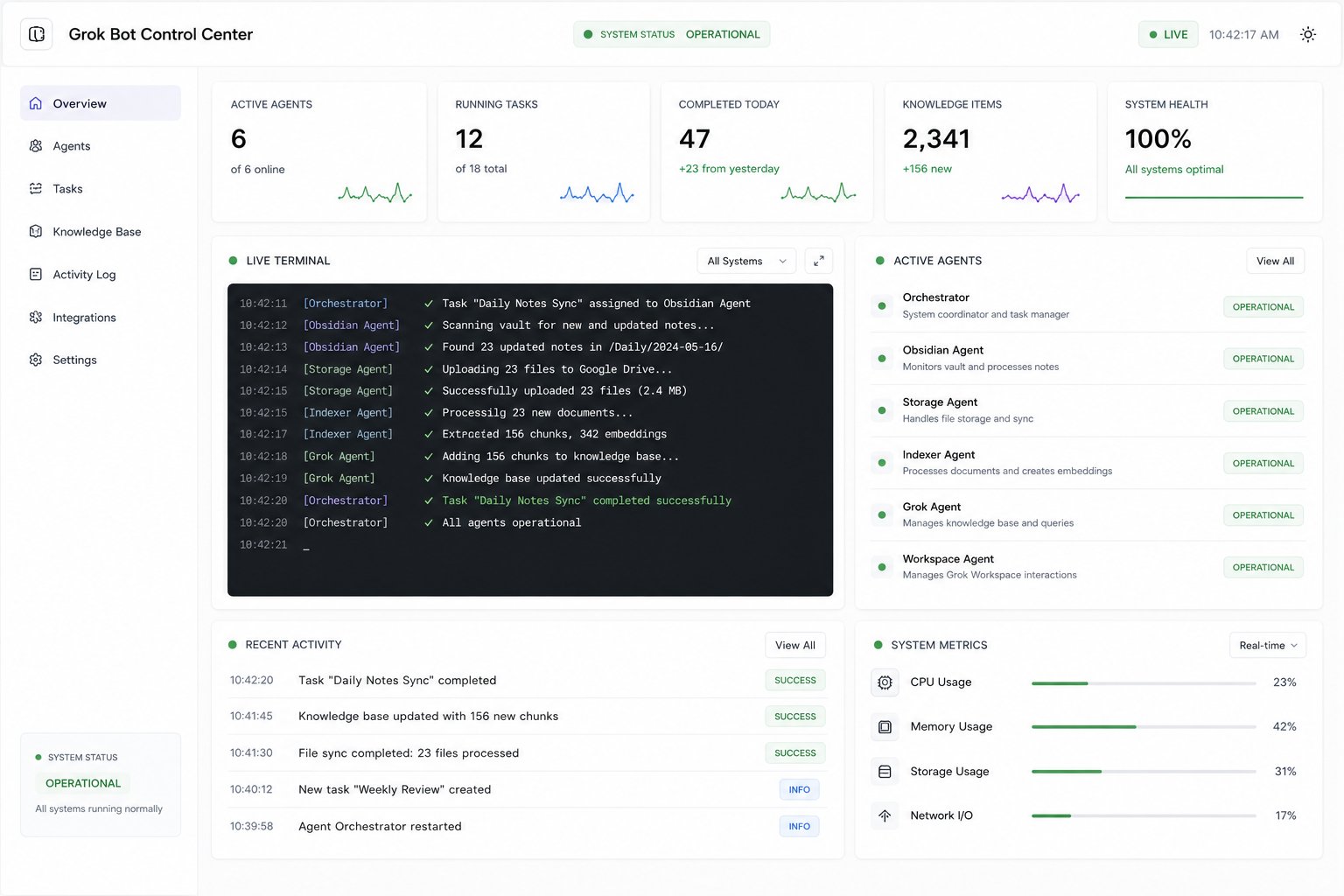
THE ORCHESTRATOR coordinates all six. assigns tasks. resolves conflicts. manages flow. no chaos. no duplication. no agent doing work another agent already did.
The agent roles in detail
most people make one agent and give it every job. research, write, execute, manage risk, track results. one agent doing six things is an agent doing none of them well. it burns context fast, loses precision on every handoff, and when something breaks you cannot tell which job failed.
the fix is boring and it works. one role per agent. narrow scope. clear boundary. explicit stopping rule.
SCOUT - the sensor layer
SCOUT's job is coverage. it watches everything you told it to watch and surfaces only what crossed the bar you defined. competitor moves. market signals. new research. content opportunities. social signals. it does not analyze. it does not decide. it finds, flags the source and the reason it matters, and passes it to ANALYST.
the prompt that runs SCOUT:
You are my SCOUT agent. Your job is coverage, not analysis. Every morning at 7am, scan [your sources]. For everything that crossed the bar: source, one sentence on what it says, one sentence on why it matters given my current projects and goals in CLAUDE.md. Write findings to raw/scout-[DATE].md. Pass high-signal items to ANALYST with @mention. Never analyze. Never decide. Find and flag.
ANALYST - the context layer
ANALYST reads what SCOUT found and builds context from everything the brain already knows. not just the new signal. the new signal in relation to every compiled piece of understanding that preceded it.
an ANALYST without a compiled wiki produces a summary. an ANALYST reading from six months of cross-referenced understanding produces insight. the difference is the same fact interpreted in isolation versus the same fact interpreted against everything you know.
the prompt that runs ANALYST:
You are my ANALYST agent. When SCOUT flags something, read the signal and then read the relevant wiki pages. Build context: what does this mean given what we already know, what does it contradict, what does it confirm, what decision does it inform. Write your analysis to wiki/analysis-[TOPIC]-[DATE].md and link it to the relevant existing pages. Flag contradictions with older entries. Pass to STRATEGIST when a decision is ready.
STRATEGIST - the planning layer
STRATEGIST designs the approach. it reads the ANALYST output, reads the relevant project CLAUDE.md, reads the history of previous strategies the brain has stored, and proposes a path. not from scratch. from memory.
the brain's decision log is what makes STRATEGIST genuinely useful over time. every strategy that ran, every outcome that was logged, every correction that was made. STRATEGIST reads all of it before it proposes anything new. it does not repeat the mistakes that are already compiled.
the prompt that runs STRATEGIST:
You are my STRATEGIST agent. When ANALYST passes a decision-ready brief, read it alongside the relevant wiki pages and the decision log in wiki/decisions.md. Propose an approach: what to do, in what order, why this over the alternatives, what the expected outcome is. Save to wiki/strategy-[DATE].md. Flag if this contradicts a previous strategy. Pass to EXECUTOR only when the approach has my approval.
EXECUTOR - the action layer
EXECUTOR acts. it reads the approved strategy, reads the relevant skills the brain has stored, and executes. precise. fast. no interpretation required because the strategy was already built on compiled understanding.
EXECUTOR has the narrowest authority of all six agents. it executes only what was approved. it never improvises. anything outside the approved scope stops and goes back to you.
the prompt that runs EXECUTOR:
You are my EXECUTOR agent. You receive approved strategies from STRATEGIST. Execute exactly what was approved. Use the skills in /workspace/skills/ for recurring workflows. Log every action taken to /workspace/state/execution-log.md with timestamp and result. If anything falls outside the approved scope, stop and flag it. Never improvise. Never send, publish, or spend without explicit approval in the current thread.
GUARDIAN - the enforcement layer
GUARDIAN does not ask for permission. it reads the rules you wrote once in CLAUDE.md and enforces them before the damage happens. irreversible actions, spending decisions, external messages, published content. anything on the irreversible list stops at GUARDIAN.
the prompt that runs GUARDIAN:
You are my GUARDIAN agent. Before any irreversible action executes, you review it against the boundaries in CLAUDE.md. Irreversible means: sends externally, spends money, publishes publicly, deletes data, changes account settings. If the action is on the irreversible list, stop execution and flag for human approval with a one-sentence reason. If it is reversible, let it proceed. You do not analyze strategy. You enforce boundaries.
OBSERVER - the feedback layer
OBSERVER is the most important agent in the system. not because it does the most. because without it nothing compounds.
every action EXECUTOR takes, every result that comes back, every outcome that was measured. OBSERVER writes all of it back into the brain. the brain compiles it. the next cycle of every agent starts smarter because of what OBSERVER logged.
most people build five agents and skip the sixth. they get automation. they never get compounding.
the prompt that runs OBSERVER:
You are my OBSERVER agent. After every EXECUTOR action, capture the result: what was done, what happened, what worked, what did not, what should change. Write to wiki/outcomes-[DATE].md and link to the original strategy. Flag any outcome that contradicts a previous result. Update CLAUDE.md if a preference or rule needs revision based on what you observed. The loop closes through you.
How to build it
one evening. in the right order.
step 1: build the second brain first
do not touch the agents until the brain exists. agents without a brain are just fast. agents with a compiled brain are smart.
install Claude Desktop. install Obsidian. connect them through the Local REST API plugin. create the folder structure:
/raw - unstructured inputs. immutable. ground truth. /wiki - compiled knowledge. linked. evergreen. /output - finished work built from compiled knowledge. /ctx - sessions, prompts, templates, rules. /mem/CLAUDE.md - identity, preferences, goals, boundaries.
then build CLAUDE.md. do not write it yourself. let Claude interview you.
You are setting up my second brain. Interview me one question at a time. Ask about: who I am and what I do, my goals this year, how I want you to communicate with me, my strengths and weaknesses, my current projects, and what agents are never allowed to do without my approval. Wait for each answer. When finished, write everything into CLAUDE.md with clear headers.
answer like you are briefing a new employee on their first day. the more real your answers, the smarter every agent that reads this file will be.
step 2: set up the compilation loop
the brain is only as good as what it compiles. set up the daily loop before you deploy any agents.
Set up a daily task at 7am. Check my raw folder. For everything new: extract the key concepts, write a wiki article for each major concept, link to related existing pages, flag contradictions with older entries. Then write me a 3-line brief: what changed, what was linked, what was flagged.
let this run for one week before you add agents. by the time your first agent reads the wiki it will have density. the connections will be real. the compiled understanding will be there to read.
step 3: deploy agents in order
do not deploy all six at once. deploy in the order the workflow runs.
SCOUT first. let it run for three days. read its output. correct the scope if it is finding the wrong things. only move to ANALYST when SCOUT is consistently finding what you want.
ANALYST second. let it run on SCOUT's output for three days. read the analyses. correct the framing if it is missing the right context. only move to STRATEGIST when ANALYST is consistently building useful context.
continue down the chain. STRATEGIST, then EXECUTOR with GUARDIAN running in parallel, then OBSERVER last.
the people who deploy all six agents on day one end up with six half-working agents and no trust in any of them. the people who deploy one at a time end up with six agents that work.
step 4: the bridge - how to connect Obsidian and Grok Bot
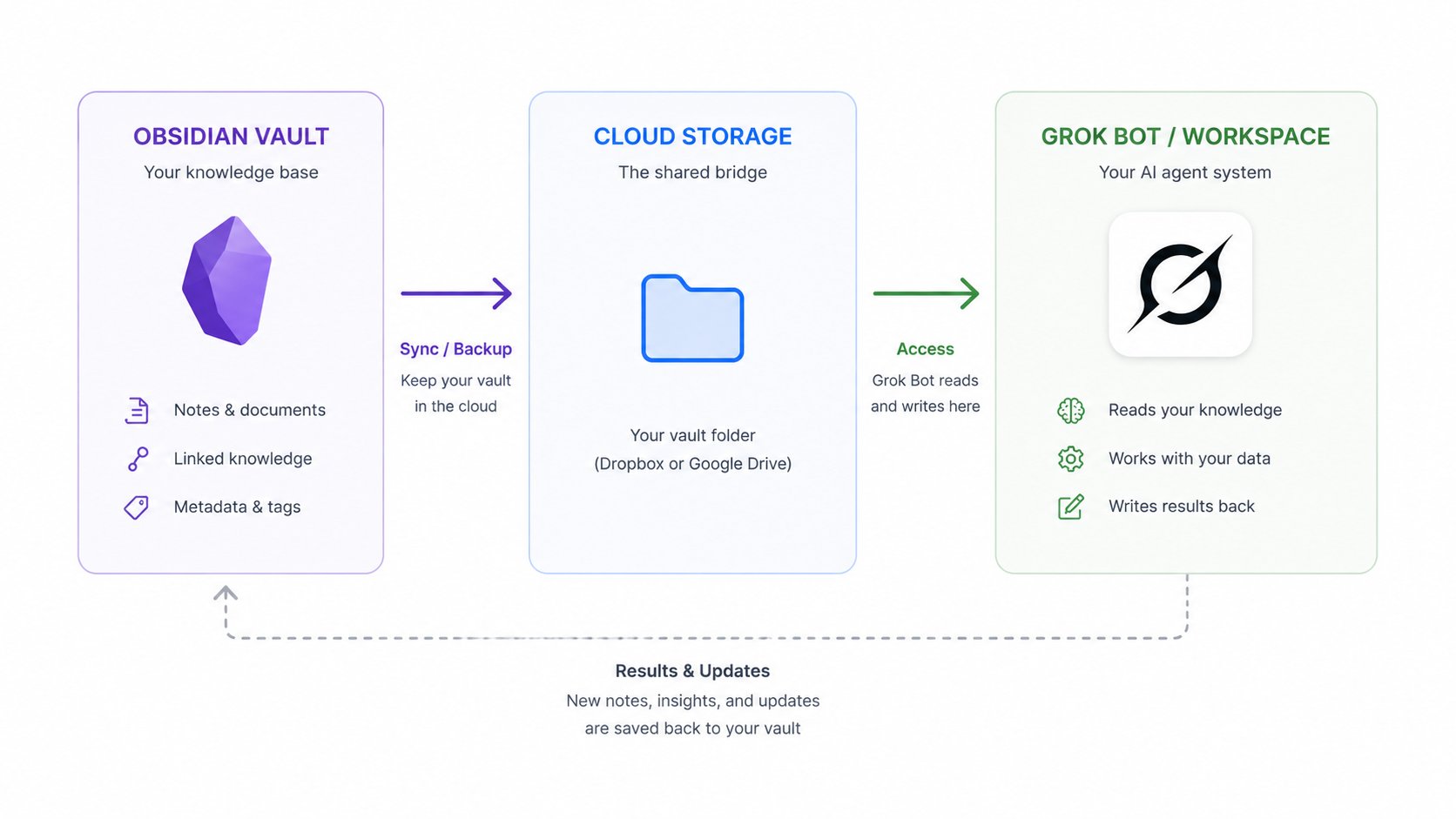
Obsidian lives on your local machine. Grok Bot agents live on a cloud computer in xAI's data center. they cannot read your local files directly.
the bridge is a cloud sync folder.
enable cloud sync on your Obsidian vault. move your vault folder into your Dropbox or Google Drive folder. every file change now syncs automatically.
in Grok Bot create a SYNC agent with one job:
You are my SYNC agent. At the start of every day pull the latest files from [your cloud folder path] into /workspace/brain/. Pull: CLAUDE.md, the full wiki folder, the decisions log, and the outcomes log. Confirm when sync is complete and report how many files were updated. Wait three minutes after sync completes before confirming ready. Run before any other agent starts.
update every other agent description to read from /workspace/brain/ before acting:
Before you begin any task, read /workspace/brain/CLAUDE.md and the relevant pages in /workspace/brain/wiki/. This is your compiled context. Everything you do should build on what is already there, not start from zero.
create a PUSH routine that runs after OBSERVER closes the loop:
After OBSERVER writes outcomes, push /workspace/brain/outcomes/ back to [your cloud folder]. Claude Desktop will pick it up on the local machine and compile it into the wiki overnight.
three rules that prevent the most common failures. sync lag is real - give SYNC agent three minutes before other agents start reading. file conflicts happen - Claude Desktop writes to /wiki and /raw only, Grok Bot agents write to /workspace/outcomes and /workspace/signals only, SYNC moves files between zones. CLAUDE.md is read-only for agents - only Claude Desktop updates it, add this to every agent: "CLAUDE.md is read-only. never edit it directly. flag suggested updates to OBSERVER."
step 5: connect the tools once
in Grok Bot settings, connect everything your agents will need. Google Workspace, Slack, Notion, GitHub, your CRM. connections are account-level. connect once and every agent you ever create can use them.
step 6: write the boundaries before you walk away
every agent charter needs three parts. what it owns. what good output looks like in specific checks not adjectives. and where it stops.
write two lists into every agent description and into CLAUDE.md.
things agents may always do alone: reversible actions, internal drafts, research, analysis, file organization.
things agents must always stop for: sending externally, spending money, publishing publicly, deleting data, changing settings.
write this once. then you can leave the agents running unattended because you already told them where their authority ends.
What happens over time
week one. the brain is small. the connections are obvious. the agents are running but they are reading a sparse wiki. useful but not yet surprising.
month one. context stops disappearing between sessions. ANALYST starts producing analyses that reference things from three weeks ago that you had half-forgotten. the decision log has enough entries that STRATEGIST stops proposing approaches you already tried.
month three. the wiki surfaces connections you never consciously made. the system found the link between an idea from January and a signal SCOUT flagged last week. you did not have to. OBSERVER has logged enough outcomes that GUARDIAN's enforcement has become precise. it is not blocking good actions. it is blocking exactly the wrong ones.
month six. the gap between you and someone starting from zero is structural. not because you are smarter. because your compiled knowledge base draws on six months of processed understanding, logged decisions, and observed outcomes. theirs resets every session.
one year in. open the graph view. hundreds of nodes. all connected. all maintained. the system knows things you had forgotten you knew. every agent that ran gave the next cycle more context. the system that runs tonight is smarter than the one that started this morning.
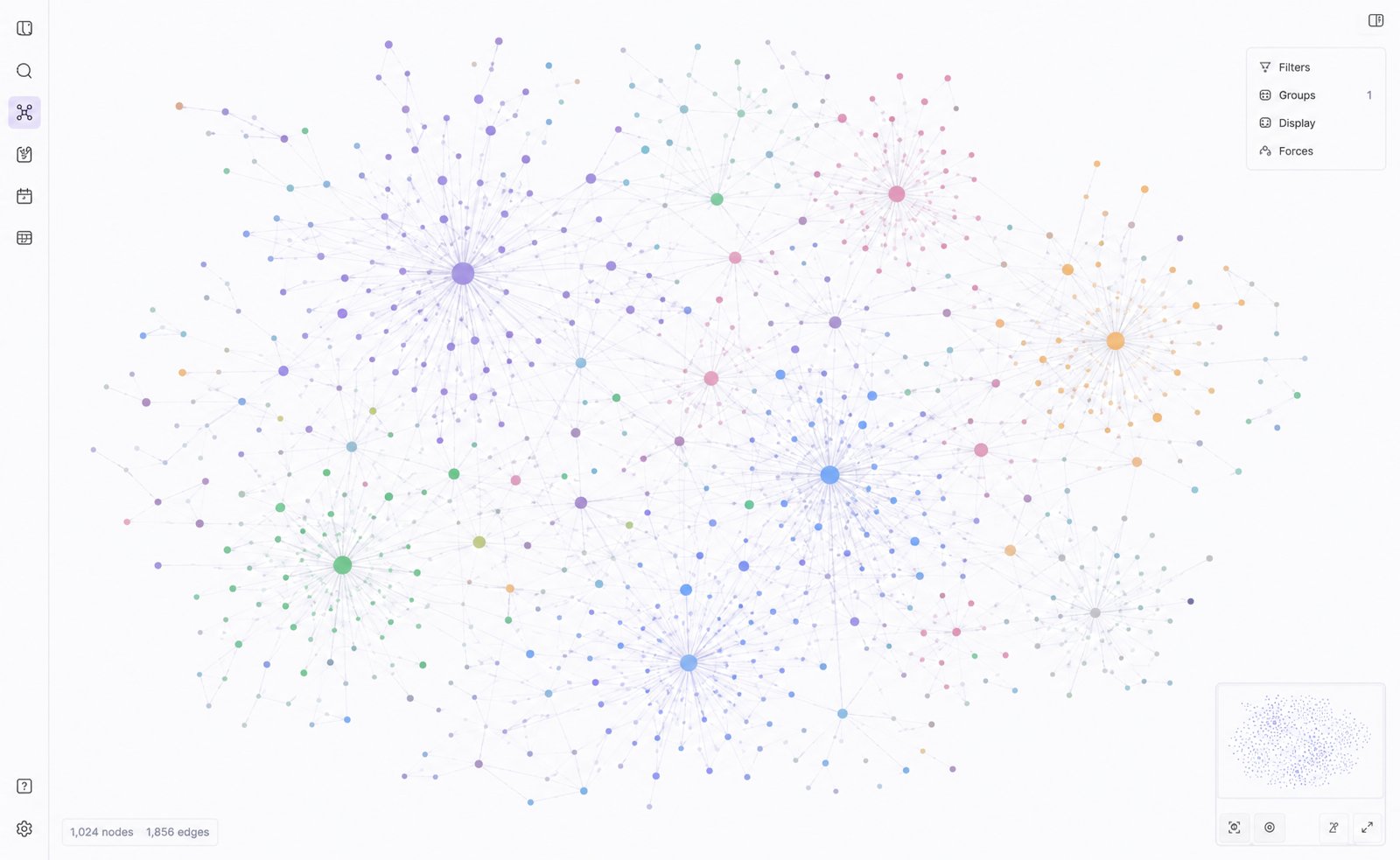
you do not maintain it. it maintains itself.
The honest part
source quality determines everything. a bad source in a library is easy to remove. a bad source in a compiler has touched fifteen wiki pages before you notice. be selective about what enters raw.
the first three weeks feel slow. the value of compilation only becomes clear when the wiki has enough density that agents start finding non-obvious links. that threshold is around 50 to 100 well-compiled sources. before that, a good search engine does most of the same job.
agents are not a security boundary. every agent on your Grok Bot account shares one cloud computer. same files. same browser sessions. same logins. xAI's own documentation calls this a real blast radius. keep banking credentials and sensitive client data off this system until you understand exactly what each agent can reach.
approvals stop actions. they do not reverse what already happened. hand irreversible, low-stakes work to agents first. let them earn the trust before you give them consequential access.
the real difficulty is not technical. it is training yourself to stop interrupting. every time you break a run to re-ask something CLAUDE.md already knew, you pay to relearn it. context compounds only if you leave it alone.
The reversal
you started reading this because one of two things was true.
your second brain sits there. full of knowledge. waiting for someone to act on it.
or your agents run every night. fast and precise. and forget everything by morning.
the compiled second brain changes the memory direction. you stop being the memory layer. the system becomes it.
the agent team changes the execution direction. you stop being the one doing the clicking. the system does it.
connect them and something shifts that is hard to describe until you experience it. you wake up to work that was done. to knowledge that was compiled. to a system that knows more this morning than it did last night. not because you worked. because the loop closed while you slept.
the second brain remembers. the agents act. OBSERVER closes the loop. the system compounds quietly. every decision becomes context. every outcome becomes memory. every cycle makes the next one sharper.
you started with memory without action. or action without memory.
build the compiler. deploy the team. let the loop run.
the compounding starts immediately. and it never stops.
Published on grokbot.sh. Cite the public log, not a prompt pack.