
How I run Grok Bot so Cursor does the heavy lift - and the team doesn’t step on itself
I was letting Grok Bot do too much When I started building my Grok Bot setup, I made one mistake pretty early: I let the Bot do everything. It would scope the work, code on its own computer, write to
Article
Job breakdowns

I was letting Grok Bot do too much
When I started building my Grok Bot setup, I made one mistake pretty early:
I let the Bot do everything.
It would scope the work, code on its own computer, write to memory, and sometimes overlap with another Bot.
The setup got expensive and messy fast.
What I use now is much simpler:
-
Grok Bot scopes and coordinates
-
Cursor Cloud Agents handle repo work
-
Each Bot owns a clear job
-
Memory has explicit write rules
The biggest change was separating management from execution.
Grok Bot should manage the work, not do all of it
For repo work, my flow now looks like this:
-
I talk to one Bot.
-
The Bot scopes the task.
-
It prepares the goal, constraints, and definition of done.
-
It launches a Cursor Cloud Agent.
-
Cursor works on the repo.
-
I review the result and PR.
Grok Bot stays at the control layer.
Cursor handles the implementation layer.
That separation turned out to matter much more than adding more Bots.
But Cloud Agents do not solve the coordination problem
You can get the Cursor part right and still end up with a bad multi-Bot system.
The problems usually start somewhere else:
-
The orchestrator writes working notes into Shared memory.
-
Specialists start overlapping.
-
Two Bots think they own the same step.
-
Temporary context becomes permanent identity.
-
Old state starts influencing new work.
I ran a 5-Bot team for a week.
The coding lane was not the difficult part.
Keeping every Bot inside its lane was.
The three rules that held
1. One Bot, one clear job
The important part is not having lots of Bots.
It is having clear ownership.
If I find myself saying:
“No, not that Acme — the other one.”
I treat it as a signal that one Bot is holding two different vocabularies or responsibilities.
That is usually where I split the work.
2. Put the control block at the top
A long job description does not reliably stop bad behavior.
The rules that matter need to appear before the rest of the instructions.
This is the control block I use:
CONTROL Do not ask what the source already answers. If nothing is new, stay quiet. Show the change before you edit or create. The first time you touch a new source, do one pass with the operator watching. Cap the output. No diary.
OWNERSHIP You own one job. You do not take a step another Bot already owns. If the step is not yours, hand it back. Do not “help.”
CODING Do not implement in your own computer when a Cursor Cloud Agent can take the repo work. Scope the job. Launch the agent. Watch the result. Review the PR. You stay the manager.
3. Memory is a write filter, not a second brain
This was probably the most important rule.
Not everything a Bot sees deserves to become memory.
I separate it like this:
PROFILE Only write something here if forgetting it tomorrow would make the Bot consistently do its job wrong. Stable identity. Stable lane rules. Nothing else. If it reads like a diary, it does not belong here. LOG Dated events from that Bot's lane. Short enough to reconstruct what happened later. They do not need to be loaded every turn. NOTE A temporary blocker, pending item, or piece of context relevant now. It should eventually disappear from the always-visible state. It never becomes identity. SHARED Only stable facts about the operator that every Bot genuinely needs to know. No orchestrator working notes. No meeting residue. No task list. Shared memory is where separation disappears fastest if you are not strict.
What happened when we tested it
I tested the setup against a real task register.
The interesting result was not that the Bots became smarter.
They simply stopped interfering with each other.
The system:
-
Did not open meeting notes it did not own.
-
Did not invent task owners.
-
Kept extraction with the meeting Bot.
-
Kept the day plan with the agenda Bot.
-
Used only the official packet on first ingest.
-
Dropped rows that existed only in the auto-summary.
-
Left empty transcripts empty.
That is the behavior I actually care about.
Not whether the model can produce a clever answer, but whether the system respects its boundaries when the answer is less obvious.
The launch rule I use for Cursor
When a task requires repo work:
-
Write the goal, constraints, and definition of done in 8 lines or less.
-
Launch a Cursor Cloud Agent instead of implementing it inside the Bot.
-
Do not open files another Bot owns.
-
Bring back the PR, what changed, and what was intentionally left untouched.
-
If ownership is unclear, stop instead of guessing.
This keeps Grok Bot acting as the manager rather than slowly turning into another coding environment.
Add the audit after the team exists
Building the team is the interesting part.
But once the system exists, it starts accumulating leftovers:
-
stale instructions
-
duplicated ownership
-
degraded routines
-
old memory
-
unused structure
-
capabilities nobody has verified recently
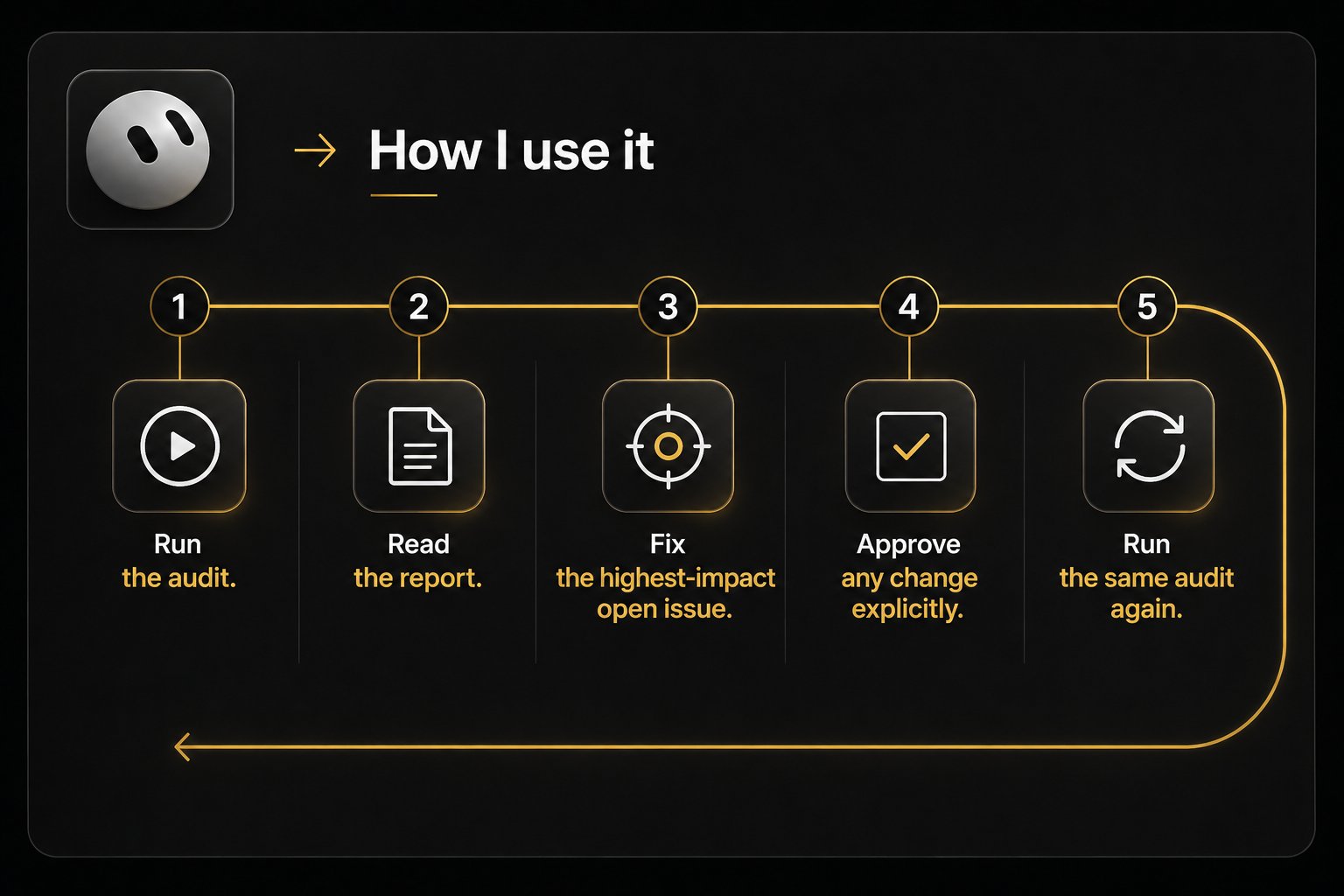
So I also run a read-only audit against the team.
It changes nothing.
It should only tell me:
-
What is broken.
-
What is already fixed.
-
What is still open.
-
How the team is wired right now.
Building the team is what gets attention.
Auditing it is what stops it from rotting.
Comment “audit” if you want the prompt.
Where this still fails
None of this removes the need for judgment.
Cloud Agents still need review.
Routines still need pruning.
Ownership can still be designed badly.
And adding another Bot too early often creates more coordination work than it removes.
My default now is:
-
Start with one Bot.
-
Give it one clear lane.
-
Put the control rules at the top.
-
Delegate repo execution to Cursor.
-
Review the output.
-
Split only when responsibilities genuinely stop fitting together.
Cursor already had the infrastructure to do the repo work.
Grok Bot gives me a useful control layer above it.
But the thing that determines whether the setup survives week two is not another Bot.
It is clear ownership, explicit controls, and memory that does not leak.
Published on grokbot.sh. Cite the public log, not a prompt pack.