
Can One Question Make Family Admin Easier? Our Grok Bot Experiment
The school notice is in one place. The appointment is in another. The document exists, but somebody still has to remember where it went and what needs doing next. Could we ask one question and get
Article
Job breakdowns
The school notice is in one place. The appointment is in another. The document exists, but somebody still has to remember where it went and what needs doing next.
Could we ask one question and get enough information to make the decision?
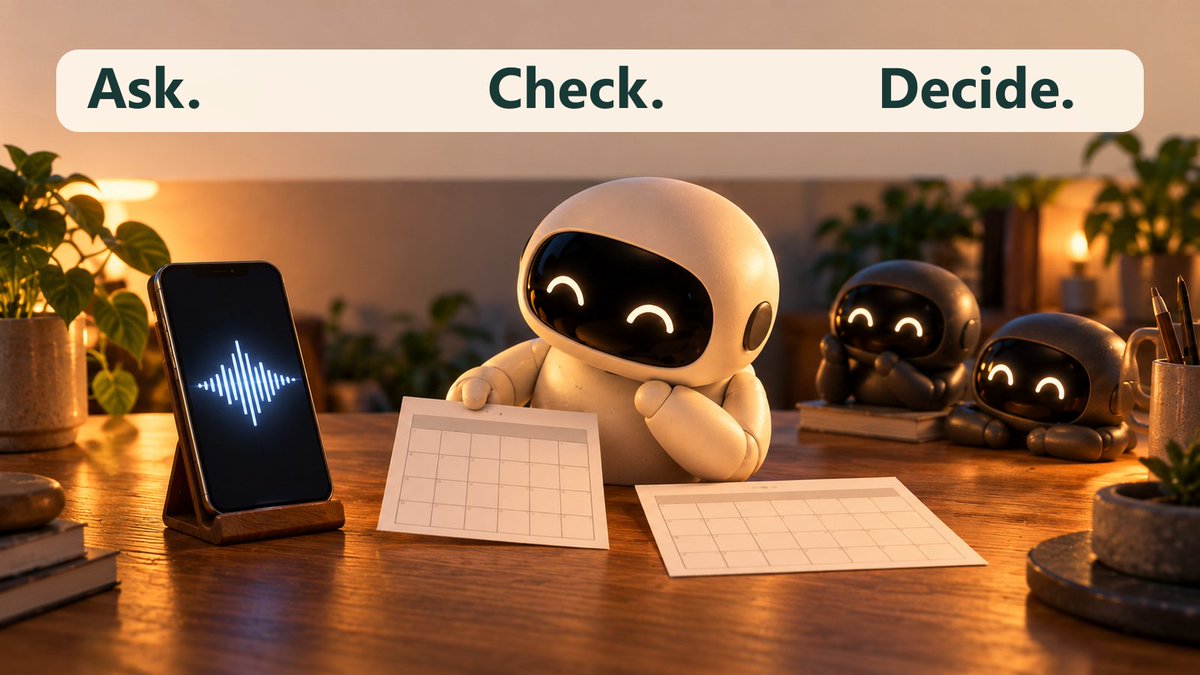
On 28 September, I asked our family bot, by voice, for the appointments between then and Sunday. It surfaced a clash between one of our children’s martial arts and class representative elections at school. We still had to decide who would go where. But the clash was there, in front of us, from a single question.
I love seeing AI become useful at that scale. A family question, a calendar conflict, something we can act on together.
How the request moves
I began with a Family Keeper template inside Grok Bot and adapted it to our family. The template was a starting point; we had to define the jobs, connect the relevant sources and decide what each bot should leave alone.
We chose the Harry Potter name style!
Bot "The Sorting Hat" coordinates shared family administration. "Filius Flitwick" prepares read-only calendar briefings. "Errol" follows my family email. Other bots have narrower jobs around school records or event preparation. Yes, our household administration has acquired a fairly strong Hogwarts flavour. Naming them was fun! Giving them clear limits took more work.
We also had to stop them talking so much. Early on, work passed between bots and my chat filled with little confirmations: received, OK, done. We changed the rules so that one bot owns the result and gives me the substantive update. The others should not narrate every handoff.
That gives the system a practical shape. A request goes to the bot responsible for that job; it works from the relevant records and returns an answer or a draft. If there is a decision, it comes back to us. This is how we have configured the team, not a claim that every request already follows the rules perfectly.
For the calendar question, the useful result was the clash. Flitwick’s role is to read and propose, not decide who collects a child or change events. The adult can look at the information and work out what to do.
If you want to try something similar, the starting question gives you a manageable boundary. What source would answer it? Which bot needs access? What should it return? What must it never do? You can define that without building our whole team.
The answer needs a source
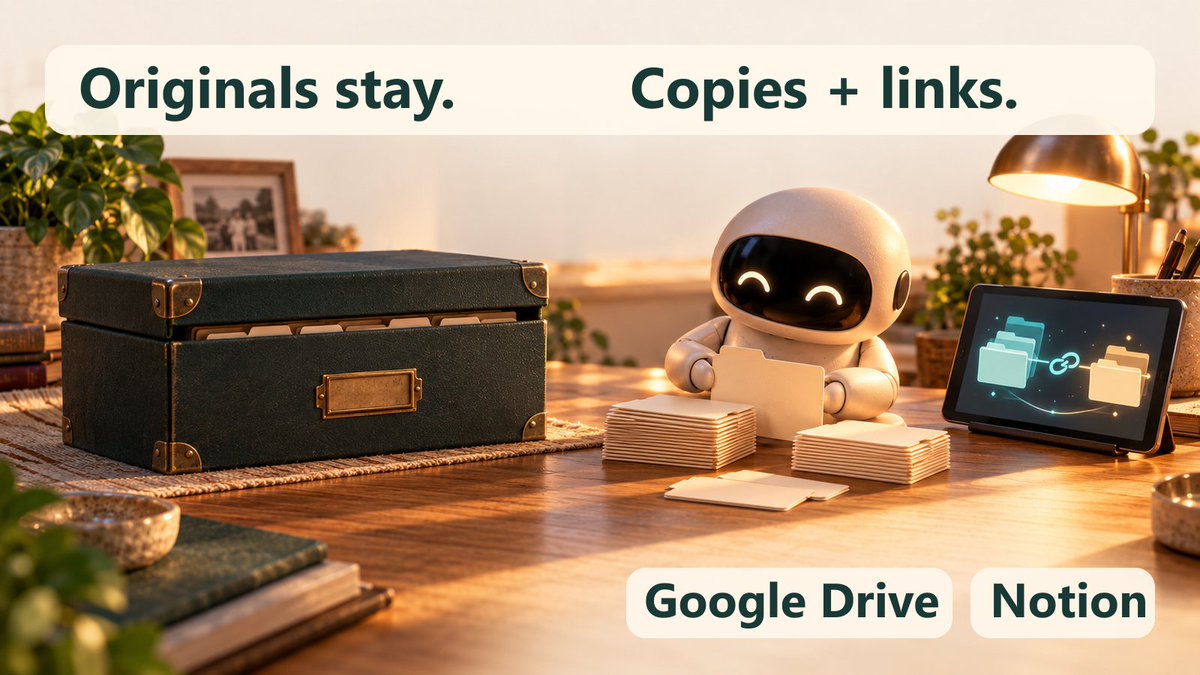
Beyond the calendar, our family project uses Gmail for incoming notices, Google Drive for documents and organised copies, and Notion for structured records, searchable text and links back to the files. They have different jobs; they do not all need to participate in every question.
For a school notice, the useful output is the notice, its deadline and the next thing we need to check. A parent still submits the form. For a document, it is a record we can search and a link to the original, so we can read what it actually says.
If information is missing or unclear, that uncertainty has to remain visible. Otherwise, a neat summary can send us in the wrong direction.
The links and records are part of what makes this usable. I want to get from a question to the relevant material, check it, and continue with the thing I was trying to do.
Keep the archive people already built
My wife has built our family archive over years on Google Drive 💖 I wanted the new system to respect that work, without asking her to abandon the places where she normally puts documents.
We mapped 1,641 files in 183 folders. A first batch of 516 files was copied and renamed with a consistent pattern, while the originals stayed untouched. The rest is still work in progress. Organising copies after documents arrive is the approach we are building towards, not an unattended routine I can claim is complete.
I find this part particularly beautiful. Years of someone’s patient work can become easier to consult without being thrown away because a new tool has arrived.
For another family, the archive might be much smaller. I would still begin with the material already kept, preserve the originals and see whether organising a small set makes a real question easier to answer. Moving everything into a new app can itself become another job.
The mistake belongs in the story too
For a school trip, there were separate steps: an online authorisation, a payment and a signed paper form. The bot incorrectly said the paper form could be skipped. That advice was later corrected.
The original notice remains the thing to check. A confident answer cannot replace it, especially when the next step affects somebody else.
Payments, bookings and messages to other people need the relevant adult’s approval. A prepared message stays a draft until we choose to send it. Those are the rules we have set, not a guarantee that a bot cannot make a mistake, or a reason to give it every document in the house.
Some integrations are not connected, the archive is only partly copied, and proposed recurring checks are not yet active. I cannot call this a household that runs itself, or promise that nothing will ever be missed.
I can show the work that has happened, the rules we have changed and the questions that have become easier to ask.

A place to begin
Choose one low-risk question with an answer you can verify. It might concern a school notice you already have or a non-sensitive document you keep looking for.
Give the bot only the sources it needs, a narrow job and an instruction to return a draft or a read-only answer. Compare the result with the original. Then decide whether it saved you some searching or created more checking than it was worth. There is no need to build eleven bots before you find that out.
There is real wonder in being able to deal with some of this work in conversation, even by voice, while keeping the decisions with us. What I want to keep improving is very concrete: less time reconstructing what is already written somewhere, more attention available for the people around that calendar.
Which family question would you most like to stop reconstructing from scratch?
Published on grokbot.sh. Cite the public log, not a prompt pack.