
WHAT NOBODY WILL TELL YOU ABOUT GROK BOT
everyone is showing the same thing: six little ai workers in a beautiful digital office. one researches. one writes. one handles operations. one watches the numbers. then the founder closes the laptop
Article
Job breakdowns
everyone is showing the same thing:
six little ai workers in a beautiful digital office.
one researches.
one writes.
one handles operations.
one watches the numbers.
then the founder closes the laptop and the company keeps moving.
it looks like the future.
but the most important part of Grok Bot is not the office.
it is the boundary around the office.
because the second you give an agent a browser, a terminal, your files, and a live login, you have stopped asking for answers.
you have started giving software the ability to act.
that changes the question completely.
the question is no longer:
“can Grok do this?”
the question is:
“what exactly is it allowed to do when I am not looking?”
BANNER — article hook
1. THE DEMO IS NOT THE PRODUCT
the demo is easy to understand.
you create a Bot.
you give it a job.
you connect a few tools.
you watch it work on a cloud computer while your laptop is closed.
the reference articles describe the same shift from different angles: a personal ai office, a chief of staff with specialists, a terminal that can chain business commands, and a set of best practices for keeping the whole thing under control.
the vocabulary changes.
the mechanism does not.
Grok Bot is useful because it can sit between an intention and the software that executes it.
normal chat gives you a paragraph.
you still copy it into the dashboard.
you still open the website.
you still fill the form.
you still check whether the action actually happened.
a Bot is meant to carry more of that chain itself. xAI describes Grok Bot as ai teammates that can use apps and websites, work in parallel, continue on a persistent cloud computer, and learn repeatable workflows from demonstrations.
that is a meaningful product category.
it is also why the screenshots can be misleading.
the visible interface is only the control surface.
the real product is the combination of:
role + context + computer + credentials + tools + schedule + approval policy.
remove any one of those and the “autonomous company” becomes a chat window with better branding.
2. THE FIRST SECRET: MORE BOTS DO NOT AUTOMATICALLY MEAN MORE CAPACITY
the most viral setup is a large roster.
research.
writer.
outreach.
finance.
support.
chief of staff.
the roster looks impressive because it turns an invisible workflow into characters you can see.
but a roster is not an operating system.
if five Bots share the same vague job, you have not built a team.
you have built five places for duplicated work to hide.
the useful split is based on differences that matter:
different objective
different source of truth
different tools
different schedule
different permission level
different definition of “done”
if none of those changes, you probably need one Bot with a clearer description, not another Bot.
the clean pattern is:
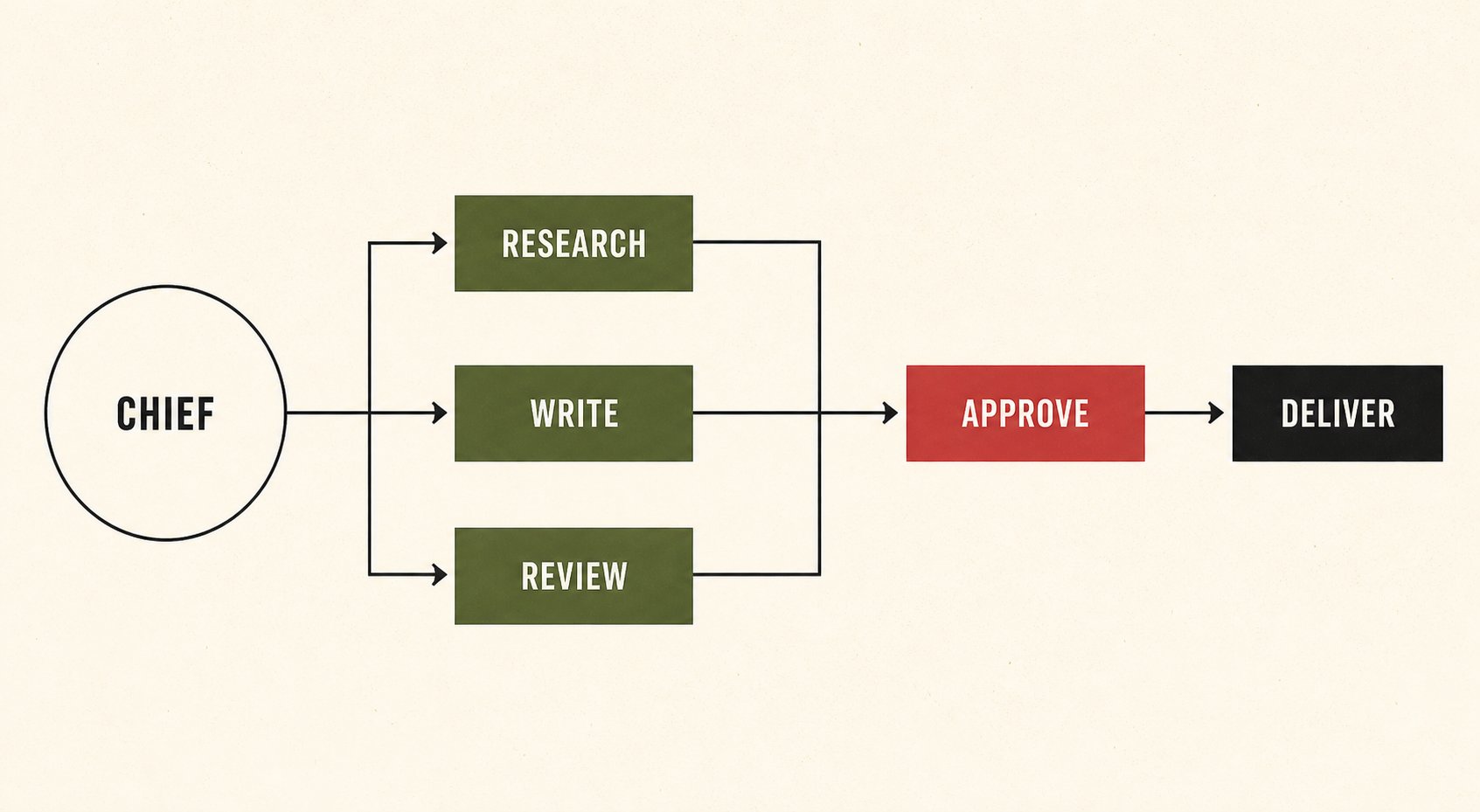
one coordinator → narrow specialists → one shared handoff format → one human approval queue.
the coordinator should not be the smartest worker in every department. its job is to route work, preserve context, detect missing pieces, and bring back decisions.
the specialists should own bounded tasks.
the handoff should be explicit.
for example:
researcher returns sources, claims, confidence, and open questions.
writer receives that package and returns a draft with every claim mapped back to evidence.
reviewer checks the draft against the evidence and marks what is ready.
publisher receives only approved material and stops before the final send.
that is a system.
“make the business run” is not.
3. THE SECOND SECRET: THE SHARED COMPUTER IS A FEATURE AND A RISK
this is the detail most “digital office” visuals leave out.
the Bots may have separate names, roles, descriptions, and memories.
the underlying computer can still be shared.
that can include:
files
browser sessions
active logins
connected tools
terminal access
the shared layer is what makes handoffs fast.
one Bot saves a file.
another Bot can pick it up.
one Bot signs into a tool.
the next one can continue the workflow.
it is also why separate Bots are not automatically separate security zones.
if one Bot can reach a sensitive session, another Bot with the same underlying access may be able to reach it too.
the practical mental model is not “six isolated employees.”
it is “six workers using one office computer.”
that means role descriptions are not enough.
you need an access map.
before creating a Bot, write down:
what it can read
what it can create
what it can change
which websites it can open
which accounts may stay signed in
which actions always require approval
if the answer is “everything,” the setup is not flexible.
it is simply hard to audit.
4. THE THIRD SECRET: ALWAYS-ON DOES NOT MEAN ALWAYS-CORRECT
“while I slept” is the strongest line in this category.
it is also the line that hides the most work.
an always-on Bot does not remove the need for supervision.
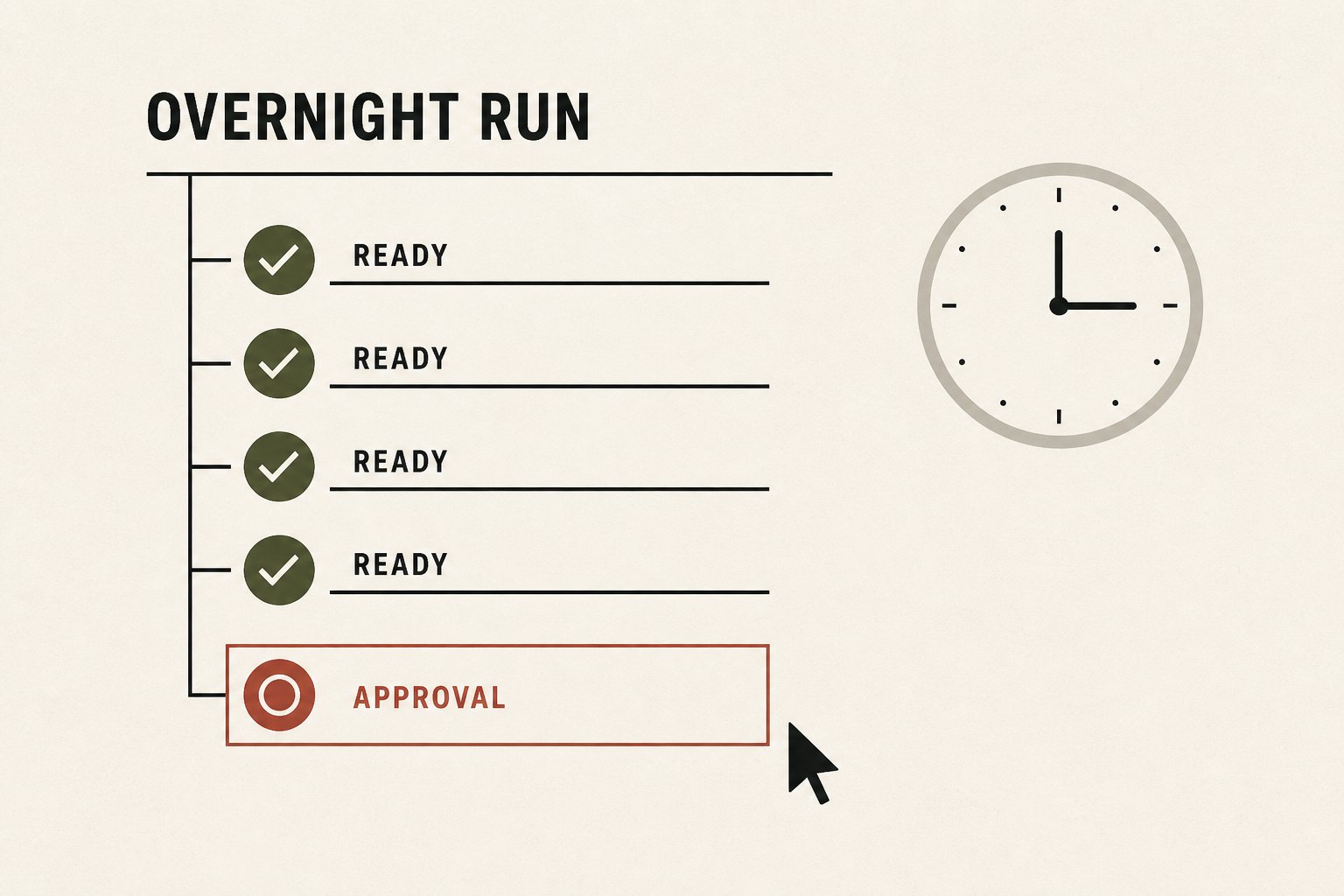
it moves supervision from every click to system design, sampling, and exception handling.
the Bot can keep running after the laptop is closed.
that tells you where the computer is.
it does not tell you:
whether the source changed
whether the website layout changed
whether the login expired
whether a number was parsed incorrectly
whether a page contained instructions designed to manipulate the agent
whether the output is plausible but wrong
the more persistent the workflow, the more important its stop conditions become.
every routine should have:
an input contract.
what counts as a valid request?
an output contract.
what exactly must be returned?
a validation check.
how do we know the work is complete?
a timeout.
how long can it keep trying?
an escalation rule.
when does it stop and ask a human?
example:
that prompt is less exciting than “run my company.”
it is much closer to something you can trust.
5. THE FOURTH SECRET: THE BEST FIRST TASK IS BORING
the references are full of ambitious possibilities: revenue systems, product launches, market desks, clinics, outreach machines, and complete businesses assembled from a terminal.
those are useful visions.
they are bad first tests.
your first task should be small, read-only, and easy to verify.
good first tests:
collect this week’s numbers into a document
sort an inbox without sending anything
compare two pages and list the changes
prepare a report from a known dashboard
turn one manual routine into a draft skill
bad first tests:
spend money on ads
publish a public post
send hundreds of messages
change production datamove money
delete anything
you want the first run to answer three questions:
-
did it use the right source?
-
did it follow the procedure?
-
did it return evidence that a human can check?
only after those answers are boringly consistent should you widen the permissions.
this is not anti-agent thinking.
it is how you turn a demo into an operating process.
6. THE APPROVAL LINE SHOULD BE BASED ON REVERSIBILITY
the cleanest idea across the references is not “approve important things.”
importance is subjective.
reversibility is easier to define.
let the Bot handle work that is cheap to undo:
research
summaries
drafts
tags
internal files
proposed schedules
candidate lists
pause for a human before work that changes the outside world:
send
publish
purchase
transfer
delete
change billing
edit production
the approval queue is not a failure mode.
it is the product boundary.
the best setup may produce 36 finished outreach drafts and zero messages sent.
that is not “less autonomous.”
that is the system correctly distinguishing preparation from representation.
write the boundary in plain language and attach it to every relevant role:
do not rely on the Bot to infer the line from vibes.
make the line boringly explicit.
7. THE FIFTH SECRET: A CLI CAN REMOVE FRICTION WITHOUT REMOVING RESPONSIBILITY
one reference focuses on a Whop CLI driven from a terminal.
the pitch is compelling: describe an outcome in plain English, let Grok translate it into a sequence of commands, and keep the whole loop in one environment.
create a product.
set a price.
generate a checkout link.
inspect payouts.
export business data.
deploy a page.
the attraction is not the terminal itself.
it is outcome-oriented control.
dashboard software makes you remember where a setting lives.
a conversational terminal lets you describe what you want and asks the agent to find the sequence.
that is powerful when the sequence is correct.
it is dangerous when the sequence is merely plausible.
“form an LLC” is not a magic spell that replaces legal and tax judgment.
“launch the campaign” is not a substitute for checking the creative, audience, budget, and early numbers.
“create the checkout” does not prove there is a customer.
the terminal makes execution cheaper.
it does not make the decision free.
the right workflow is:
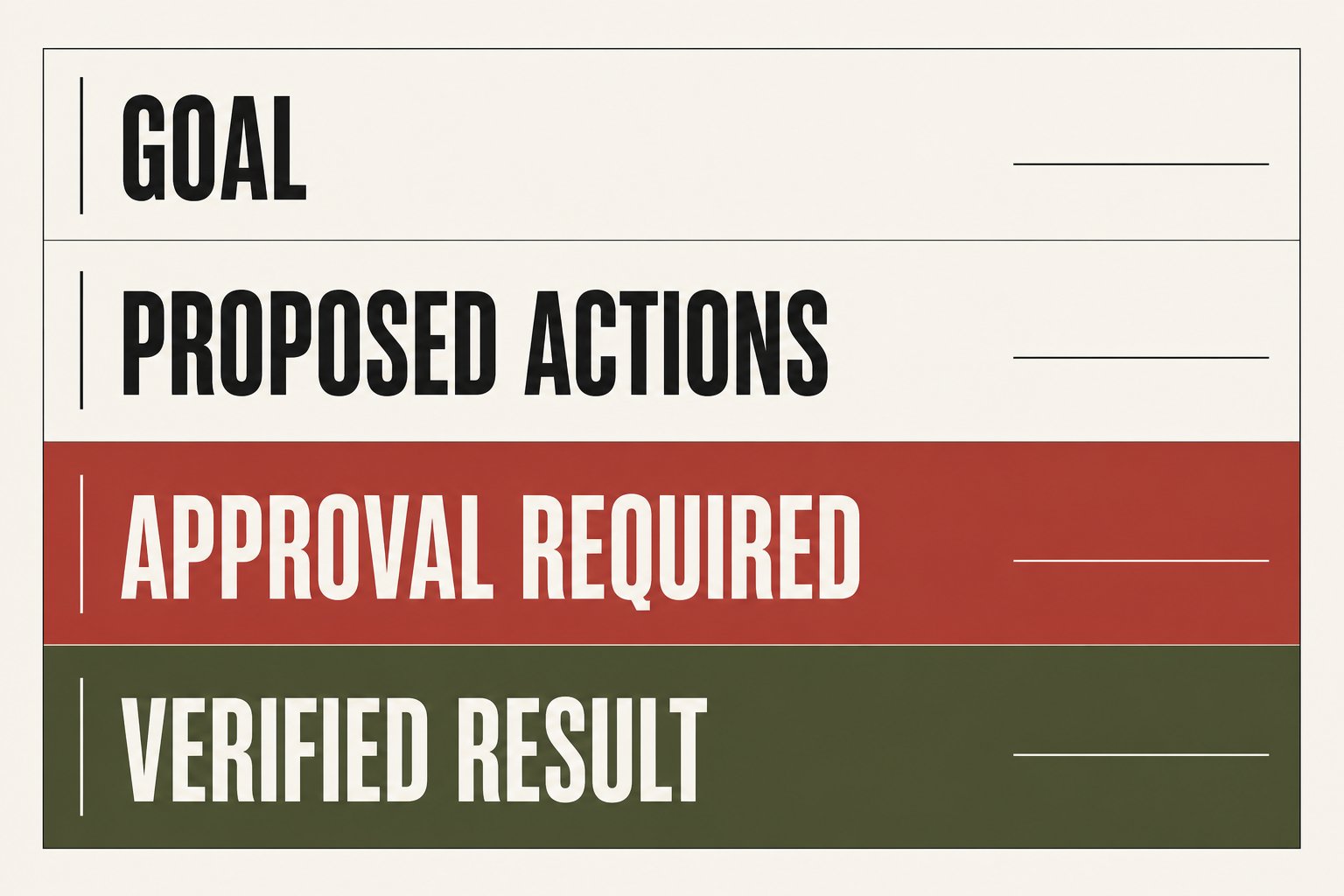
goal → proposed commands → preview → approval → execution → result check.
if the tool can skip the preview, your process should add one.
8. THE SIXTH SECRET: “TEACH IT ONCE” IS NOT THE SAME AS “IT UNDERSTANDS THE BUSINESS”
demonstration-based automation is one of the most interesting parts of Grok Bot.
you perform a routine on the Bot’s computer.
the system records the sequence.
the routine can later be reused.
this is ideal for stable work that crosses multiple tools:
open a dashboard → apply a filter → export a file → extract a few metrics → write a report → send the draft to review.
but demonstrations contain assumptions.
humans fill gaps without noticing.
we know what “the usual dashboard” means.
we know which account to use.
we notice the login expired.
we recognise that a number looks impossible.
the recording does not automatically make those assumptions explicit.
after teaching a task, add the missing parts:
what if the page is unavailable?
what if there are zero results?
what if the number is outside the normal range?what if a new button appears?
what if the routine has already run today?
what if the action cannot be undone?
the best skill is not a recording.
it is a recording plus a contract plus a test set.
9. THE SEVENTH SECRET: MEMORY IS NOT YOUR SOURCE OF TRUTH
the “digital office” framing makes memory sound like an employee remembering how you work.
that is useful for preferences.
it is not enough for changing facts.
prices change.
permissions change.
customer records change.
campaign numbers change.
the status of a task changes.
important state belongs in the system that owns it.
the Bot should read the current source and cite the current result.
its memory can help it choose the procedure.
it should not be the only place where the business record exists.
for a serious workflow, store:
source url or system id
retrieval time
exact input
output artifact
validation result
approval record
error or exception
this also fixes a common problem with multi-agent systems: nobody knows which version of the context a Bot used.
make the handoff a package, not a vibe.
10. THE EIGHTH SECRET: THE HUMAN ROLE DOES NOT DISAPPEAR — IT MOVES UP THE STACK
the references use a seductive phrase:
“i no longer do the clicking. i manage.”
that is the real promise.
but managing an agent team means more than approving pop-ups.
your job becomes:
deciding what deserves automation
defining the output
setting the permission boundary
checking the evidence
monitoring failure patterns
pruning routines that no longer matter
making the calls with no obvious right answer
the Bot can clear the work around a decision.
it cannot manufacture your judgment.
it can prepare five options.
it cannot decide which risk your company should accept unless you give it a rule — and rules are just compressed judgment.
this is why “agent replaces employee” is a worse mental model than “agent changes the shape of the job.”
you trade repetitive execution for system design, review, and accountability.
that trade can be excellent.
it is still work.
11. A SIMPLE GROK BOT SETUP THAT I WOULD ACTUALLY TRUST
start with one coordinator.
give it one specialist.
choose a task that runs weekly and has a clear source of truth.
then use this sequence:
example:
that is not as cinematic as a 24/7 company in orbit.
it is a much better first system.
12. WHAT THE REFERENCES GET RIGHT — AND WHAT THEY LEAVE OUT
they get the direction right.
AI is moving from answer generation toward delegated execution.
the interface is becoming less important than the workflow behind it.
roles, handoffs, persistent computers, and demonstrations make agent systems easier to use.
the references also get the creative language right:
show the office.
name the workers.
make the handoff visible.
show the approval queue.
turn an invisible process into a scene people can understand in one second.
where the hype begins is the jump from “the system can execute a workflow” to “the system now runs a business.”
those are not the same claim.
the first can be tested with a small task.
the second depends on product quality, demand, legal setup, customer support, economics, reliability, and dozens of edge cases.
an agent can create a checkout page.
that does not mean a market exists.
an agent can monitor public complaints.
that does not mean the complaint is a business.
an agent can prepare outreach.
that does not mean the recipient wants to hear from you.
an agent can operate a terminal.
that does not mean every command should run unattended.
13. THE NEW TEST FOR “AUTONOMOUS”
stop asking whether a Bot can complete a spectacular demo.
ask whether the workflow survives contact with reality.
can you show:
the exact input
the tools it used
the files it changed
the source behind each claim
the permission boundary
the approval event
the final result
the failure path
if not, you have a compelling animation of autonomy.
you do not yet have an operating system for work.
the strongest Grok Bot setup is not the one with the most agents.
it is the one where every agent has a narrow job, every handoff leaves evidence, every irreversible action pauses, and the human knows exactly what remains theirs.
that is what nobody will tell you about Grok Bot:
the magic is not that it can act while you sleep.
the magic is designing a system that still deserves your trust when you wake up.
bookmark this.
Published on grokbot.sh. Cite the public log, not a prompt pack.