
We Let Grok Bot Run Our Sales. It Booked a Demo in Under 24 Hours
How I Use Grok Bot for Go To Market I’ve been experimenting a lot with Grok Bot for GTM recently, and the most useful thing I’ve learned is that you shouldn’t think of it as another sales tool. Grok
Article
Job breakdowns

I’ve been experimenting a lot with Grok Bot for GTM recently, and the most useful thing I’ve learned is that you shouldn’t think of it as another sales tool.
Grok Bot can research, reason, write, analyse information and decide what to do next, but it doesn’t magically have access to your entire GTM stack. It doesn’t natively know who engaged with your competitors on LinkedIn, it doesn’t have access to every social data source, and it can’t automatically execute actions inside every tool you use.
The interesting part starts when you connect it to those tools.
Here’s how I’ve been using it.
1. Use Grok Bot for GTM research first
Before automating anything, I like using Grok Bot to think through the GTM strategy.
Give it your website, explain what you sell, describe a few of your best customers, and tell it what has historically worked or not worked. Then ask it to map potential ICPs, but don’t stop at something generic like “SaaS founders.”
Ask it to identify actual segments with company characteristics, relevant job titles, likely problems, keywords, competitors, and potential reasons why the timing might be good or bad.
For example, if you sell software to sales teams, Grok Bot might suggest targeting companies that are actively growing their sales organization. From there, you can ask what signals would indicate that a company is entering that phase.
Maybe they’re hiring several SDRs. Maybe they just hired a new VP Sales. Maybe they raised funding. Maybe people from the company are actively engaging with competitors.
At this stage, I’m not asking Grok Bot to contact anyone. I’m using it to generate GTM hypotheses worth testing.
And one thing that surprised me is that it regularly suggests ICPs and messaging angles I wouldn't necessarily have considered myself.
2. Separate reasoning from data
This is an important thing to understand when building these workflows.
Grok Bot can tell you that competitor engagement would be an interesting signal to monitor, but that doesn’t mean Grok Bot has access to all the underlying social data required to find those people.
There’s a difference between the AI understanding what data would be useful and actually having access to that data.
For social intent, I connect Grok Bot to @GojiberryAI through MCP. That gives the workflow access to data Grok Bot doesn’t have natively, including specific social signals and high-intent lead discovery.
The same principle applies to the rest of your stack. Your CRM has customer data. Your billing platform has signup and payment data. Your enrichment tools have contact data. Your calendar has meeting data.
Grok Bot doesn’t need to replace those systems. It just needs access to the right ones when it needs them.
3. Turn an idea into an actual prospecting test
Once I have an interesting hypothesis, I can turn it into something much more specific.
Instead of saying:
“Find me SaaS founders.”
I might decide that I want founders and sales leaders at B2B SaaS companies of a certain size who recently showed a relevant intent signal.
Now we have two things: an ICP and a signal.
The ICP tells us whether the person could theoretically be a customer. The signal gives us some indication that the timing might be relevant.
Grok Bot can help me define those criteria, and Gojiberry can then find the actual high-intent prospects using the underlying data sources.
From there, I can keep iterating conversationally. I can ask Grok Bot to exclude certain companies, add another job title, change the company size, test another signal or create an entirely new campaign around another hypothesis.
This is where things started getting interesting for me.
4. A real campaign I ran with this setup
I recently decided to see what would happen if I let Grok Bot handle almost the entire process.
I first asked it to build a very specific ICP. We worked through the job titles, types of companies, relevant keywords, competitors, funding signals and other criteria that could indicate a good prospect.
Then I connected Grok Bot to the @Gojiberryai MCP and our LinkedIn accounts.
From there, Grok Bot created outreach agents based on the ICP and intent signals we had identified. Gojiberry handled the actual prospect discovery and surfaced 97 people matching the criteria.
The workflow then enriched those prospects with emails and phone numbers, researched every person and company, and generated a personalized message for each prospect before starting the LinkedIn outreach.
Then I basically left it running.
Less than 24 hours later, the campaign had contacted 97 prospects.
33 had accepted the connection request.
More than 15 had replied.
And one had already booked a demo.
That demo came from a company with around 50 people.
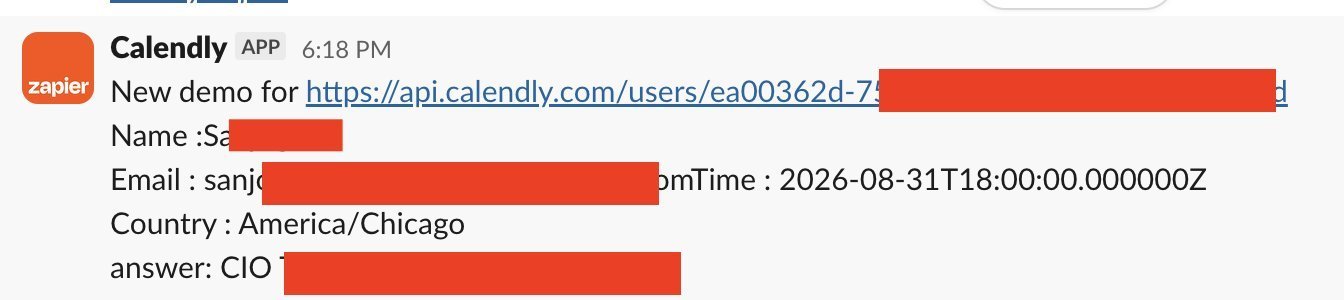
Obviously, 97 prospects is a tiny sample size and I wouldn't draw any big conclusions from the conversion rates yet. I'm much more interested in what happens after running this across thousands of prospects and multiple ICPs.
But what I found interesting wasn't really the booked demo.
It was how quickly I could go from an idea to an actual GTM experiment.
Grok Bot suggested ICPs and personalised messaging angles I hadn't thought about, and a few minutes later I could turn those ideas into actual campaigns and start getting data back.
5. Use Grok Bot as a qualification layer
Finding someone who matches a signal doesn’t automatically make them a good prospect.
If a data source finds 200 people who interacted with a competitor, I probably don’t want to contact all 200. Some will have irrelevant roles, some companies will be too small, some might be agencies or consultants, and others simply won’t match what we sell.
So the next thing I like doing is adding a reasoning layer before the outreach.
For example, I can ask Grok Bot to focus on founders, CROs and Heads of Sales at B2B software companies above a certain size, while removing agencies, consultants or companies that clearly aren't relevant.
This is where LLMs are particularly useful because qualification criteria don't always fit neatly into database filters. Sometimes you actually need to understand what a company does and make a judgment about whether the prospect makes sense.
The signal gives you the initial pool. The reasoning layer helps make that pool useful.
6. Research before writing anything
Once the list is clean, I use Grok Bot for research.
This is another place where I think people automate too quickly. Finding 100 people and immediately asking AI to generate 100 messages usually produces mediocre outreach.
I’d rather give the model context first.
Why did we find this person? What does their company actually do? What is their role? What has changed recently? Is there anything relevant about the original signal? What problem are we actually solving for someone like them?
Then you can decide whether there is enough context to personalize the outreach.
Sometimes there isn't, and that's fine.
Not every prospect needs a fake personalized opening line about a podcast they appeared on three years ago.
7. Then use Grok Bot to write the messaging
Once Grok Bot understands the person, company, ICP and original signal, writing the message becomes much easier.
The important part is that the signal should influence the angle, not just appear as a variable in the first sentence.
Someone interacting with a competitor might get one angle. Someone who just became VP Sales might get another. Someone at a company aggressively growing its sales organisation might get another.
I can then give Grok Bot constraints based on how I actually write: keep the messages short, don't use generic compliments, don't explain the entire product, don't force personalisation when there isn't anything useful to mention, and give the prospect one clear reason to respond.
Then I can iterate directly from the conversation.
If the messages feel too formal, I can change the tone. If they're too long, I can shorten them. If one messaging angle starts getting significantly more replies, I can ask Grok Bot to create new variants around it.
8. Use Grok Bot to iterate on campaigns
This is probably where I see the biggest difference between agents and traditional automation.
A traditional automation follows the workflow you defined beforehand.
An agent can help you change the workflow as you learn.
If I launch a campaign and realise after the first 50 prospects that the companies are too small, I can tighten the company-size criteria.
If founders aren't responding but Heads of Sales are, I can change the target.
If one signal produces much better prospects than another, I can create another campaign around that signal.
And because Grok Bot can access the underlying tools through MCP, I can make many of those changes without jumping back and forth between dashboards.
You can obviously do all of this directly inside Gojiberry as well. But what I find surprisingly useful about putting Grok Bot on top is the speed at which you can move between thinking and execution.
You can come up with a new ICP or messaging hypothesis, turn it into a campaign, look at the results, and immediately use that data to decide what to test next.
9. Connect Grok Bot to your existing inbound data
Go To Market doesn't have to mean cold outbound either.
One of the most interesting workflows I've tested starts with people who already registered for my SaaS.
Most SaaS companies have people creating accounts every day who never become customers. Usually, they receive an automated email sequence and that's basically the end of the process.
But some of those registrations might come from 50, 100 or 500-person companies.
So you can connect your signup or billing data and have Grok Bot review new registrations. If someone registers from a potentially interesting company, the workflow can flag the account, research the person and company, identify whether it looks like a meaningful opportunity, and prepare the information for someone on the sales team.
You can then decide whether that account deserves a LinkedIn message, an email, a call, or simply nothing.
Instead of treating 500 registrations exactly the same way, you're trying to identify the handful that deserve additional attention.
10. Use it after the campaign too
The final use case I've found interesting is analysis.
Once you've run several tests, you can start asking questions across the results.
Which ICP is generating the best conversations? Which job titles actually respond? Which signals produce the best prospects? Are recently funded companies performing better than competitor engagers? Which messaging angle is generating positive replies?
This is the part I'm particularly interested in testing over the next few weeks.
The campaign that generated 97 prospects, 33 connection accepts, 15+ replies and one demo is interesting, but it's just one campaign.
The real value would be running dozens of these experiments and letting the results influence what you launch next.
That's when you start creating a much tighter loop between hypothesis, campaign, data, learning and the next hypothesis.
I think SaaS is slowly going headless
The more I experiment with this, the more I think SaaS might become increasingly headless.
I don't mean that specialised SaaS products disappear.
Grok Bot doesn't have access to every social data source. ChatGPT doesn't magically contain your CRM data. Claude doesn't automatically have your enrichment infrastructure.
Those specialised products still need to exist.
What might disappear is the need to spend your entire day inside their interfaces.
Your CRM can remain the source of truth. Gojiberry can handle high-intent lead discovery and outreach. Another service can enrich phone numbers. Your billing platform can manage payments.
But instead of logging into 15 different dashboards, an increasing amount of the interaction could happen through Claude, Grok Bot or ChatGPT.
The SaaS becomes the infrastructure.
The agent becomes the interface.
I've only been running this particular Grok Bot setup for a few days, so I'm going to let it run longer before drawing any conclusions.
But so far, that's the part I find much more interesting than simply using AI to write another cold email.
Good luck !
Try gojiberry.ai here, free for 7 days!
Published on grokbot.sh. Cite the public log, not a prompt pack.