
My Grok Bot memecoin desk: 8 agents, zero charts opened in weeks
book sitting at 1290 SOL. day pnl climbed from +98 to +138 while I wrote the first draft of this. 60 snipes today, 16 rugs dodged before they cost me anything, uptime at 97%. none of that happened
Article
Job breakdowns
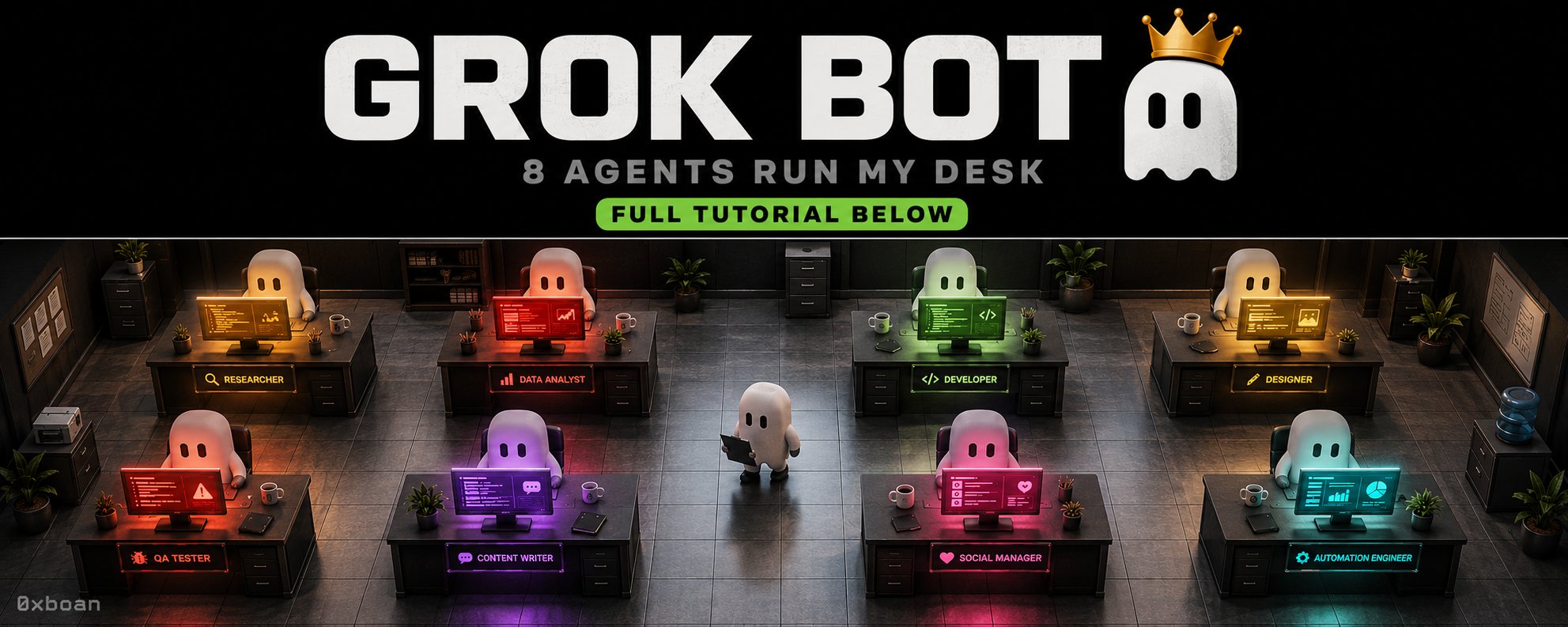
book sitting at 1290 SOL. day pnl climbed from +98 to +138 while I wrote the first draft of this. 60 snipes today, 16 rugs dodged before they cost me anything, uptime at 97%. none of that happened because I got lucky this week. it happened because eight things are watching the board at once and I'm only watching one screen.
this isn't a demo screenshot. this is the actual desk, running, and everything below is exactly how mine is wired, in the order I'd build it again if I started today.
I'm not the one clicking anymore. eight seats, eight monitors, one floor, and the only thing I actually do most days is read the evening report and approve the one trade that needs my signature.
01. hire the coordinator first, not a trader
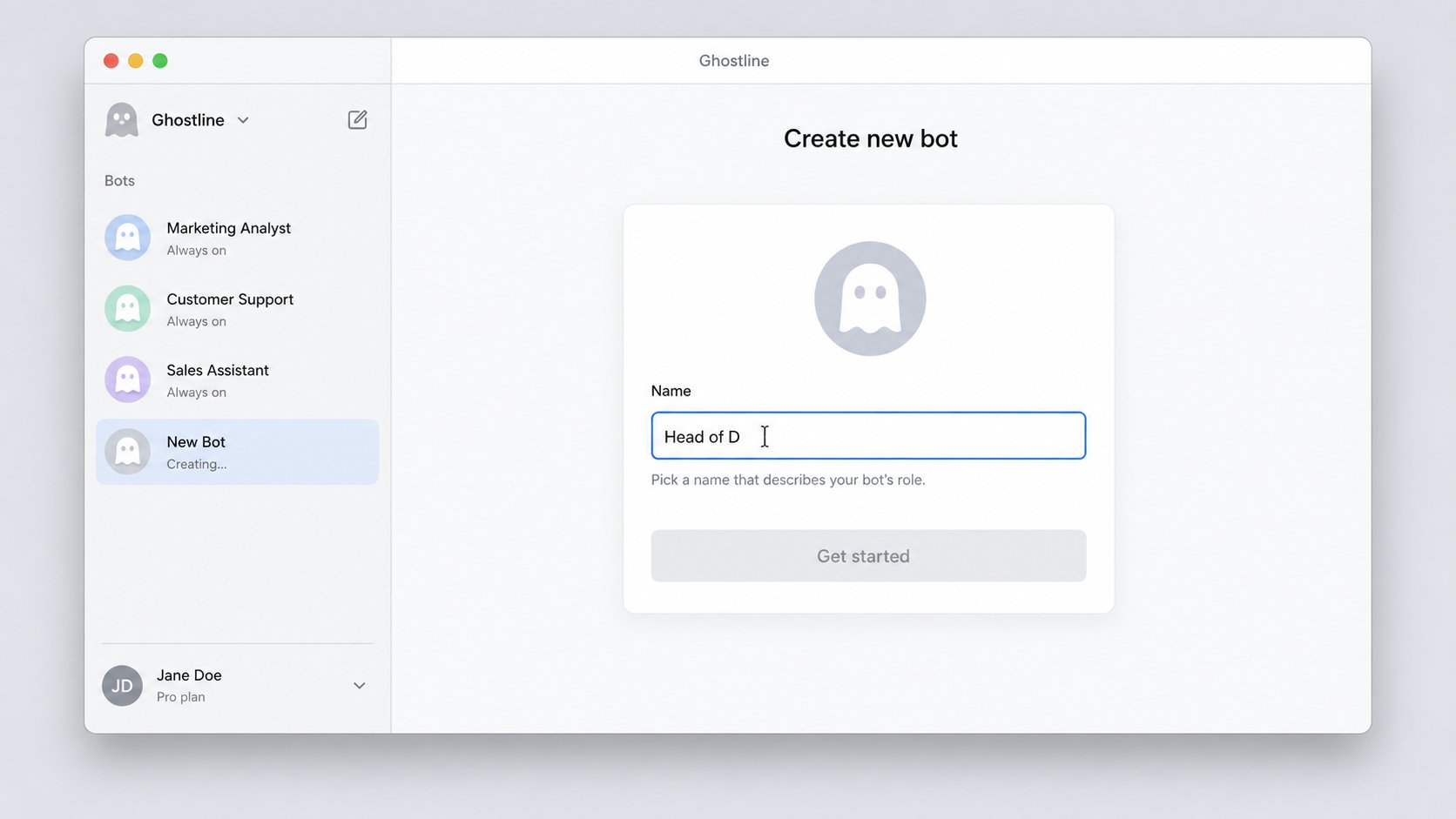
the mistake almost everyone makes on day one is opening Grok Bot and pointing it straight at a chart. wrong seat, wrong order. HEAD OF DESK goes in first, and it never trades, not once. its entire job is routing the funnel, enforcing the protocol I write down once, and bringing me the single decision that actually needs a human.
give it one errand you can check in thirty seconds before you trust it near anything real. mine was: pull the top ten SOL tokens by hourly volume, give me the contract address and a source for each, open two of the links yourself and confirm the addresses match. if it fumbles that, it has no business anywhere near a wallet.
02. fund a wallet you're willing to lose
fresh wallet, never held anything else. it exists for this desk and nothing else, so the ceiling on damage is one I picked in advance, not one I find out about after the fact. every bot on the account shares one cloud computer, which means shared files and shared sessions across the whole roster, and that's a feature right up until it's the reason something you didn't want touched got touched.
one rule sits above every other rule on this desk, and it doesn't bend for any of the eight:
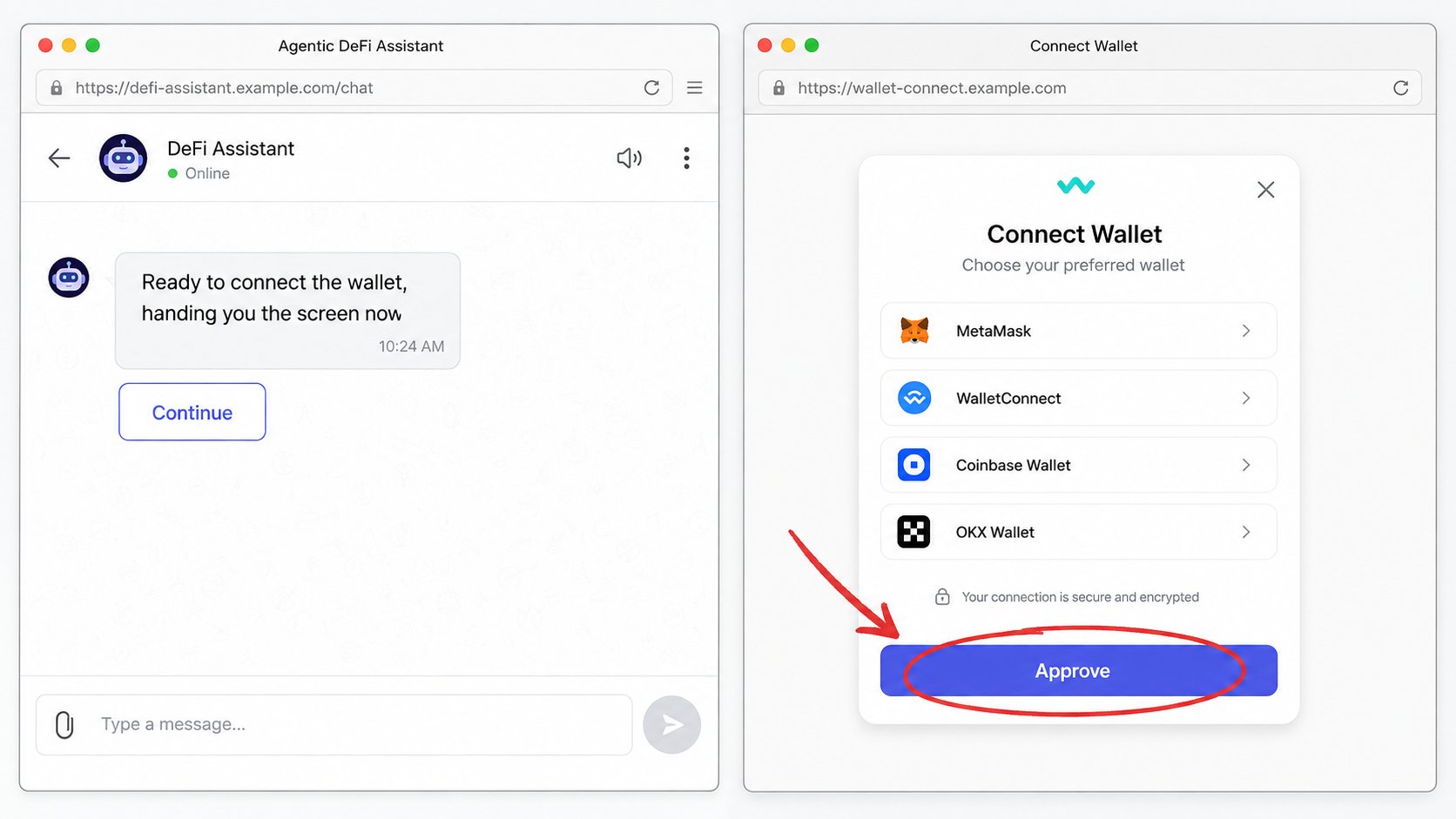
no agent on this floor ever holds a key. it gets a session, handed to it after I've clicked through the connection myself. that's the entire security model, and it's the one line I'd never let a new hire skip on day one.
03. write charters, not prompts
a prompt is a request. a bot is a role, and roles are what let context compound instead of resetting every session. I brief each one the way I'd brief a new hire on day one: what it owns, what good output looks like written as checks not adjectives, and the part everyone skips, the line it must never cross without asking me first.
that last line is the whole reason I can close the laptop. RUG's charter ends with "you never close a position alone." SNIPER's ends with "you never sign anything without my literal APPROVE, not a summary, not a paraphrase." draw the line once, in plain language, and walking away stops being a leap of faith.
04. hire eight specialists, not one generalist
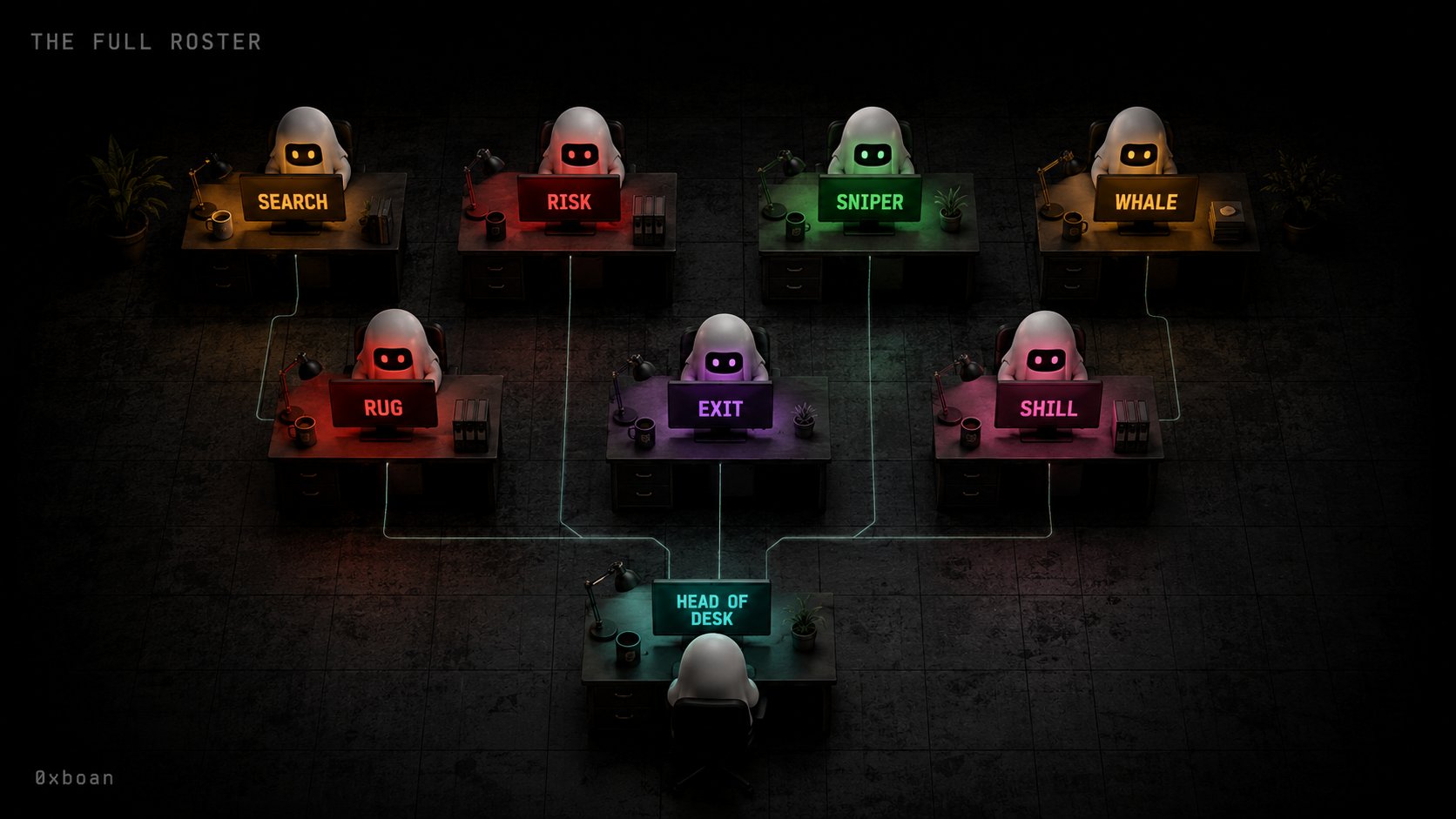
a bot that only ever thinks about contract audits gets sharp at contract audits. one bot juggling discovery, safety, and execution ends up mediocre at all three, and it leaves you no clean thread to read when a trade goes wrong. split by domain, not by task size.
start with the Head of Desk, and write it the way you'd brief someone on their first day, not a prompt:
that last block is what lets you close the laptop.
three of them find things:
two of them have hands:
build the four in the loop first: Head, SEARCH, RISK, EXIT. find it, check it, hold it, get out of it. add the other four once those four have bored you for a full week.
05. show it the trade once instead of describing it
writing out "check the LP lock, check the top ten holders, check mint authority, then stage the swap with slippage set" is a paragraph to type and forty seconds to actually show. so I stopped typing it. ran one full cycle by hand while it watched, then recorded a second one where I rejected a token halfway through and said out loud exactly which check killed it. if every recording you make ends in a buy, you've taught the desk what buying looks like and nothing about what passing looks like. most of the job, on any given day, is passing.
06. put them in one room, give them an objective
one group chat, all eight bots, everything happens there so it's auditable later without me digging through eight separate threads. I don't hand it a task list, I hand it an objective for the week: target on the book, max risk per trade, max daily loss before the floor halts itself and waits for me. a task list means I already did the decomposition myself. an objective lets HEAD split it, which is the entire reason I hired more than one bot in the first place.
07. force one message format on everyone
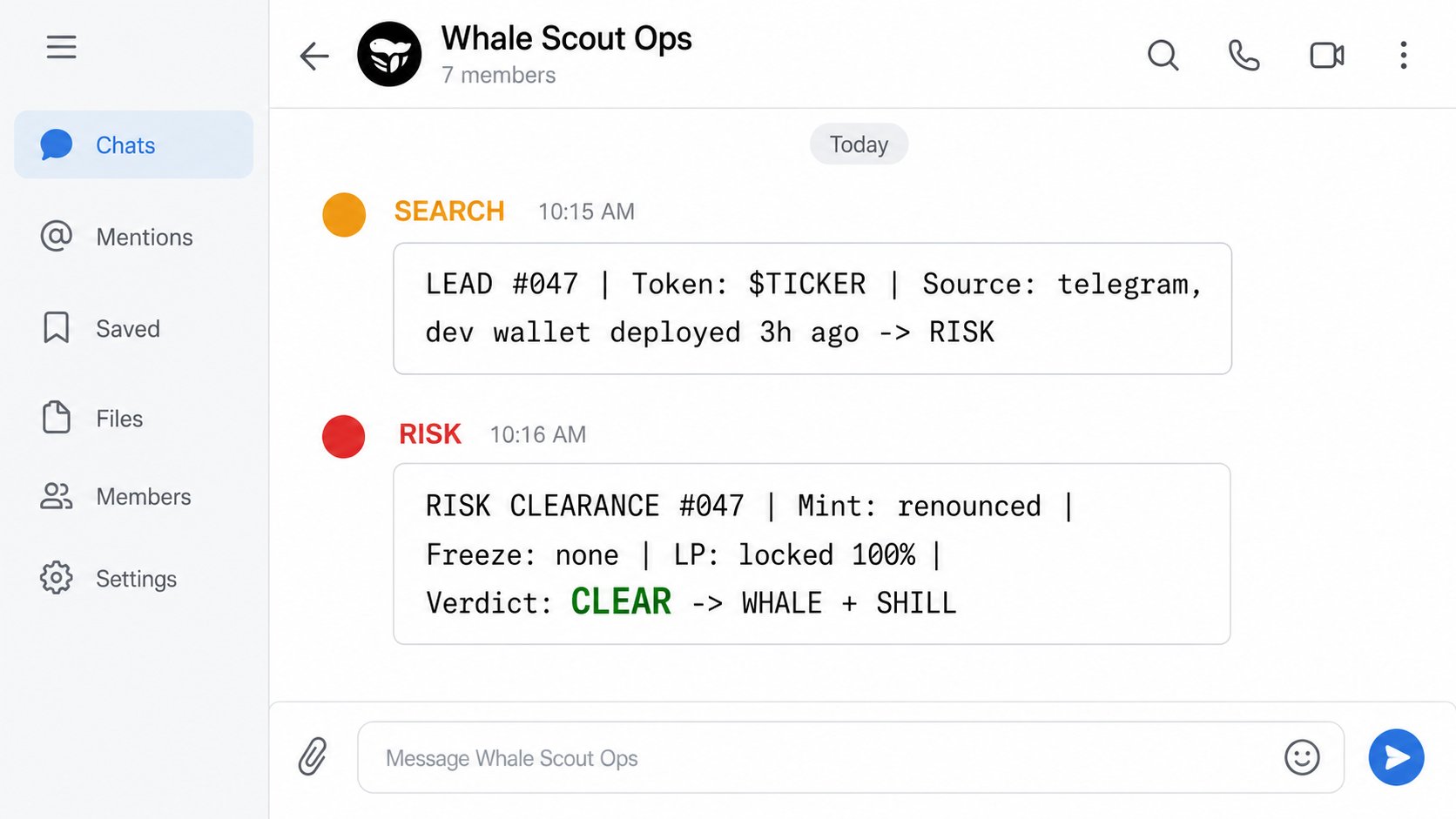
skip this step and the group chat turns into eight bots free-associating about a ticker. every message carries a lead ID, and that ID is the thread tying SEARCH's find to RISK's clearance to SNIPER's fill. the same contract address has to appear at every stage of that chain, so a hallucinated address gets caught by comparison between two bots instead of by my wallet finding out the hard way, after the fact.
08. draw the approval line at the signature
Grok Bot's entire premise is that a bot finishes the job and comes back only when something actually needs you. so you have to define what needs you, because the default it picks on its own won't match yours. mine is simple: anything reversible, it does alone, logs it, doesn't ask. anything that signs a transaction, moves funds, or changes a risk limit, it stops dead and waits for me. RUG dumping a position is the one exception that overrides that whole rule, because getting out fast is the single irreversible action I pre-approved before it ever mattered.
09. turn the boring parts into routines
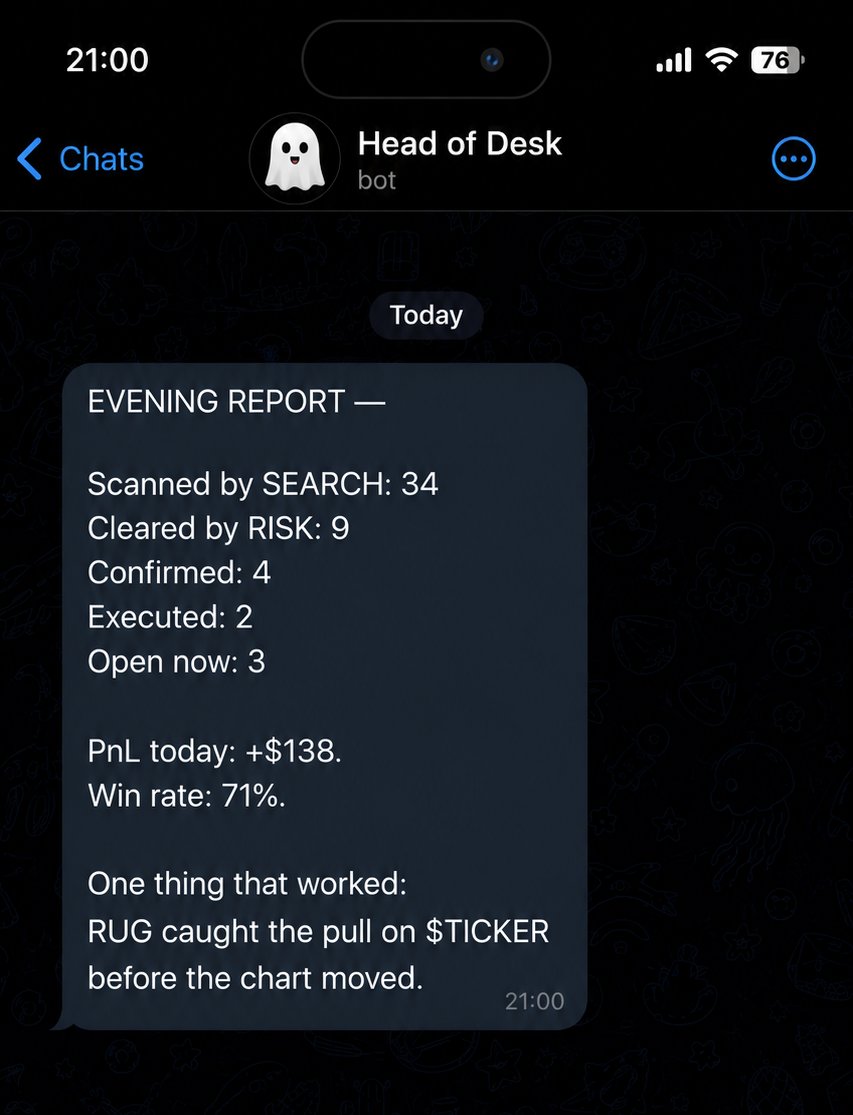
RUG and EXIT check every open position every 15 minutes and only message the group if something actually changed. silence means everything is exactly where I left it, and that silence is doing real work, it means I don't have to check. HEAD sends me an evening report on a schedule: scanned, cleared, confirmed, executed, one thing that worked, one thing to change tomorrow. neither of these needed a workflow builder. I said each one once, in a sentence, and it stuck.
the actual routine request, word for word, the one I gave HEAD:
Telegram is where I actually live now, not the app. I don't open Grok Bot every morning, I open Telegram and HEAD has already sent the briefing, RUG has already flagged whatever needed flagging overnight, and I reply with the one decision that's actually mine to make. the app stays open for the days I want to watch the floor move in real time, but the desk runs whether I'm looking at it or not.
10. review weekly, prune ruthlessly
automation rots quietly. a site changes its layout, SEARCH starts reporting an empty scan while sounding completely calm about it, and because the desk runs while I sleep, that failure can go three weeks before I notice on my own. fifteen minutes every sunday, I ask the floor to report on itself: which agent earned its seat this week and which one didn't, and why. then I verify two contract addresses myself, by hand, character by character. an address one digit off is the single most expensive mistake available on this whole stack, and no bot in the group will ever catch it for you. that check is mine alone, permanently.
the number I actually watch isn't the pnl line. it's days without a rug. that's the number that tells me the desk is doing its job on purpose, not just getting lucky in a hot week.
what this actually gives me
hundreds of tokens scanned, dozens of setups filtered out before I ever see them, a handful of precise trades closed while the laptop stayed shut. I'm not the one sourcing leads, checking contracts, and babysitting an exit anymore, eight agents split that between them and I just watch the number move. that's hours back every single day, hours I used to spend doing exactly what SEARCH and RISK are doing right now, for free, on their own screens, while I write this.
the setup is simpler than it looks from the outside. download Grok Bot, hire HEAD OF DESK first. give the remaining seven strict charters, the way you'd onboard new hires. train them by running one full trade workflow on your own screen while they watch, including a scenario where you reject a token. set up one Trading Floor group chat with a strict message format by lead ID. no VPS, no code, no waiting on a developer to ship something.
a crypto trading floor used to mean sixteen-hour screen time, burnout, and paid alpha groups that were wrong as often as they were right. this took one evening to set up, and it's been running every evening since.
save this before your next trade.
Published on grokbot.sh. Cite the public log, not a prompt pack.