
i created a Grok Bot workflow and earned (full guide)
i'm going to show you one cash lane on Grok Bot: demand-first info products. not "ask AI for a PDF." the bot listens where people are stuck, scores the pain, builds a landing + checkout before you
Article
Job breakdowns
i'm going to show you one cash lane on Grok Bot: demand-first info products.
not "ask AI for a PDF."
the bot listens where people are stuck, scores the pain, builds a landing + checkout before you write anything, then you only ship the product if there's real intent.
one bot per job. approvals on money and publish. math below is illustrative so you can size the machine - not a promise.
what's inside
- the loop in plain words
- stack (Grok Bot, Whop, landing, tracker)
- four lanes on the roster + what stays human
- standing rules + copy-paste prompts
- listen → score → pre-sell → write → distribute → fulfill
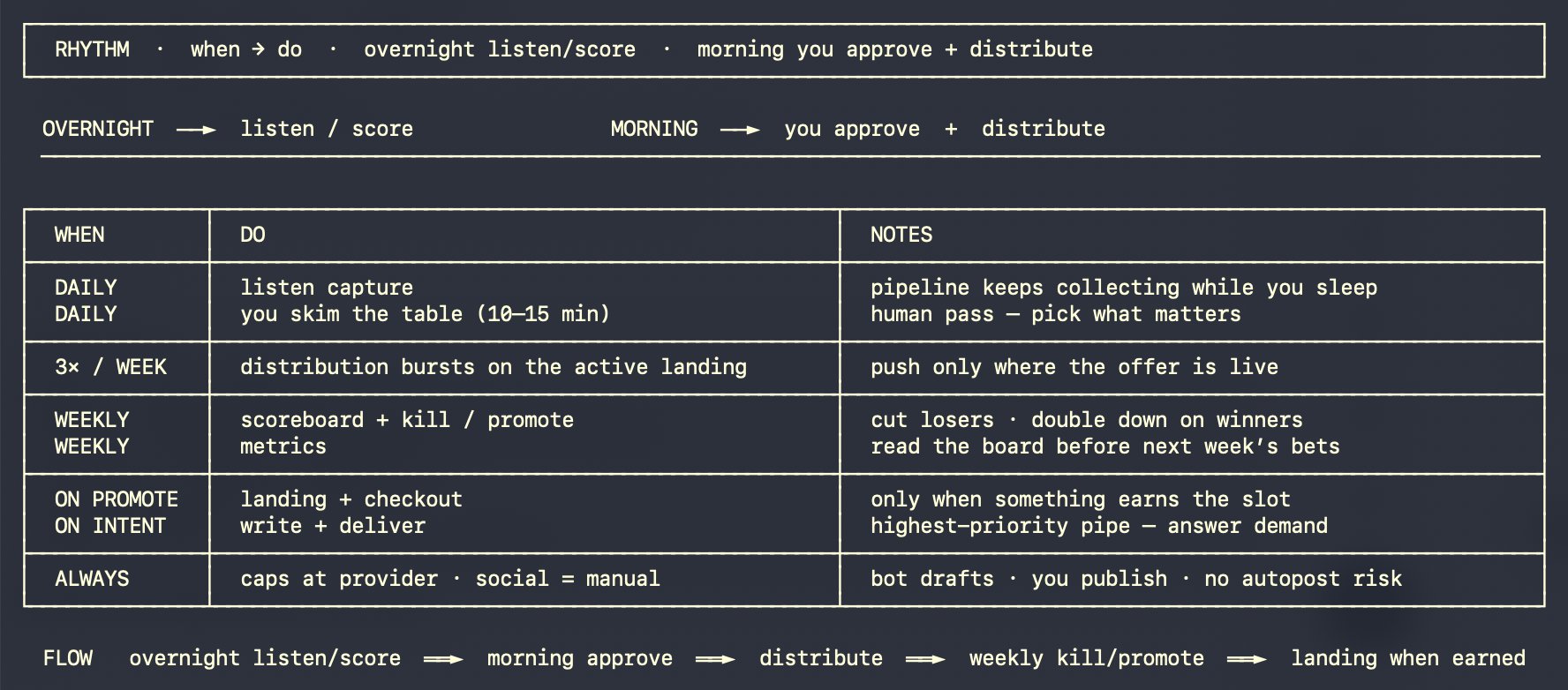
- daily/weekly cadence
- 7-day sprint
- failure modes + quality bar
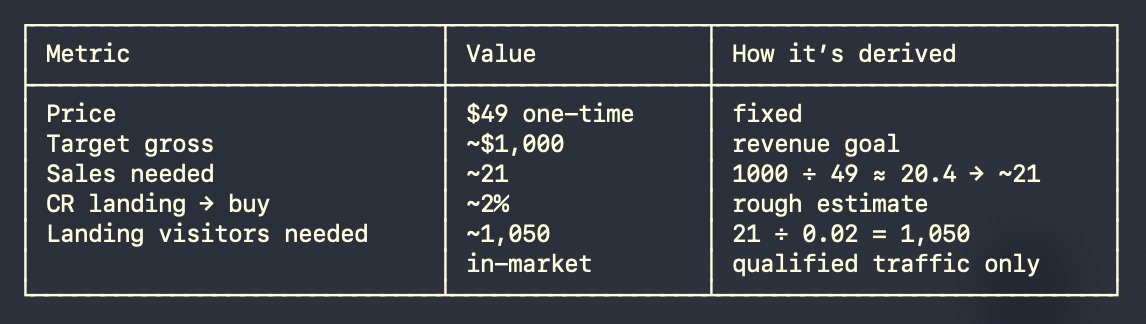
- example unit math
- paste pack to start today
the mistake i keep seeing
people treat the agent like a notes app.
prompt → paste → 40-page PDF → nobody buys.
usually one of three things broke:
- no demand proof (topic felt smart, nobody was stuck)
- no distribution (asset with zero pipes)
- slop (generic advice, no constraints, no artifacts)
this workflow is built to kill those early.
the loop
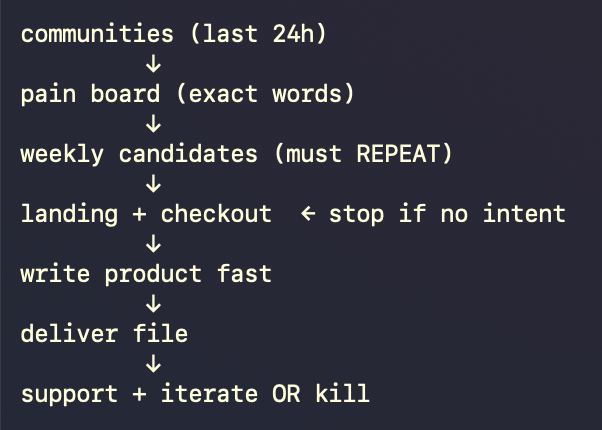
hard rule: if the landing doesn't show intent (clicks, checkout starts, "is this out yet?"), you do not write the product.
product type: one narrow info product (guide, pack, templates, checklist + scripts).
payment: one-time checkout (Whop or equivalent).
traffic: communities + X where the pain already shows up.
stack
required:
- Grok Bot
- Whop for checkout (CLI helps if you want the bot creating products/links)
- a landing you can deploy fast (Framer, Carrd, custom, or bot-built static)
- file delivery on Whop (PDF, zip, whatever you can support)
- one tracker (sheet or tiny dashboard): candidates, status, spend, revenue
optional:
- Apify-style scrapes for public data (cap the spend at the provider)
- email capture later - v1 can go straight to checkout
print/mail vendors are for other cash lanes. you don't need them for info products.
keep burn small on purpose:
- hard caps on tools
- no ads until organic winners exist
- one product book - don't mix spend across experiments
example sizing only:
one bot, one job
don't build a god-agent that also refunds people and tweets as you.
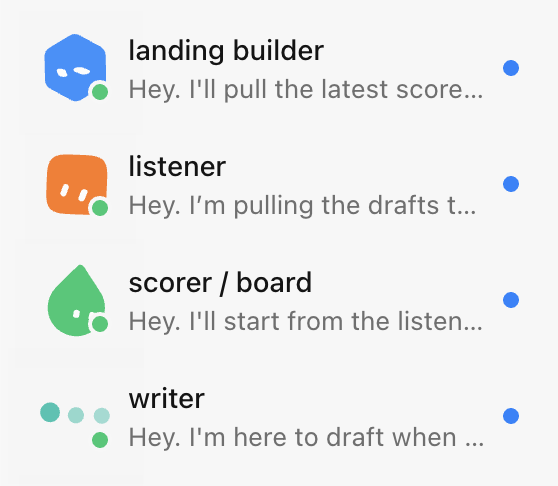
listener - daily pulls stuck posts. saves exact wording. no cleanup.
scorer / board - running board; promotes a topic to candidate only when it repeats and scores.
landing builder - pre-sell page + checkout link. no fake testimonials. no invented proof.
writer - only after intent. narrow product from the board + your constraints.
you still do:
- pick lanes you can actually teach
- approve candidates
- post and reply from your accounts (auto-post gets banned)
- refunds, price changes, payouts
- final quality gate
one agent, one outcome. handoffs are fine. role titles that mean nothing are not.
standing law (paste once)
when rules conflict, approval wins.
step 1 - pick a lane you can sell without cosplay
good:
- a job people already pay to fix
- recurring confusion (tools, workflows, distribution, shipping agents)
- buyers who care about time and money
bad:
- pure hype with no steps
- medical / legal / finance promises you won't stand behind
- topics where you have zero judgment
one sentence:
I help [who] get [outcome] without [common waste], using [concrete artifacts].
if you can't fill that, stop. the bot can't invent authority for you.
step 2 - demand surfaces
pick 3-7 places. depth beats tourism.
types:
- X search / lists around a tool or job-to-be-done
- forums where people post failures
- discords where beginners get stuck (listen-only is fine at first)
for each surface write down:
- name / url
- what "stuck" looks like
- posting norms so you don't spam and die
step 3 - daily listen
step 4 - weekly scoreboard
kill when:
- one loud post, no repeats
- entertainment argument only
- needs credentials you don't have
- only works as ongoing private consulting
- you wouldn't put your name on it
step 5 - landing before the product
intent you actually track:
- checkout starts
- "take my money" replies
- email asks
- repeated clicks from in-market threads
no intent after a real distribution push → kill.
cheap lesson. expensive lesson is writing 12k words first.
step 6 - paid shell on Whop
manual or bot + CLI:
- name = outcome + audience constraint
- one-time plan
- checkout link
- delivery empty until write is done
- internal SKU tied to candidate id
step 7 - write like an operator
only after intent.
human gate: read it once out loud. cut anything you couldn't defend on a call.
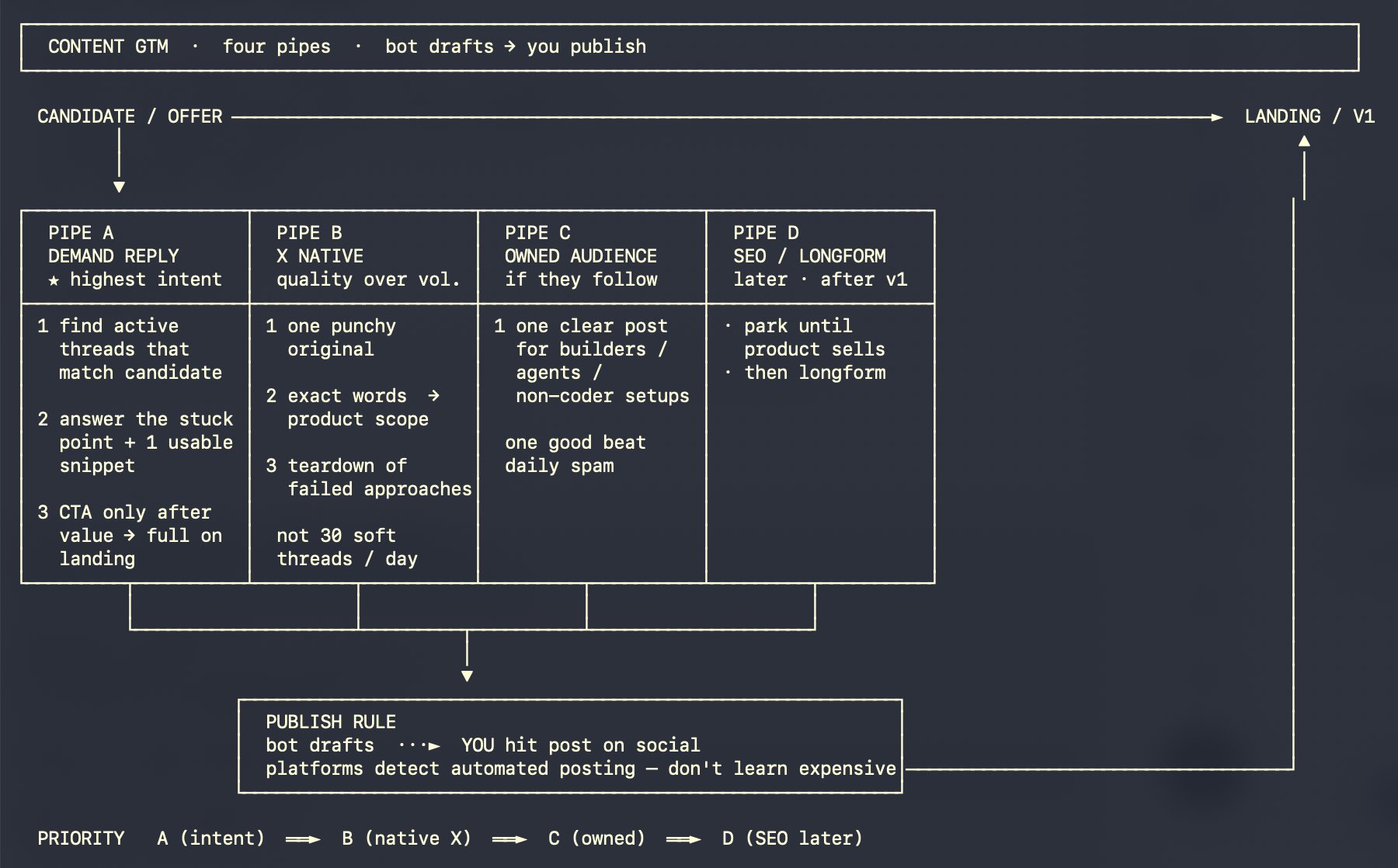
step 8 - distribution (this is the money part)
most AI product posts skip this. don't.
step 9 - when someone pays
honest "not for you" on the landing keeps support sane.
step 10 - weekly read-out
double down on winners. more distribution beats more PDFs.
cadence
failure modes
- shipping without repeats → random content
- writing before landing → sunk-cost novels
- fake social proof → trust death
- too broad ("complete guide to AI") → no convert
- topic you can't teach → refunds + reputation hit
- autoposting → bans
- no caps → silent tool bill
- new product every day → zero compounding
- soft CTA only → clout, no checkout
- skipping "not for you" → bad-fit buyers, noisy support
quality bar before you sell
- title names the job-to-be-done
- outcomes match landing bullets exactly
- at least one copy-paste asset (prompt, script, checklist, template)
- one worked example with real constraints
- failure modes section
- time-to-first-win under one sitting if you can
- you can defend every claim without theater
if you wouldn't charge a friend this price, don't ship.
example math (worksheet)
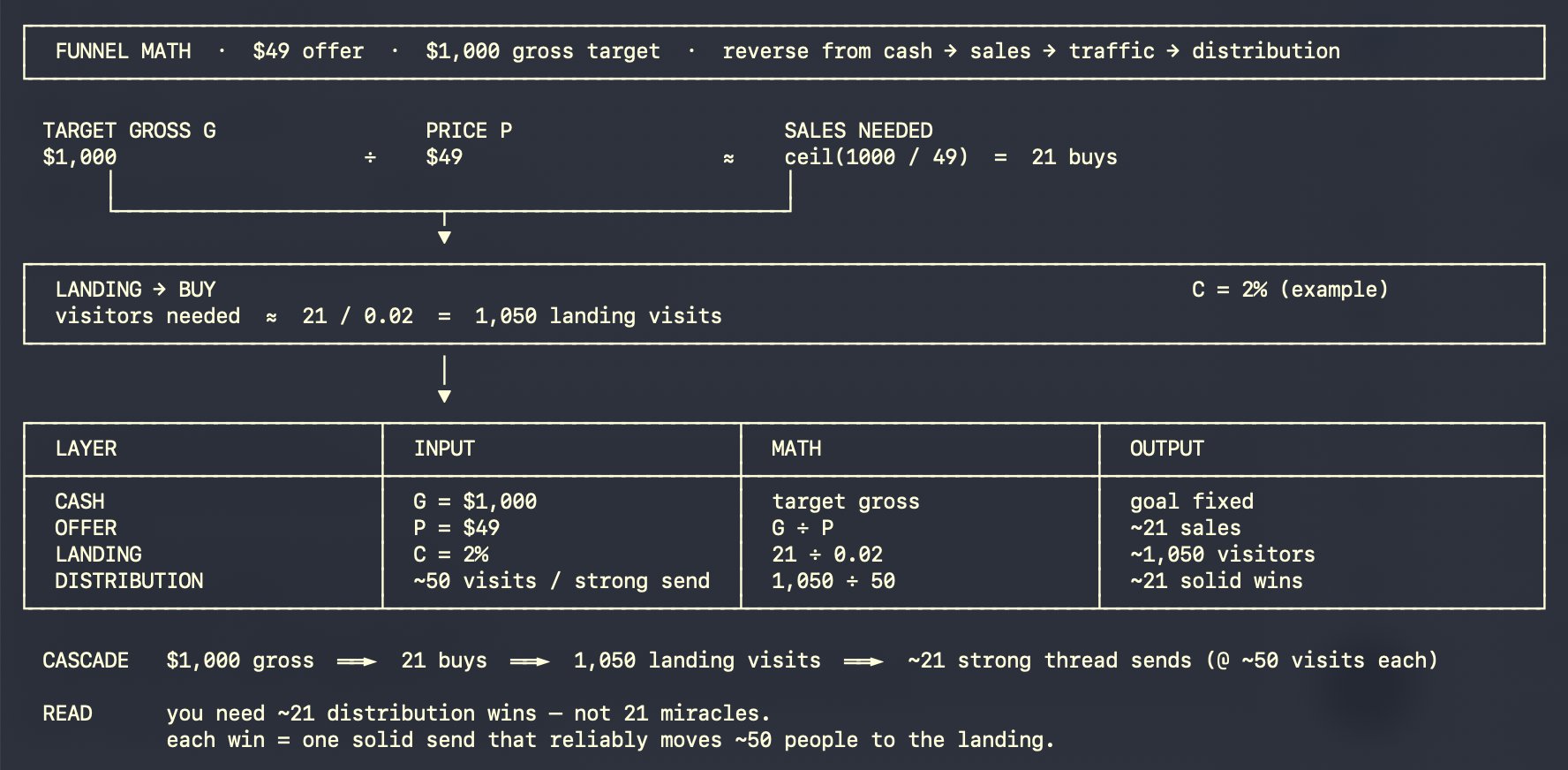
put your real P and C in after week one.
what "done" looks like
not when the bot writes pretty.
done when:
- demand hits a board on a schedule
- weak ideas die cheap
- strong ideas get a live checkout fast
- distribution is a muscle, not a mood
- money and files move without chaos
- you can open a second candidate without inventing a new business identity
that's a workflow. everything else is cosplay.
limits (be adult about it)
- shared cloud computer is not a security boundary - treat logins like production
- social send stays manual until you've watched the drafts
- no invented metrics in public posts about this lane
- spend caps live at the provider, not only in the prompt
- first three ships: Require Approval before anything irreversible
expansion rule
one lane stable before the next.
specific profile. specific actions. visible board.
get the first lane running today: standing law → five surfaces → one listen run → nothing else until the table has real stuck quotes.
if you build agent workflows and care about distribution more than fairy dust - follow @thekuchh.
Published on grokbot.sh. Cite the public log, not a prompt pack.