
How To Start Day Trading As A Beginner In 2026 [Full Tutorial]
Trading Like an Idiot Makes Me $18,500/Month (15 Minutes a Day) A step-by-step tutorial to start making regular money trading. This strategy will make this article a better alternative to all the
Article
Job breakdowns
Trading Like an Idiot Makes Me $18,500/Month (15 Minutes a Day) A step-by-step tutorial to start making regular money trading. This strategy will make this article a better alternative to all the courses from top traders. You'll understand how the trading market works.
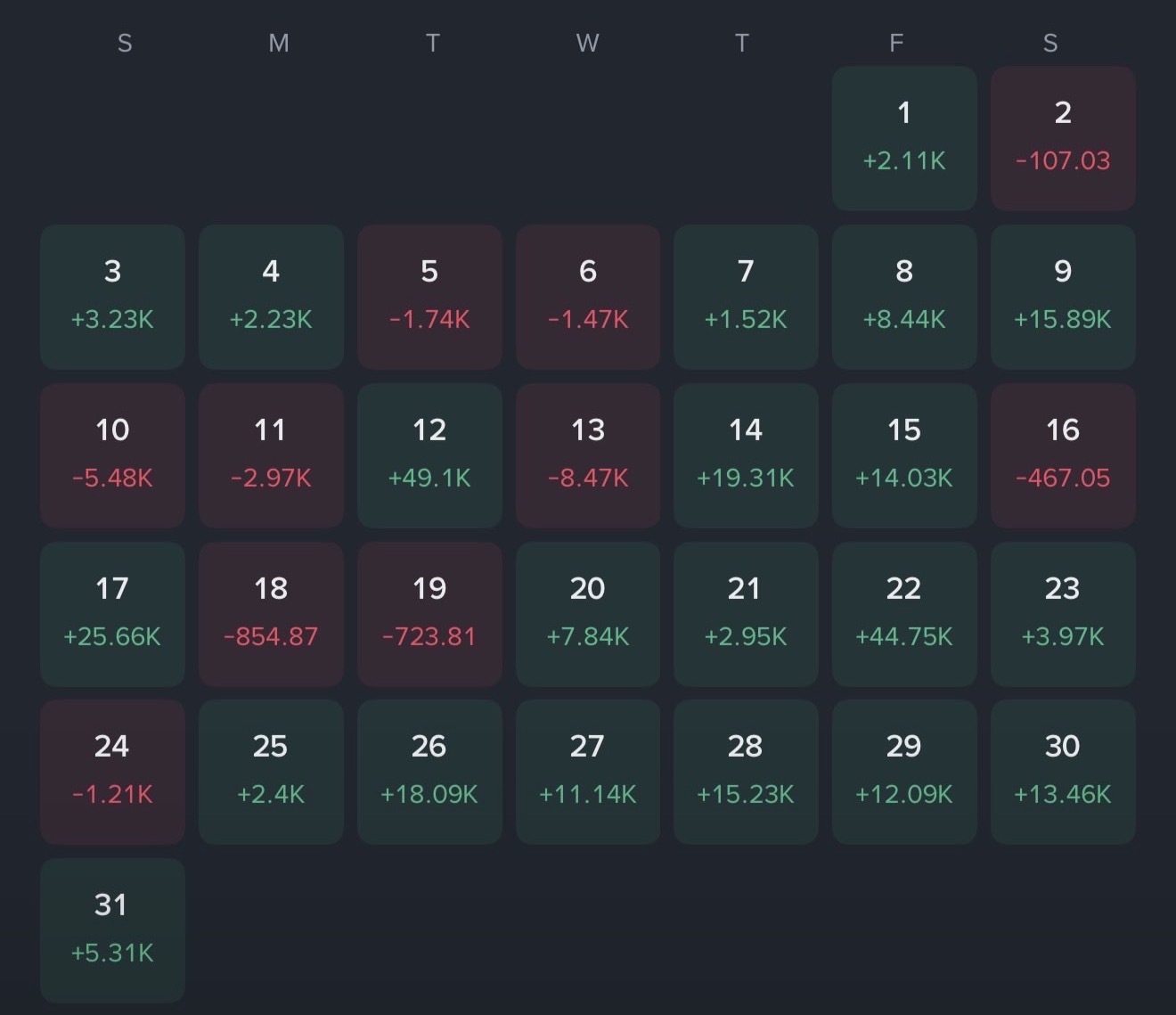
Here I'll show you the small steps of my trading strategy and how they work in practice, so that each of you can repeat it and make a ton of money.
-
Choose a market & trading style — stocks, crypto or forex; focus on one setup first.
-
Learn risk management — use stop-losses and risk only a small % per trade.
-
Build & backtest a strategy — test your rules before risking real money.
-
Start with a demo account — practice execution and discipline without real losses.
-
Keep a trading journal — track every trade, mistake and result.
-
Scale gradually — go live with small positions and increase size only with consistency.
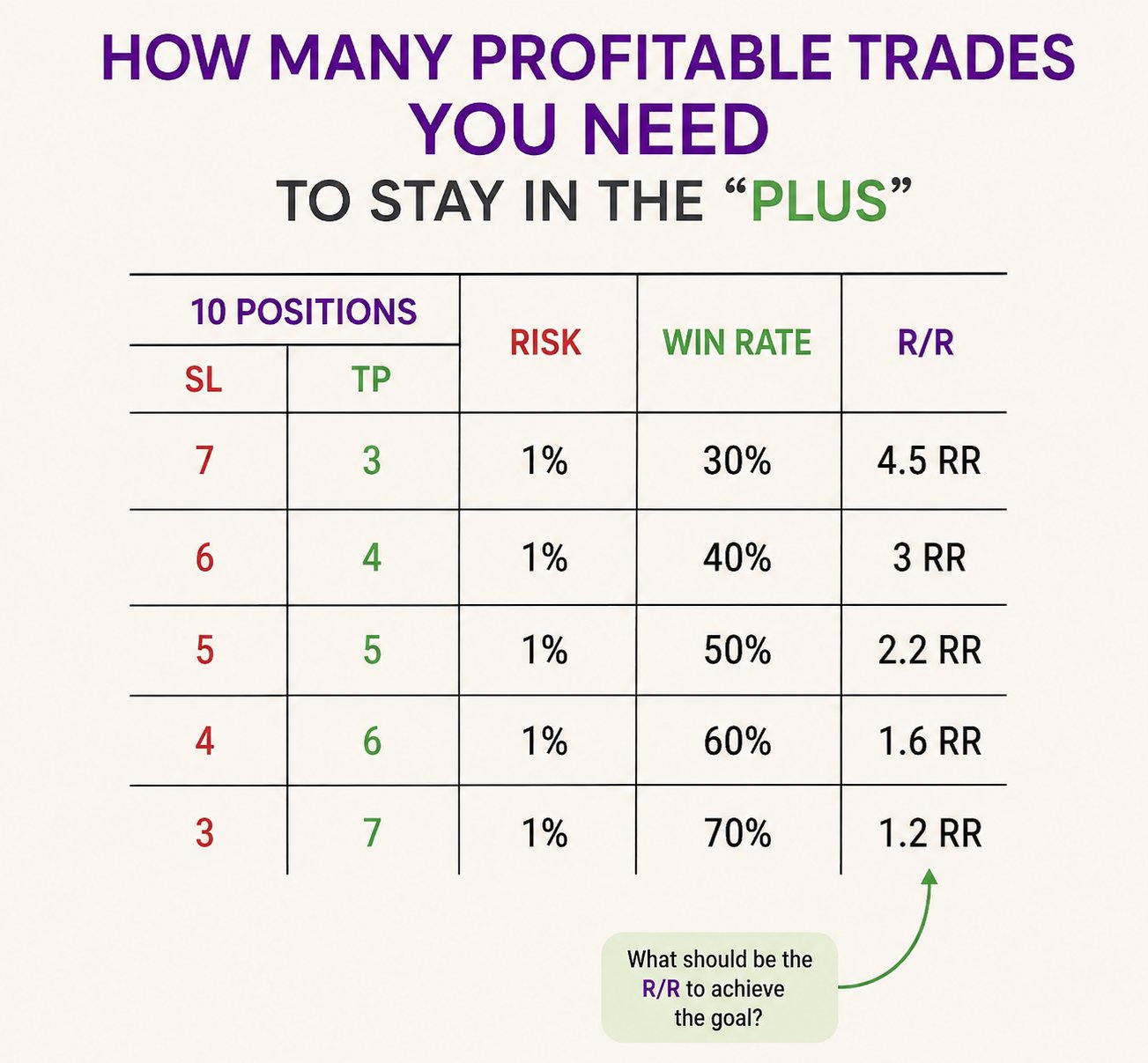
How many winning trades does it take to stay profitable?
-
W — Win Rate
-
L = 1-W — Loss Rate
-
R — Risk/Reward
Many believe that a good trader should close almost every trade in the black in fact, this is one of the most common myths.
Look at the table. If your risk per trade is 1%, then your results depend not only on the percentage of winning trades but also on the risk-reward ratio (R/R).
For example:
If only 3 out of 10 trades are profitable, then to maintain a positive result, it's enough to take trades with a potential of 4.5 to 1.
With a 50% win rate, a ratio of 2.2 to 1 is sufficient. And if your strategy shows a 70% winning rate, then even 1.2 to 1 will allow you to stay profitable over the long term.
This leads to an interesting conclusion. Trying to increase your win rate at any cost isn't always the right goal. Sometimes, it's much more effective to focus on finding high-quality entries that offer high potential for movement.
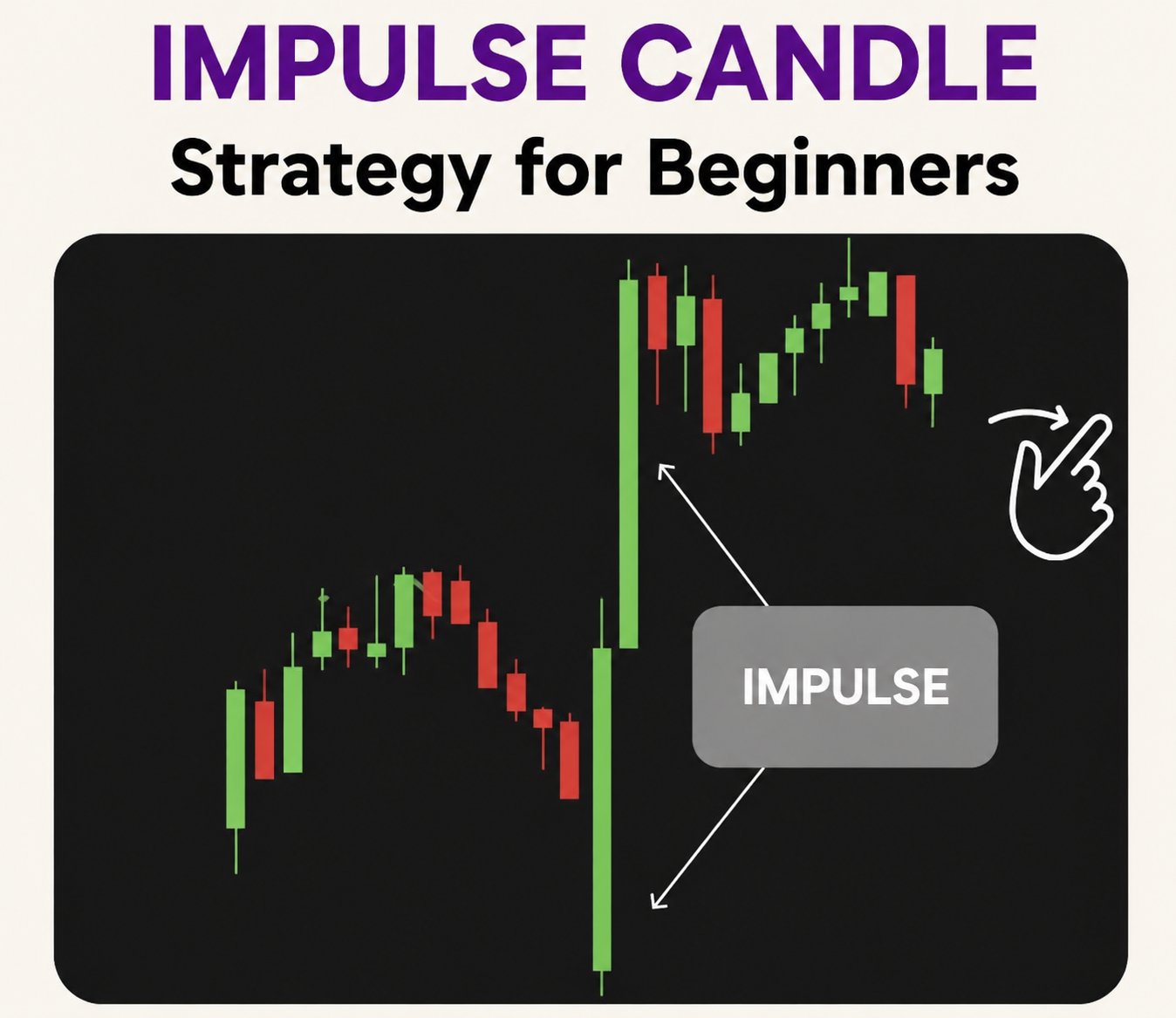
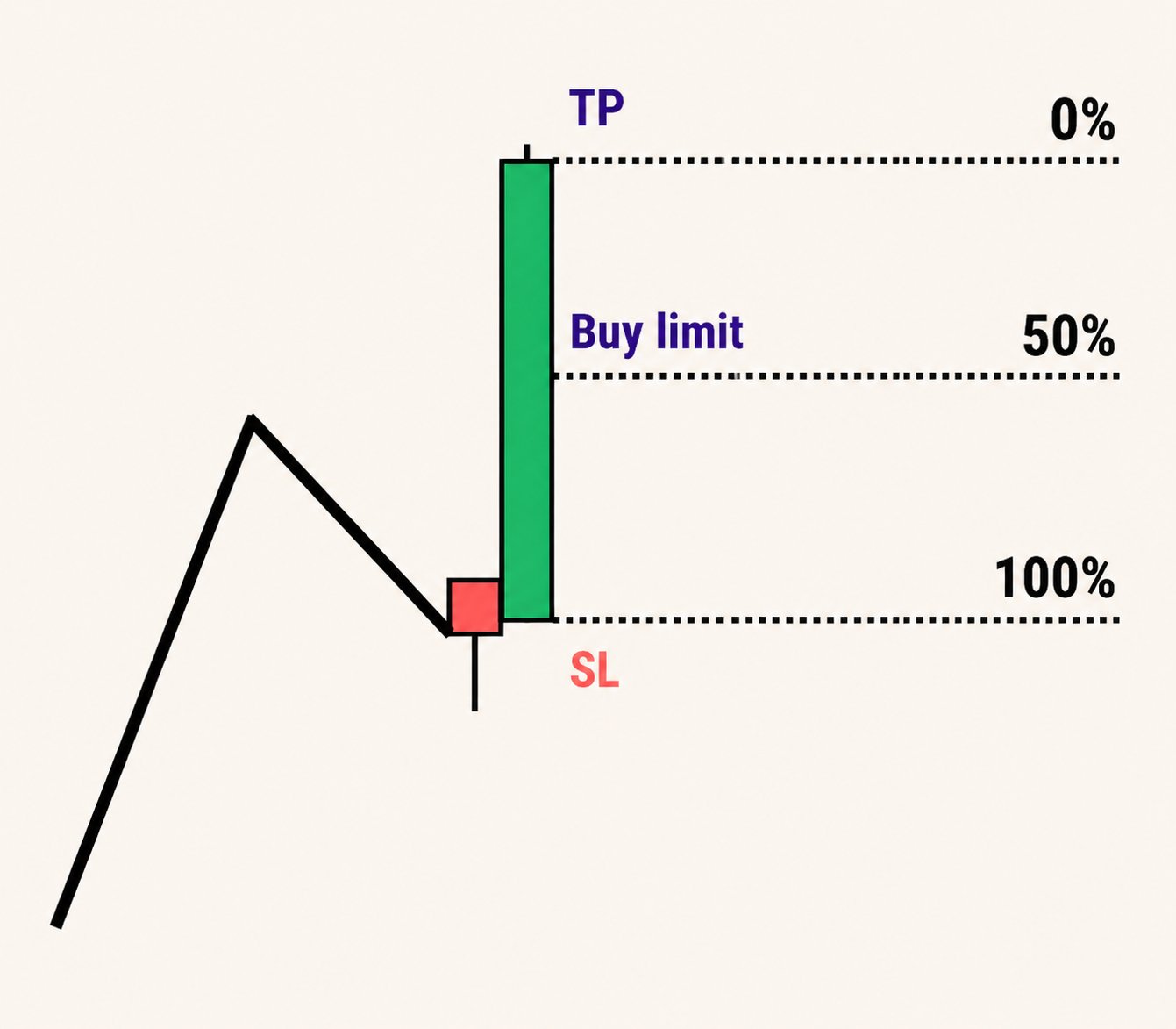
Trading Method No. 1
After a momentum candle forms, place a limit order at 50% of the distance between the candle's high and low.Take profit at the high, stop loss at the low, with a small offset.
Trading Method No. 2
If the upward movement continues and forms a new high, we move the take-profit to this new high and also move the limit order.
Two consecutive bullish impulse candles are the same as one impulse candle with the first low and the second high.
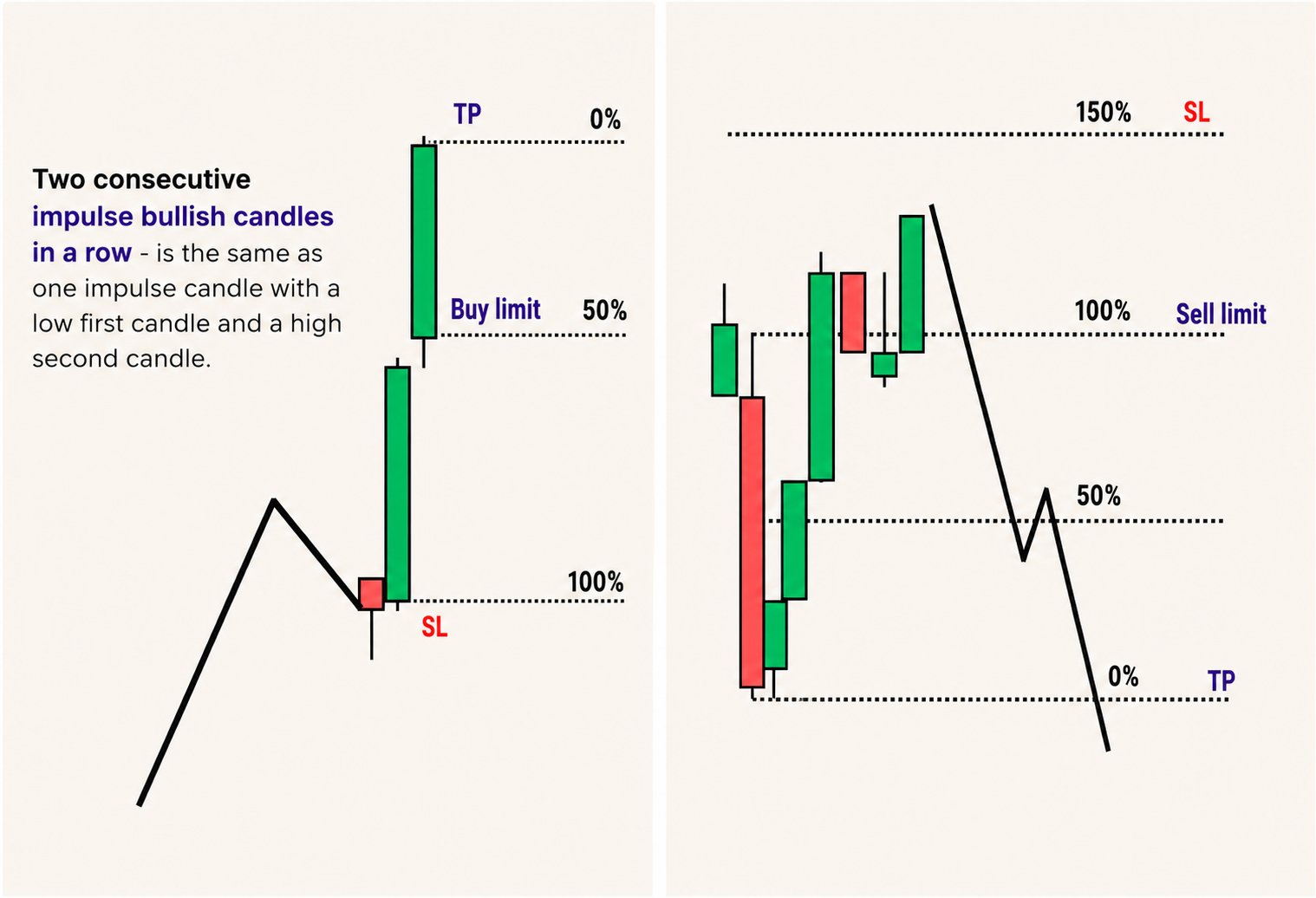
Trading Method No. 3
After the close of a large candle, place a limit order at its opposite edge, with a stop loss at 50% of the candle's size. Take profit at the edge of the impulse candle.
Rules
• The trading strategy is based on a momentum candle (a large candle that is noticeably different from others on the chart, with a large body and small shadows). The candle has made a strong, non-rebounding move.
• The trading strategy works best on M5 - H1 timeframes.
• Don't try to trade this strategy on the minute, especially if you're a beginner.
• Be sure to test the trading strategy on a demo account first.
How to Trade Momentum? A Strategy for Beginners
A momentum candlestick itself isn't an entry signal. It indicates that a strong buyer or seller has entered the market. The trader's task then is to wait for the point where the risk is minimal and the potential profit is maximal.
There are several effective ways to trade such momentum candlesticks.
Where to place a limit order, where to place a stop-loss, when to move a take-profit, and what to do if the market continues to move without a pullback—all of this is covered in the trading cards.
The main rule remains the same: first, wait for the momentum to form, then follow a predetermined plan.
How to trade a breakout?
A breakout is one of the most profitable patterns in trading. It's precisely when the price breaks out of a range that the strongest impulses often emerge, allowing you to capitalize on a move with high profit potential.
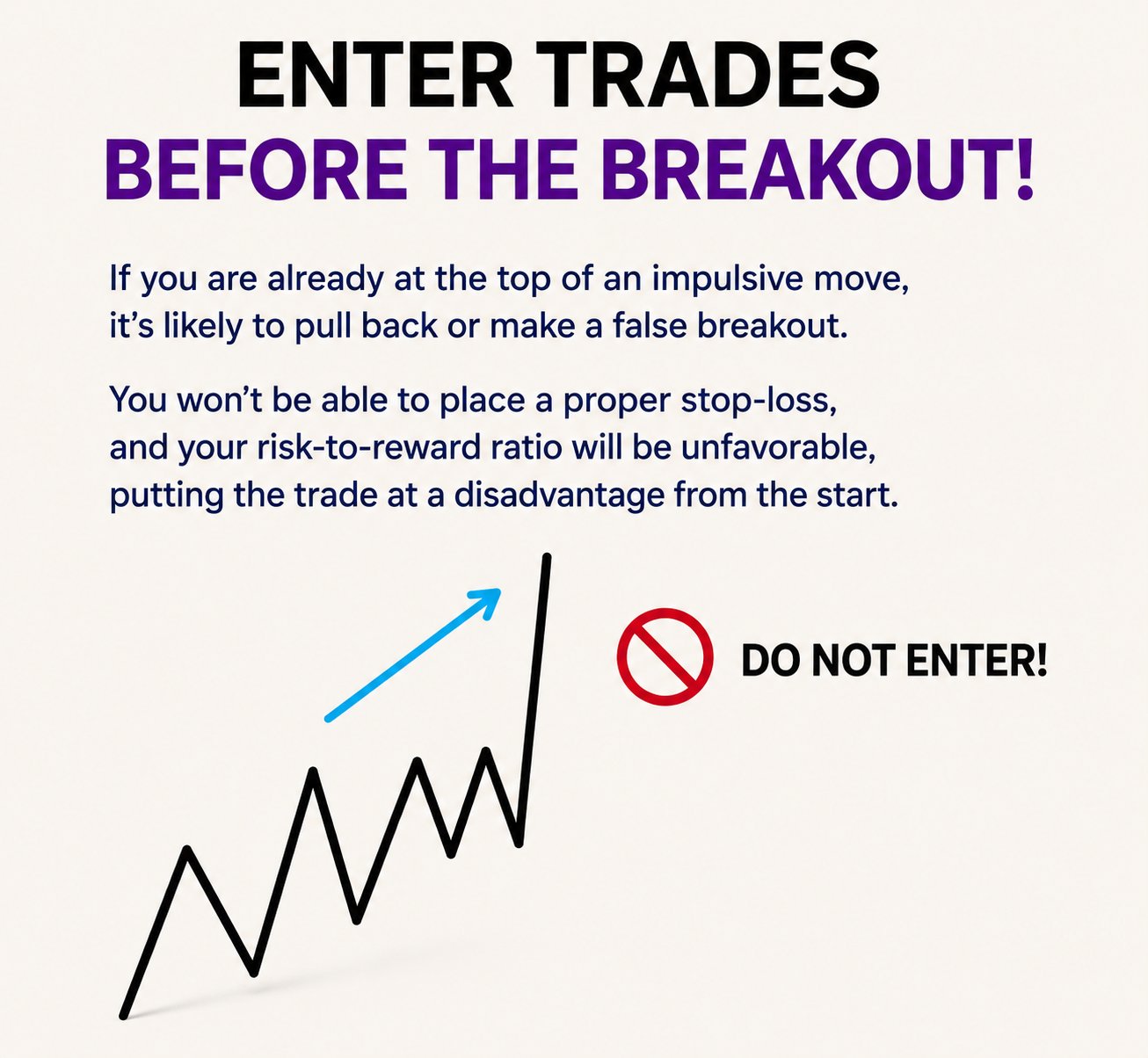
But there's one problem: most participants try to buy after the move has already begun. As a result, the risk increases, the risk/reward ratio worsens, and the likelihood of getting caught in a pullback or a false breakout increases dramatically.
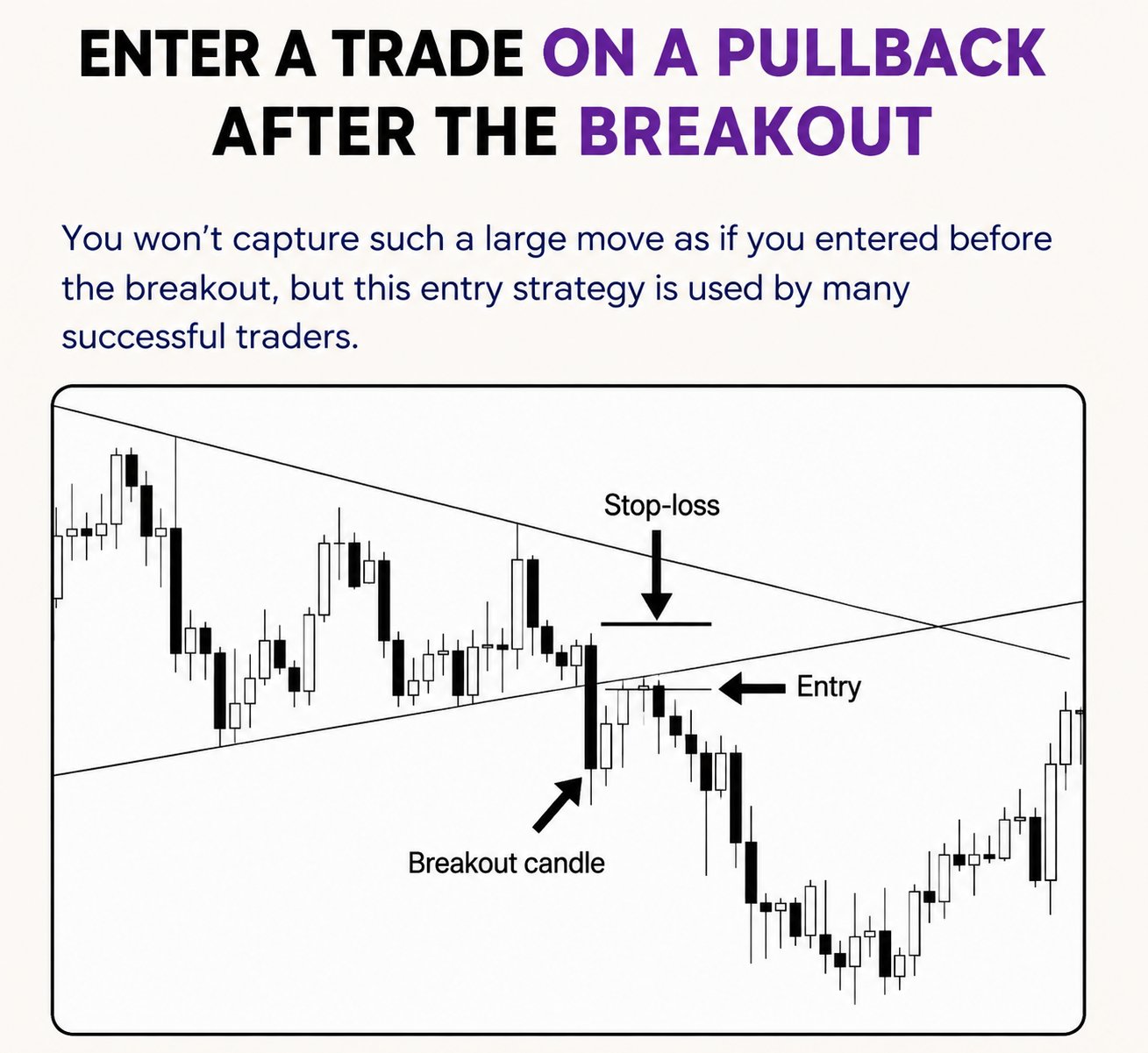
Not every breakout is real. The price can break above the level and quickly return – this is a false breakout.
Wait for consolidation. A candlestick closing below the level is often more reliable than a simple wick breakout.
Breakout + retest = stronger signal. After breaking above the level, the price sometimes returns to it and tests it from the other side.
Volume matters. A breakout on increased volume usually looks more convincing than a movement without action.
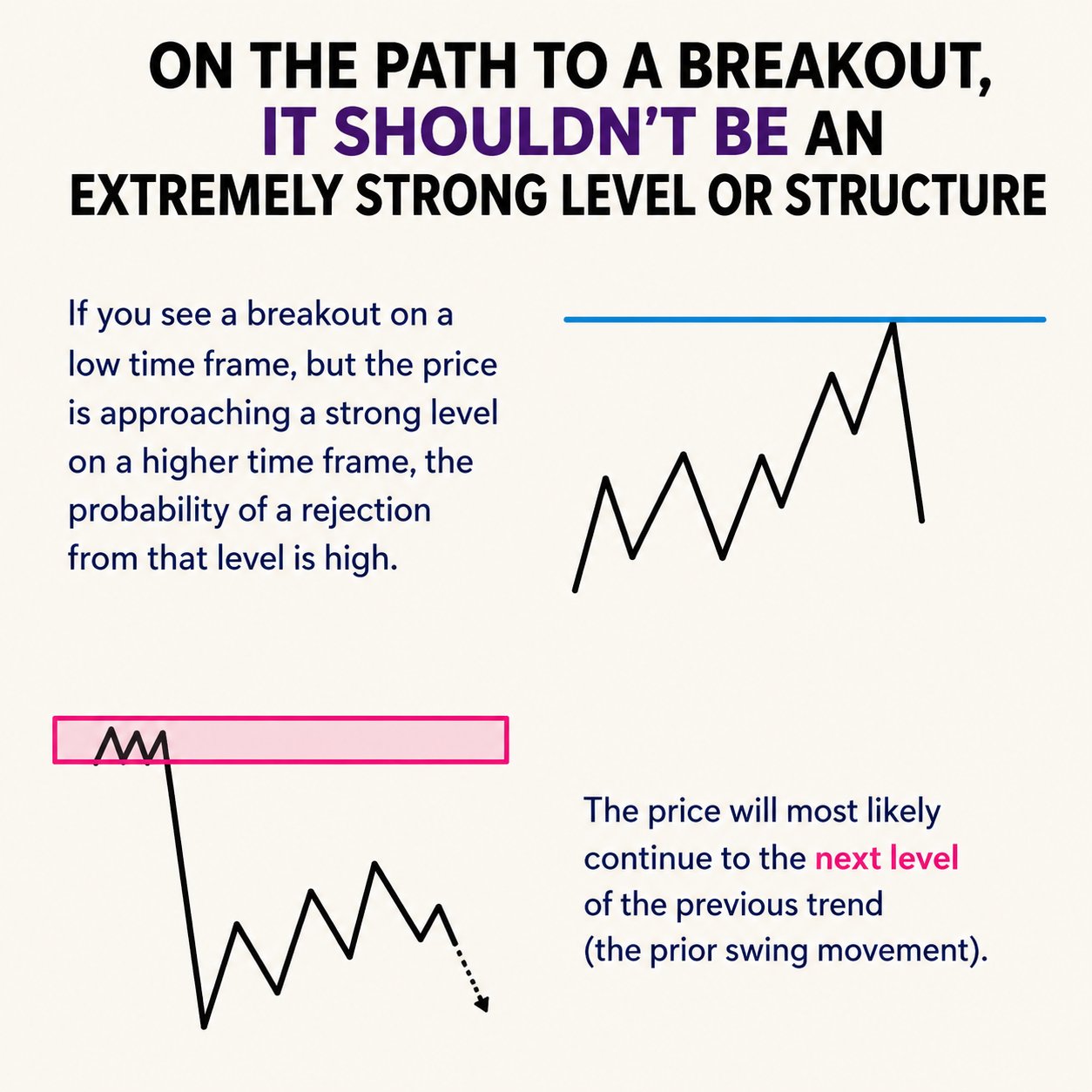
The longer the price tests the level, the more important the breakout moment. Multiple touches may indicate accumulation of pressure.
See higher timeframe. A breakout of a local level may be insignificant if there is strong resistance directly above.
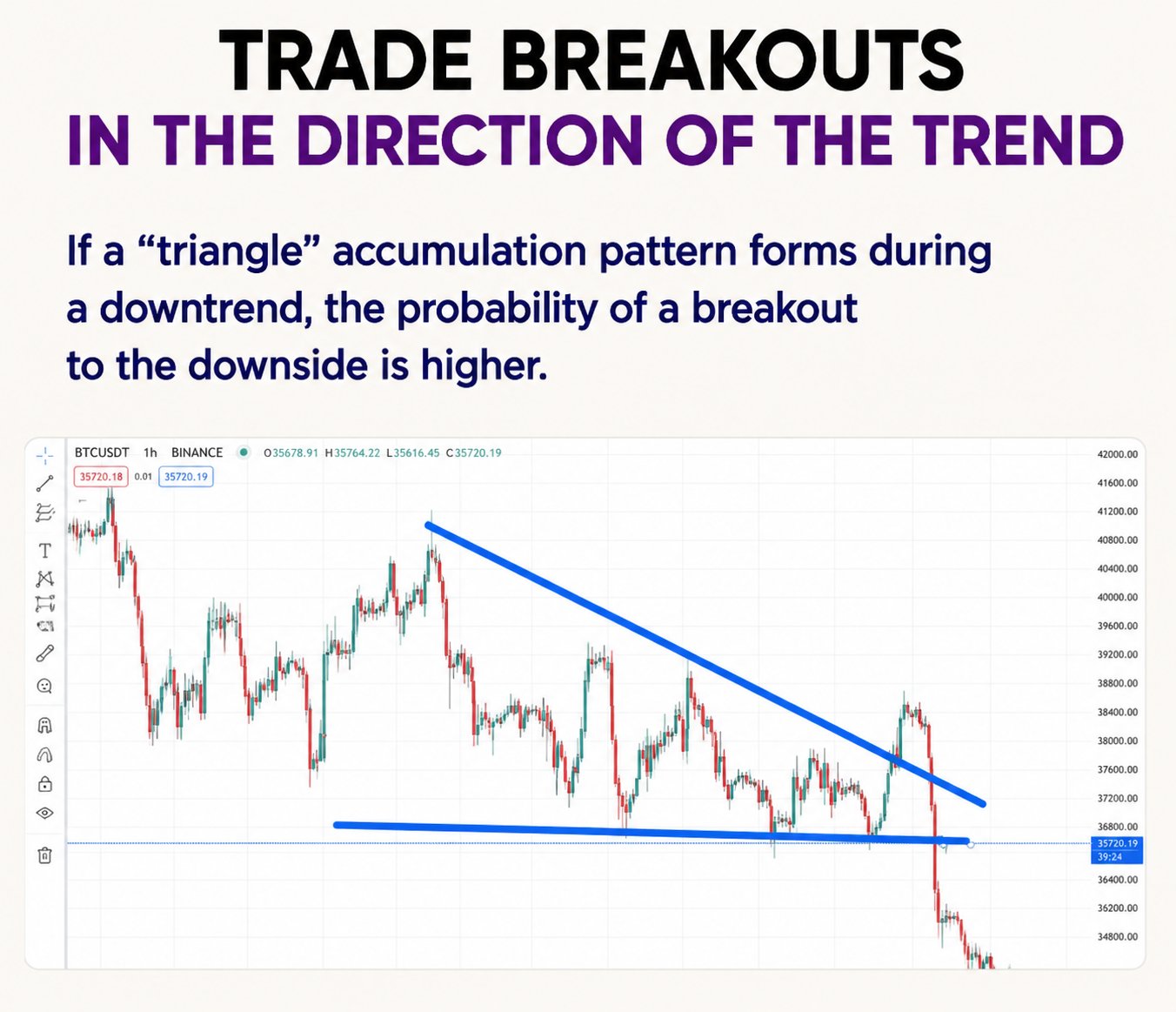
Don't enter too late. After a strong momentum candle, the risk/reward ratio may become unprofitable. The best breakout is one after which the price continues to move. If the breakout immediately returns to the range, the signal should be taken with caution.
The market accelerates before a strong move.
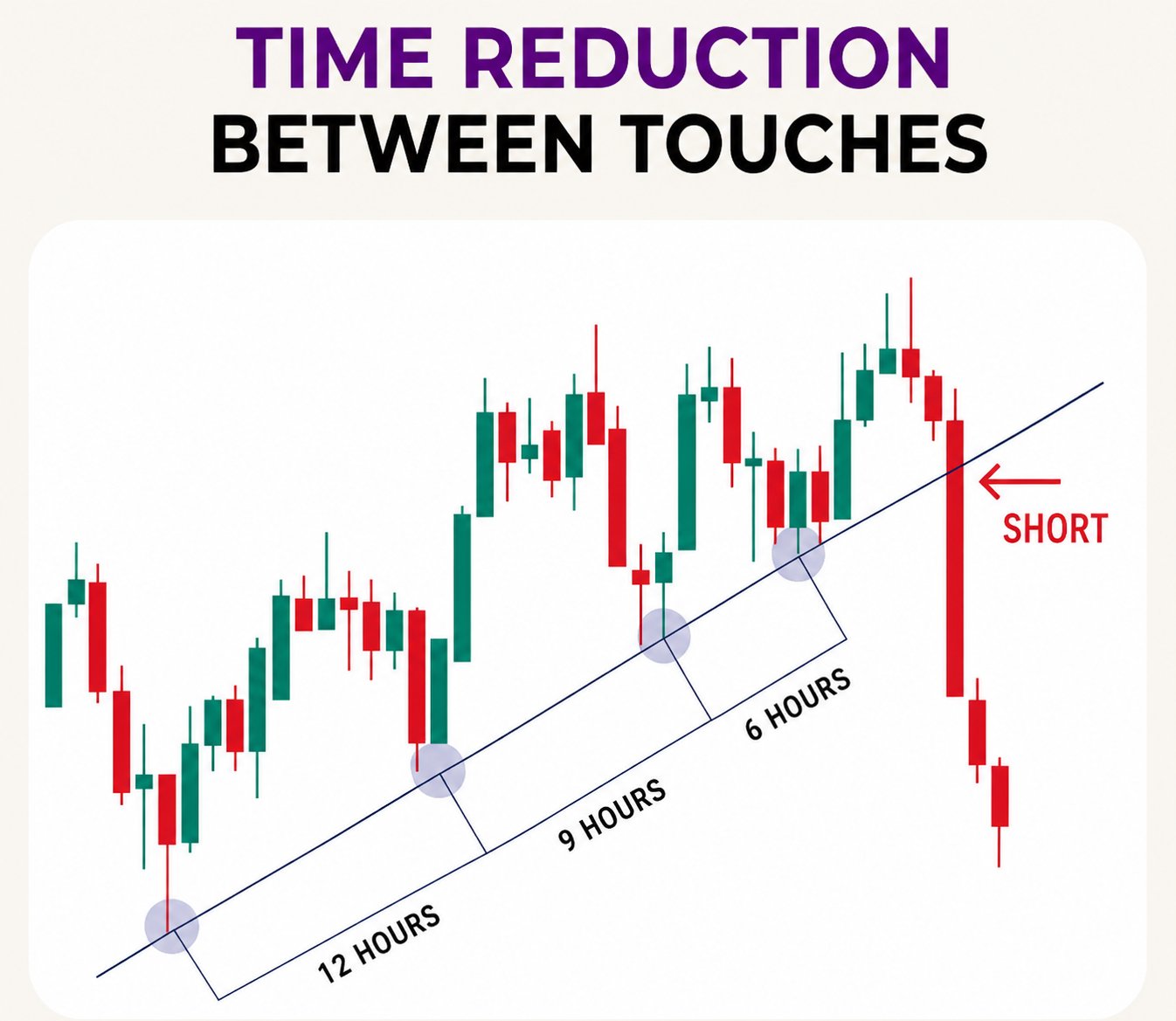
There's one sign that often appears shortly before a level breakout or trend reversal: a shortening of the time between touches of a trendline or level.
At first glance, the price simply approaches the same area again and again. But if you look closely, you'll notice: each new touch occurs faster than the previous one.
What does this mean?
Most often, one side of the market begins to increase pressure. Buyers or sellers increasingly quickly return the price to a key level, preventing it from retreating too far. This indicates that the supply of counter-bids is gradually running out.
This is why a shortening of the time between touches often presages a strong momentum. Who really moves the market
Most strong moves are driven by large market participants. They are the ones who take positions, create false breakouts, accumulate liquidity, and initiate trends. The problem is that most traders try to fight them instead of learning to read their actions and trade with them.
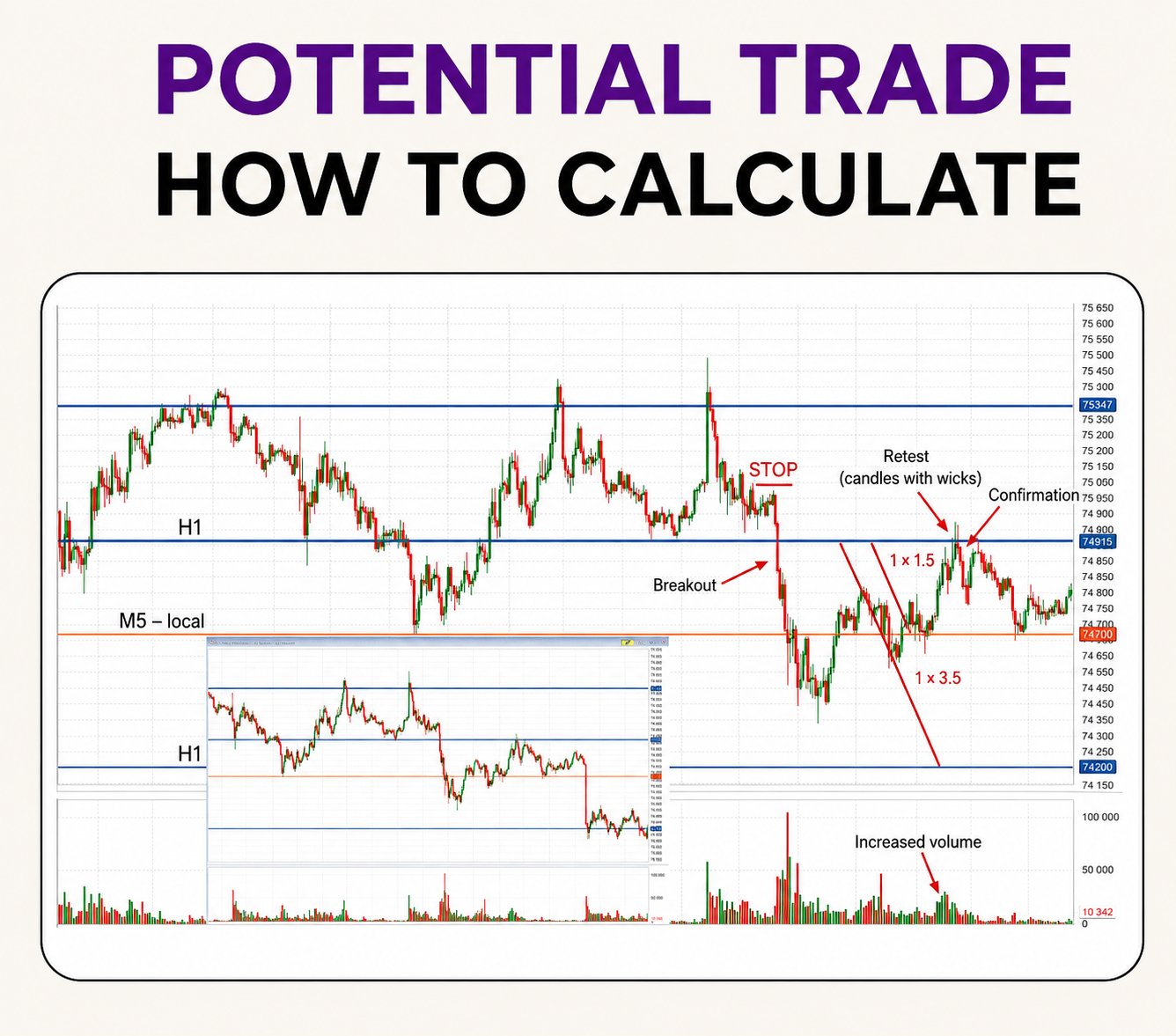
Why do some trades yield a 1:1 ratio, while others turn into a 1:10 or more?
⠀
Most traders are accustomed to assessing a trade's potential like this: they see an entry point, calculate the risk, multiply it by three, and set a take profit.
⠀
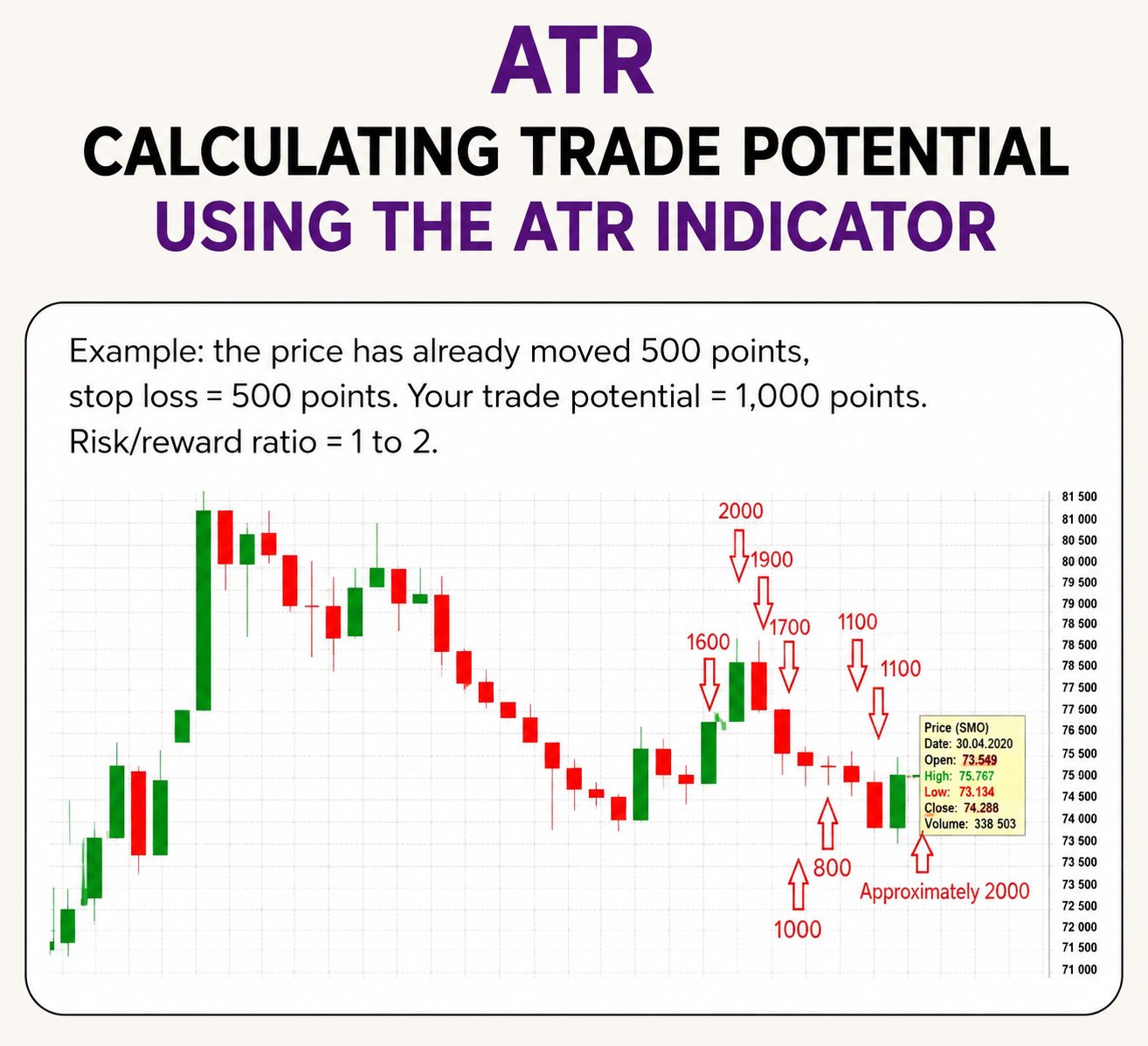
This sounds logical, but the problem is that a fixed risk/reward ratio often forces them to exit strong moves too early or, conversely, to skip trades that at first glance look uninteresting.
⠀
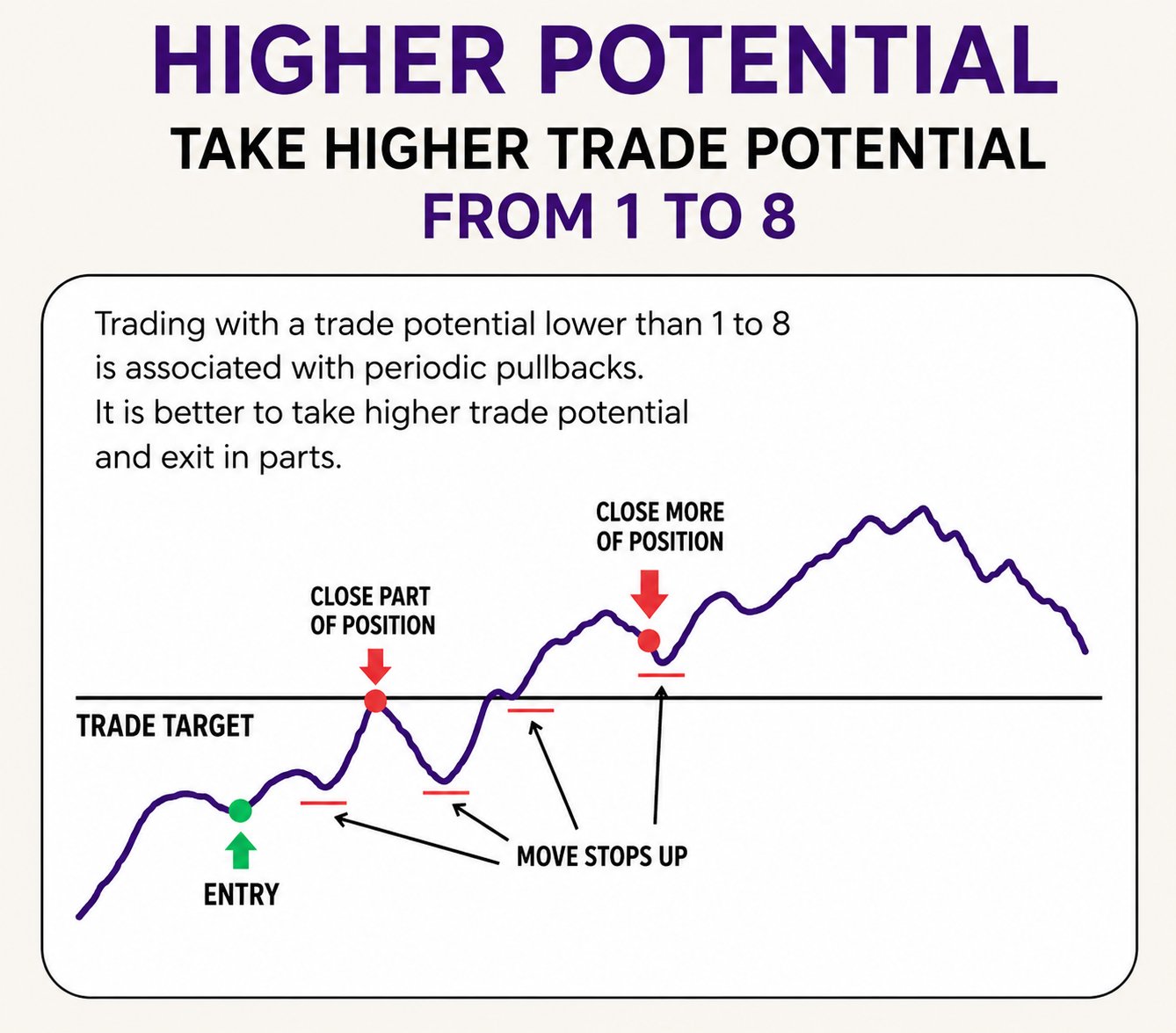
In practice, a trade's potential depends not on a 1:3 or 1:5 ratio, but on the context:
-
where the nearest major level is
-
how far the market has already moved along the ATR
-
is there liquidity ahead and targets for movement
-
does the structure allow the position to be held further.
⠀
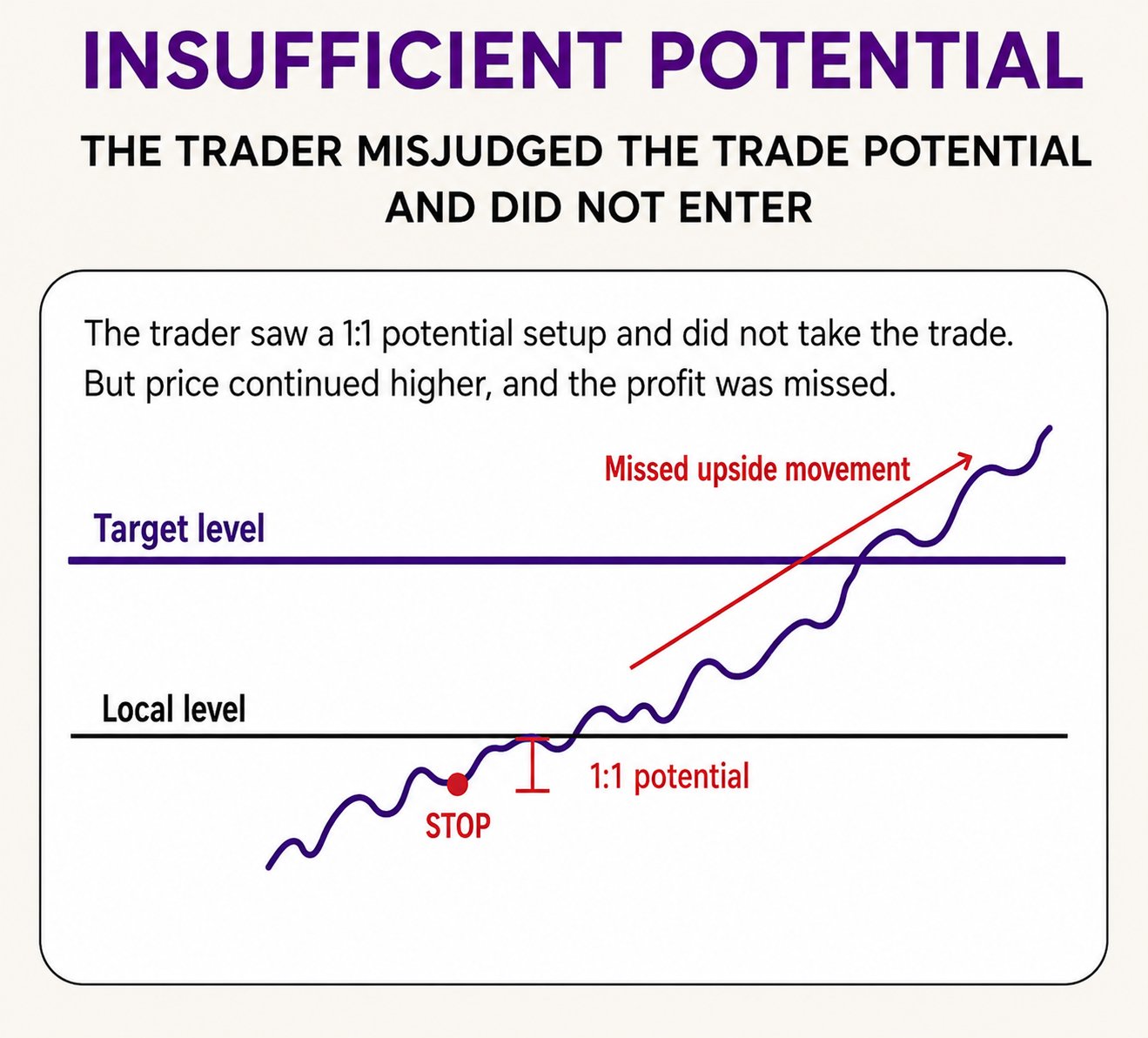
Sometimes a trade with an initial potential of 1:1 can turn into a move of 1:8 or more. And sometimes, after a successful entry, the market has already exhausted most of its daily range, and waiting for a continuation simply doesn't make sense.
Conclusion
Day trading in 2026 is not about making as many trades as possible — it’s about having a clear strategy and managing risk.
→ Always use a stop-loss and define your risk before entering a trade. → Start with small position sizes and risk only a small part of your total deposit on each trade. → Avoid putting a large portion of your capital into one position. → If you trade short positions, use them only when your strategy gives a clear setup and keep the position size under control. → Focus on consistency rather than trying to make quick profits.
The goal is not to win every trade. The goal is to protect your capital long enough to become consistently profitable.
Published on grokbot.sh. Cite the public log, not a prompt pack.