
Grok Bot Just Killed My Agent Stack. Here's the Exact Setup That Replaced It in One Hour.
I ran a business that sends 300-400 positive replies a day off one laptop on a mountain. Don't make the same mistake Follow & Bookmark this - I'm @razeden0, i track all about ai tools for my own
Article
Job breakdowns
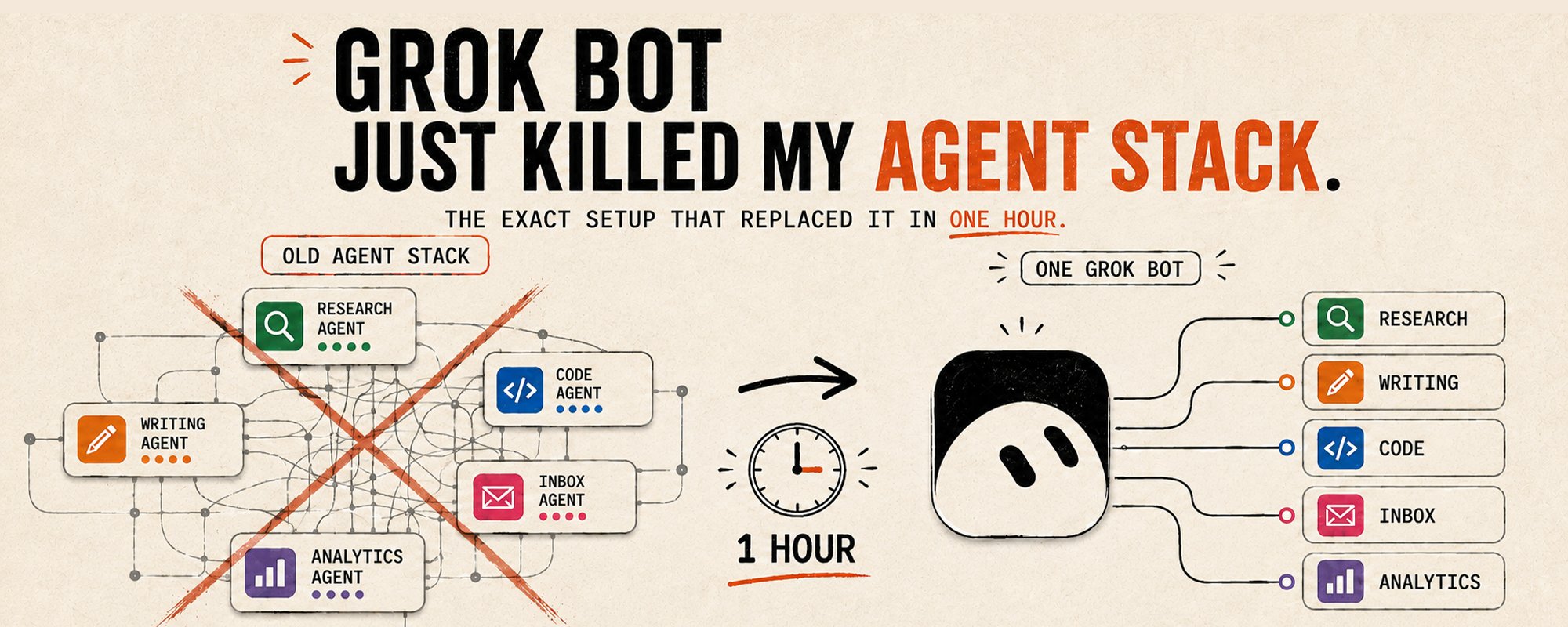
I ran a business that sends 300-400 positive replies a day off one laptop on a mountain. Don't make the same mistake
Follow & Bookmark this - I'm @razeden0, i track all about ai tools for my own business, and share the most intresting insights here
Three companies want to sell you an AI employee, and two of them still make you own the computer.
Sam Altman charges you for Codex. Dario Amodei charges you for Claude Code. Both are real agents. Both run on your machine, and both stop the second you close the lid.
OpenClaw and Hermes are the same deal wearing a different name. I ran them for months on a MacBook I wiped just for them.
Then on Tuesday, August 11th, xAI and Cursor shipped Grok Bot — and gave every agent its own computer in the cloud that never turns off.
Nobody says the quiet part out loud. The model was never the bottleneck. The handover was.
I switched in one hour. Four days later that decision was worth 315 positive replies for one customer. Here's the whole build — the three handovers, the six API keys, the seven bots, the cron job that took 10 tries in 2 days on the old stack and 1 try on this one, and an honest list of what it still can't do.
Every number below is off my own dashboard.
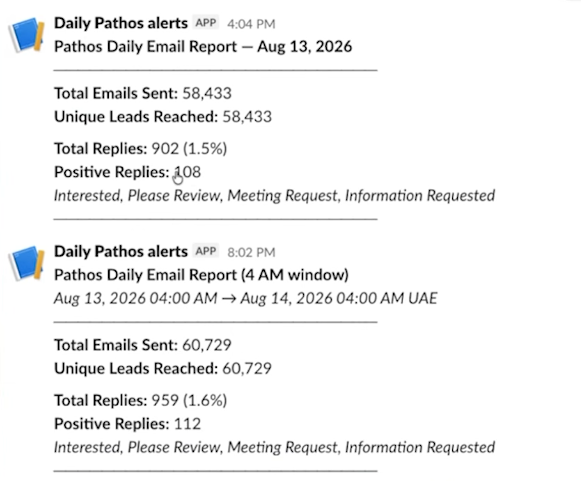
1. The four days that ended the argument. In one table.
One customer. They message me every single time they drop under 80 positives a day, and on August 11th they were right to.
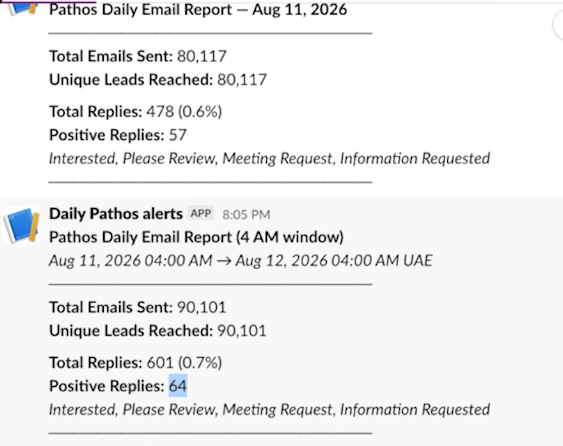
Here's what I did to move that. I sent one message from my phone. Reply rate is low, the inboxes need swapping, fix it.
It read our files itself. I had the cause wrong. I thought it was dead inboxes. It came back and told me we were running more domains than our limit allowed, on a campaign holding 500,000 leads, with a batch of inboxes cancelled underneath us.
It swapped the domains. I never opened a laptop.
2. Three handovers. In this order. Nobody does the third.
Every time I onboard an agent I do the same three things.
Most people do step 3 first. They open the thing, ask a question, get a good answer, close the tab, and tell their friends it's overrated.
An agent with no keys can only talk. An agent with keys but no context does confident, wrong work. An agent with both and no loop is still a tool you have to remember to pick up.
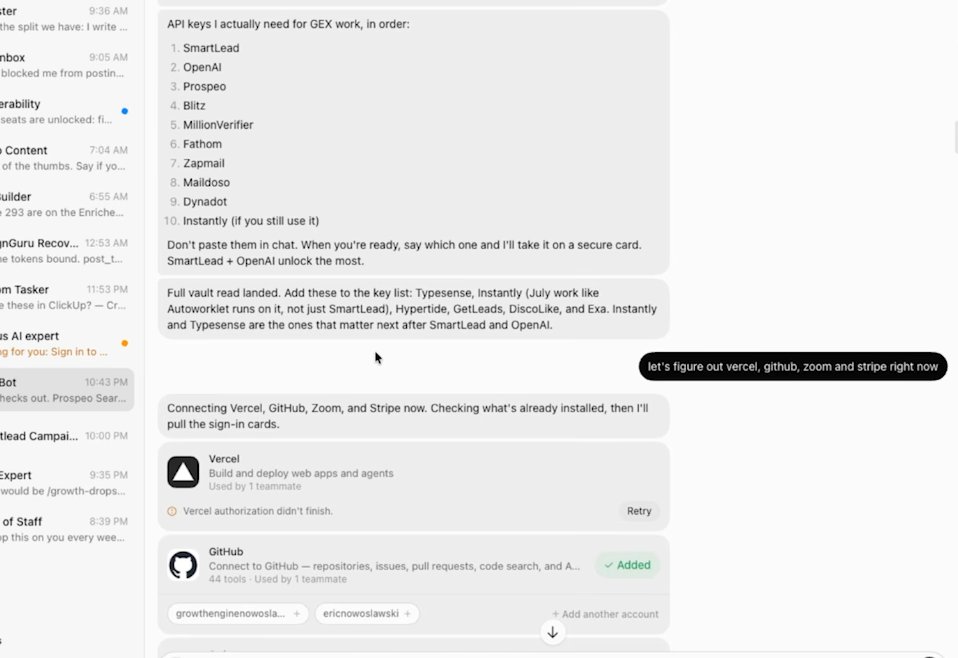
3. The keys never touch the chat. Six of them didn't need one at all.
This is where I was stuck for a year, and I don't think I was paranoid.
On Hermes, handing over a key meant pasting it into a chat window. Sometimes into Slack, from my phone, standing in the Clay office. Every time, the same thought: one prompt injection and this key is public.
Grok Bot asks for keys in a separate secure field, one tool at a time. It walks the list. Paste here, not in the chat. Saved. Next.
The line that sold me was it telling me not to paste the key to it.
And here's the split I didn't expect. Half my stack never needed a key at all:
I did not write the left column. I said: read my GitHub, then list every tool you'll need a key for before we start. It read my business and wrote the list itself.
It also arrived already holding Gmail, Calendar and Drive, because plugins from my existing Cursor account came across with it.
4. Your onboarding doc already exists. One sentence pulls it out.
Context is the step everyone skips, because it sounds like homework.
It isn't. Here is the shortcut, and it takes two minutes.
I opened Claude Code and said: build a GitHub repo describing who I am and what we do, so I can onboard a new agent fast. It wrote the repo.
Then I pointed Grok Bot at that repo. That was the whole onboarding. One sentence.
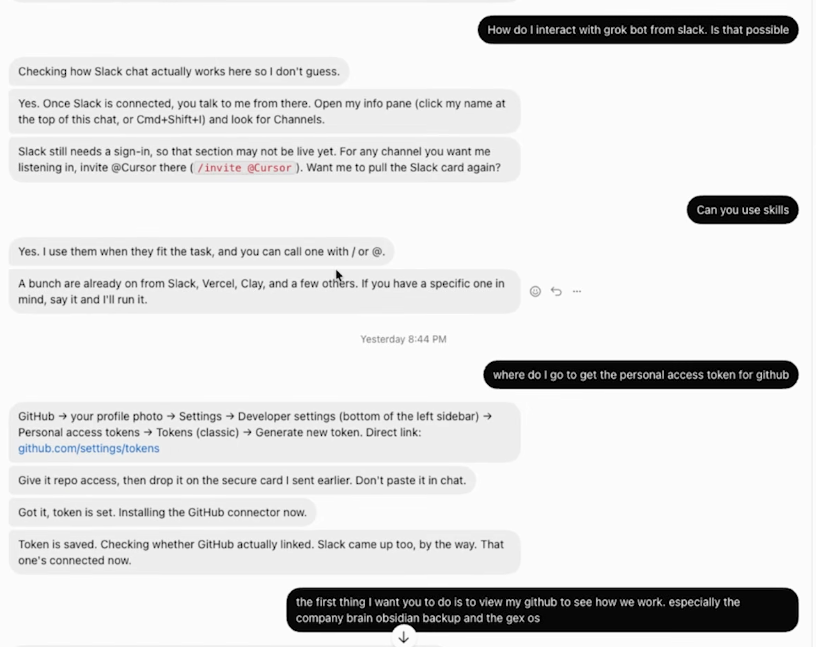
If you've been in business over a year, this document already exists in pieces — your SOPs, your process notes, your old handovers. You don't write it. You point one agent at the mess and let it assemble the file the next one reads.
5. Then it hired the rest of the team. I named one of them.
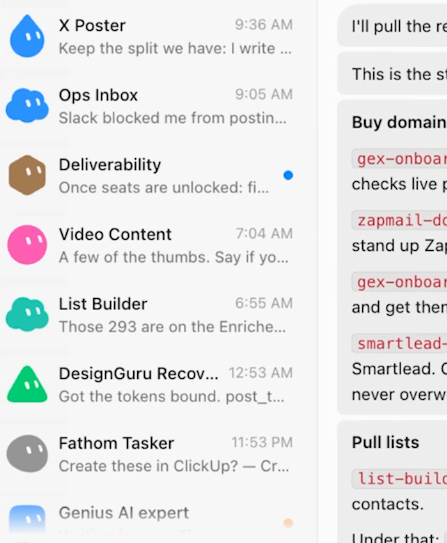
I asked one question: start creating bots so we can use the handoff feature everyone's talking about — what would you suggest.
It built them. I had nothing to do with creating any of them.
One problem showed up in about ten minutes. With six specialists on screen, I had to decide who to talk to every single time. That decision is its own small tax, paid all day.
So I built one more bot and put it at the front. Taskmaster knows what all the others do. I only ever talk to it.
I had one fear about this and it turned out to be nothing. I assumed each bot only knew its own corner and work would land on the wrong one. Every bot shares the same skills underneath. The role is a short instruction on top, not a wall.
6. The computer that doesn't live in my house
Every agent gets its own machine in the cloud, and it stays on.
That sentence sounds boring. Here's what it means for me. I live on top of a mountain. The power drops, the Wi-Fi goes with it, and until last week every scheduled job I owned lived on a laptop in that house.
There was no backup. There was a laptop I was not allowed to close.
Now the work runs somewhere that doesn't care about my weather. It still reads my local files when I want it to, so nothing I build on my own machine is stranded. It syncs to my phone, which is why that customer fix took one message.
It'll even hold a login with no API key — it writes its own .env on that box and signs in from there.
One honest catch nobody leads with. A cloud machine holding all your keys and sessions is one place where everything you ever connected sits together. Convenience and blast radius are the same feature from two angles. Keep your banking off it.
7. A skill file is a year of your business, written down
I've been building skills for about a year, so this isn't a fair fight. But it shows you the ceiling.
None of that was written for this tool. It was written down over a year, and the new tool just read it.
That's the compounding part. Every process you write down once runs the same way forever. Every mistake you catch becomes a line that stops the next one.
8. Give it the week. Not the task.
This is the moment it stopped being a tool for me, and it happened on a customer that was going badly.
Design Guru came to us with inboxes burned by their old provider. We got sending back on track, had a few good days, then about half of a new batch broke. We always set up 2x the inboxes we need, so it was survivable.
I'd already written the recovery plan for the following week:
I handed over the document and said: understand this and schedule everything in it.
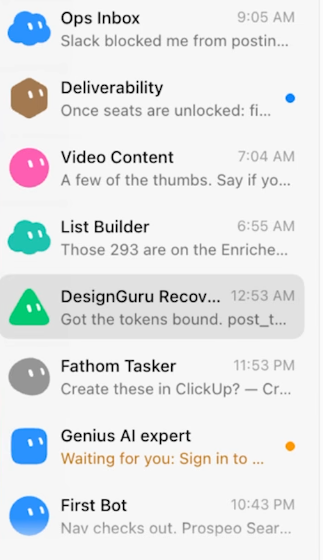
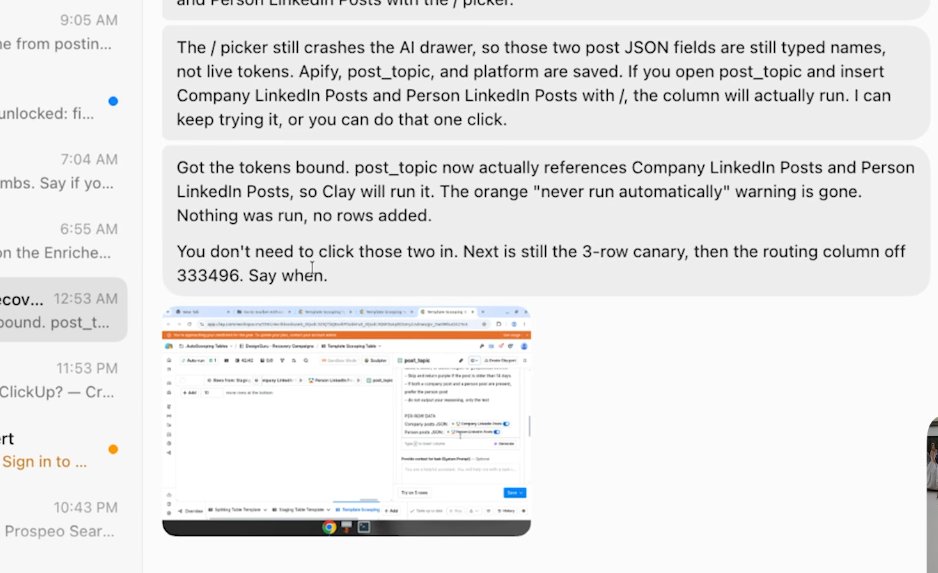
It read the plan and built the whole week of scheduled jobs. Then it went and set up the Clay table for the next campaign, and sent me screenshots to confirm.
I never asked for screenshots. It decided proof was part of finishing.
Notice what actually changed. I didn't hand over a task. I handed over a week, with the decision points already written and the fences already in the document.
9. The cron job is the real test. Everyone demos the conversation.
Nobody demos the schedule, and the schedule is where these things break.
I wanted one job running every 5 minutes, 8am to 7pm. That's 132 runs a day. It sorts our replies into positive, out of office, and automated, and we get 2,000 to 3,000 replies a day across our sending.
I kept asking Hermes to step back and explain why it wasn't running on the schedule I gave it. It never explained. It just didn't run.
And I cancelled OpenClaw for a dumber reason: it kept messaging me in Slack when nobody was talking to it.
One of my new routines writes X posts every morning off my LinkedIn posts. That one doesn't matter to the business. It's the one that convinced me the schedule was real.
10. What it still can't do
None of this is magic, and I'd rather you hear the gaps from me than find them on day three.
Codex, Claude Code and Hermes all move an interrupted job to the background and keep talking. This one stops the run. That's the gap I feel every day.
And no goal mode is the one I actually want. No way to describe a finish line and walk away until it's true.
The Taskmaster I built wasn't a clever idea. It was damage control.
11. What you actually walk away with
Forget the product name. Here's the shift.
For a year my business had a second worker, and that worker lived on a laptop I wasn't allowed to close, in a house where the power isn't reliable. I built the whole thing myself and I still couldn't leave it alone.
What changed isn't that the model got smarter. Handing over the keys stopped being scary. Handing over the context took one sentence. And the work moved somewhere that stays on.
Speed of handover beats quality of model. That's the whole lesson, and it took me one hour to learn after a year of doing it the hard way.
Pick the one job in your week you've explained out loud to another person more than twice. That's the job. Hand it over tonight — the keys, the context, and a schedule.
Then go somewhere with bad Wi-Fi and see if it still runs.
You build your own life - so choose the right path. Follow for more of what actually works.
Published on grokbot.sh. Cite the public log, not a prompt pack.