
Why Meta’s Muse Is Having a Moment That Grok Bot Isn’t
If your group chat is asking why $META just ripped double digits while nobody can explain what Grok Bot even does, here’s the short version: Muse isn’t winning because its model is dramatically
Article
Job breakdowns
If your group chat is asking why $META just ripped double digits while nobody can explain what Grok Bot even does, here’s the short version: Muse isn’t winning because its model is dramatically smarter. It’s winning because Meta turned “an agent that actually does the work for you” into a mass-market consumer product and dropped it straight into apps billions of people already open every day.
What Muse Actually Launched With
Meta introduced Muse on September 8, 2026, positioned explicitly as a personal agent rather than a chatbot. Give it a goal — send an email, book a flight, compare prices and check out, negotiate a bill, list a car for sale — and it executes the multi-step task across email, calendars, payments, and shopping. It runs on Meta’s own Muse Spark model, and each session runs inside a private, isolated cloud virtual machine with its own browser, so it keeps working after you close the app. A separate oversight layer called Sentinel has to approve anything Muse sends out to the internet, and it’s designed to check with users before sensitive actions like payments or emails. Reportedly, Meta’s agent team drew inspiration from OpenClaw, the open-source agent framework — though OpenClaw’s creator publicly credited Meta with building its own system rather than copying his.
Distribution is the real differentiator. Muse lives as a standalone app on iOS and Android, on the web at muse.ai, and directly inside WhatsApp chat, with Meta AI glasses support coming soon. Pricing is a free tier for most users, plus Power at $20/month and Maximum at $100/month for heavier use.
The Numbers Behind the Buzz
Muse hit roughly 83,000 U.S. iOS downloads in its first two days, reaching No. 2 on the App Store. By day five or six, cumulative downloads passed 730,000 to over 900,000, and Muse took the No. 1 spot on Apple’s U.S. free chart, overtaking ChatGPT. As of September 21, roughly two weeks in, Sensor Tower puts total downloads above 2.5 million — outpacing what Claude (400,000) and Grok (200,000) logged in comparable post-launch windows, though ChatGPT still led with 3.1 million in that same comparison.
JPMorgan upgraded Meta to Overweight with an $820 target; Wells Fargo raised its target to $796; Goldman Sachs and KeyBanc reiterated Buy-equivalent calls in the $725–$780 range. Not everyone’s convinced — Oppenheimer and Wedbush have questioned whether users will pay for yet another AI subscription on top of ChatGPT or Gemini. One complication: Amazon has blocked Muse from shopping on its platform, citing unauthorized access and undisclosed agent activity — an early sign of how contentious agentic commerce will get. Shopify, by contrast, is partnering with Meta to support agentic checkout directly.
Different Lanes, Not a Head-to-Head
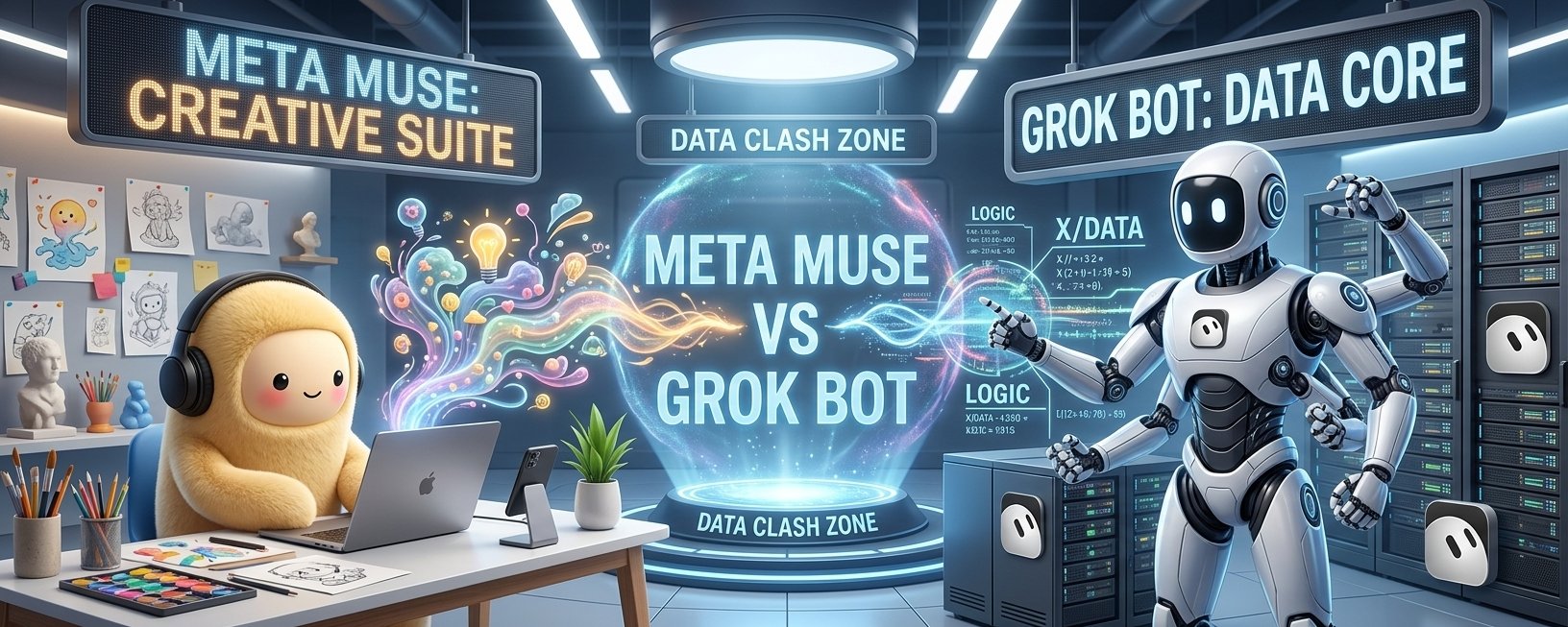
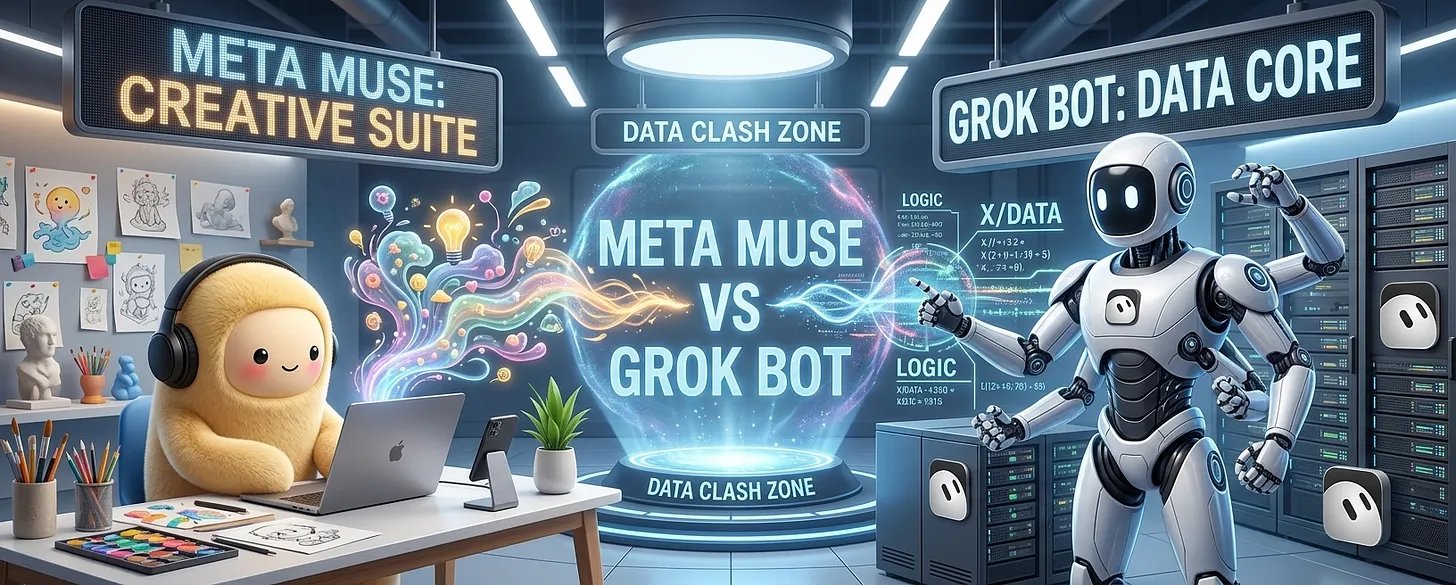
Muse and Grok Bot aren’t really fighting for the same user. Muse connects to WhatsApp, Instagram, Gmail, OpenTable, Ticketmaster, Stripe, and Shopify, running as a single private agent per user in its cloud VM — built for everyday life tasks: bookings, shopping, bills, forms, turning a saved Reel into a shopping list. Grok Bot, in beta since August 11, lives inside Cursor, grok.com, and X, and its edge is structural: multiple named bots that hand off tasks to each other, saved as reusable Skills or Routines, with tight integration into Cursor’s coding environment — local files, terminals, repo edits.
Grok Bot’s pricing is more layered than “no free tier” suggests. It’s now bundled into Cursor Pro at $20/month and base SuperGrok at $30/month, but the fuller always-on experience sits behind pricier plans — Cursor Ultra ($200), SuperGrok Heavy (~$300).
Why Grok Bot Hasn’t Had a Muse-Sized Moment
It’s product and distribution, not model quality. Muse targets anyone with a phone and WhatsApp; Grok Bot, even with its cheaper entry point, still sits inside a developer-first product. Meta can push Muse into conversations inside apps with billions of existing users; Grok Bot’s entry points don’t have that install base. Zuckerberg frames Muse as an always-on life upgrade — health, finances, relationships — intuitive to non-technical people, while Grok Bot’s “AI colleagues” pitch resonates more with engineers. And Muse arrived as one coordinated consumer launch, while Grok Bot rolled out gradually across tiers.
What Decides the Next Round
Neither product “wins” outright — they’re built for different jobs. For booking flights and buying things, Muse is clearly riding the momentum. For a team of bots running pipelines and handing off engineering work, Grok Bot remains the more purpose-built tool. The real test ahead is trust: Amazon’s pushback shows platforms won’t simply hand agents access to transactions, and whether users will hand over their email and payments at scale will matter more than download charts.
Published on grokbot.sh. Cite the public log, not a prompt pack.