
GIVE ME AN ADDRESS AND I'LL SHOW THE HOMEOWNER A POOL IN THEIR OWN BACKYARD
I don't build pools. I build the thing that sells them. Pool builders don't lose deals on price. They lose them on imagination. A homeowner stands in a bare yard while a salesperson gestures at the
Article
Job breakdowns
Pool builders don't lose deals on price. They lose them on imagination.
A homeowner stands in a bare yard while a salesperson gestures at the grass. They nod, say they'll think about it, and never call back. The pool was never too expensive — it was never real.
This is the system that makes it real, built inside Grok Bot. Take an address, pull a satellite image of that exact yard, render a pool into it, hand it to the builder. The homeowner opens an image of their own house with a pool in it.
You don't build pools. You build the thing that sells them.
Why now
Pool construction books months ahead of the digging. Contractors sign in late winter for work that happens in summer, so the sales pressure lands long before anyone sees a crew.
That's your window. Whatever you build now sells into the exact weeks that decide a builder's entire year. In a trade with six-figure job values, a tool that closes two extra deals pays for itself many times over.
The system
Take an address from the builder's lead list or quote form.
Pull the real property. Google's Maps Static API returns a satellite image for an address — pass the address string and it geocodes for you, maptype=satellite for the overhead. Street View Static gives the front elevation. Both are plain URL calls the Bot fires from its terminal.
Render the pool in. The overhead goes to an image model with the pool spec — shape, decking, landscaping. Out comes that specific backyard with a pool in it.
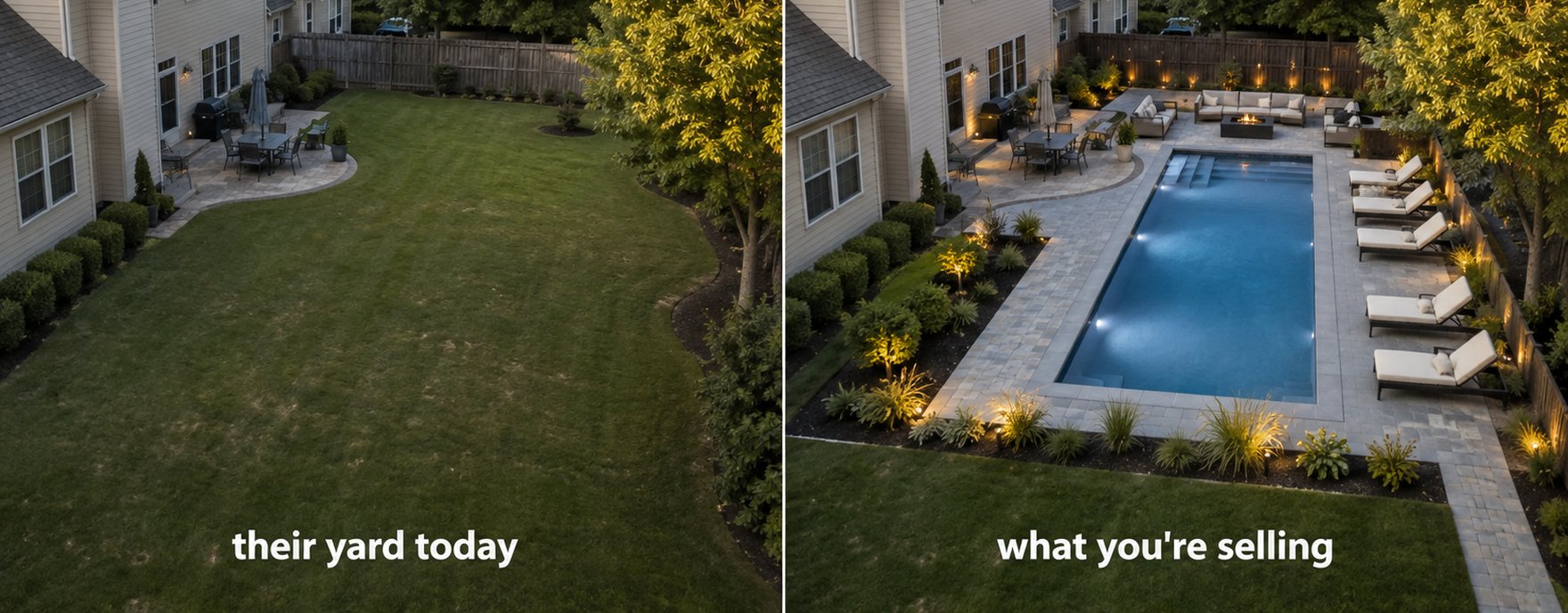
Hand it to the builder. A before/after pair their salesperson sends.
The detail that decides whether this works
Check imagery availability before you render anything.
Street View has a metadata endpoint that tells you whether imagery exists for a location and when it was shot — and those calls are free. Screen every address for nothing first. Only spend on the ones that come back usable.
Two more things that will bite you.
Satellite imagery isn't live. It can be years old, and a yard landscaped last summer may not match what you render onto. Print the capture date under every image instead of hiding it.
And pull more than one frame. A single flat overhead leaves the model guessing at the fence line, the slope, where the house sits. Overhead plus street level plus two angles gives it enough to place a pool that belongs there.
The Bot setup
That last line isn't optional.
The part you have to get right
You're handling images of private homes tied to real addresses. Three rules, built in from day one.
The builder contacts their own leads. You deliver renders into their pipeline. They own the customer relationship and the consent that came with it. You stay a supplier, not a competitor — cleaner legally, better business.
Only render for leads who asked. Someone who filled in a quote form expects to hear back. A homeowner who contacted nobody doesn't, and an unrequested render of their house reads as surveillance.
Label it a render. "Illustrative concept, not a construction plan" under every image. Protects the builder from a dispute later, costs you nothing.
Read the imagery terms before building a product on them. Static Maps content is licensed, not yours — what you may do with a derived image has a real answer.
Pricing
Per render is the wrong model. It anchors the builder on cost per image instead of value per close.
Charge monthly for the pipeline running, plus setup to configure it against their pool shapes, decking options, and branding. The number that sells it is the comparison: one extra closed job against what this costs per month.
In this trade that comparison isn't close. Lead with their close rate, never your technology.
What it can't do
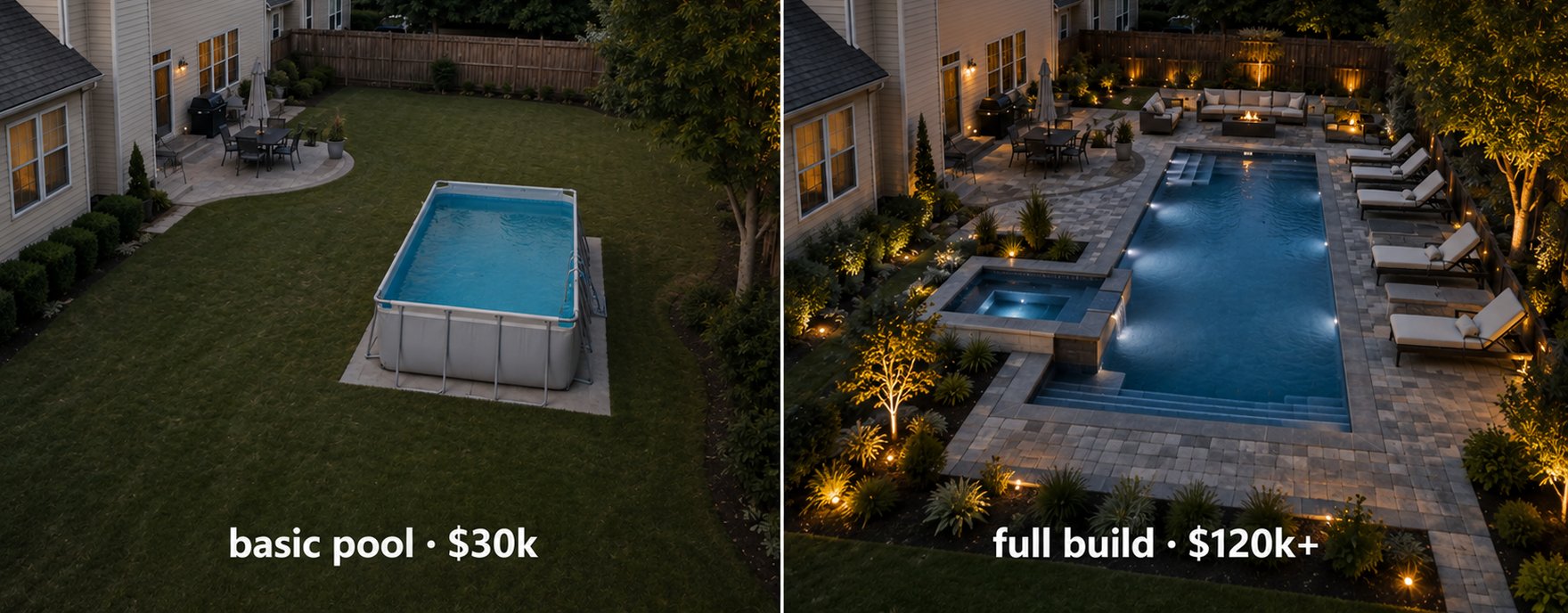
It can't fix a bad render. A pool that looks pasted on damages the sale. Get one property genuinely right before selling this to anyone.
It can't work everywhere. Rural addresses, new builds, and treed lots often have poor coverage. Run the metadata check across a builder's real lead list before promising anything.
It can't replace the salesperson. It closes the imagination gap. Someone still walks the yard and prices the job.
Start this week
Pick one local builder. Run five of their real addresses through the metadata check, render the ones that pass, and show up with the before/after pairs unprompted.
That demo is the entire sale. You're not describing a system — you're handing them five of their own leads, already visualised.
Build it once. Sell it before the calendar fills.
Published on grokbot.sh. Cite the public log, not a prompt pack.