
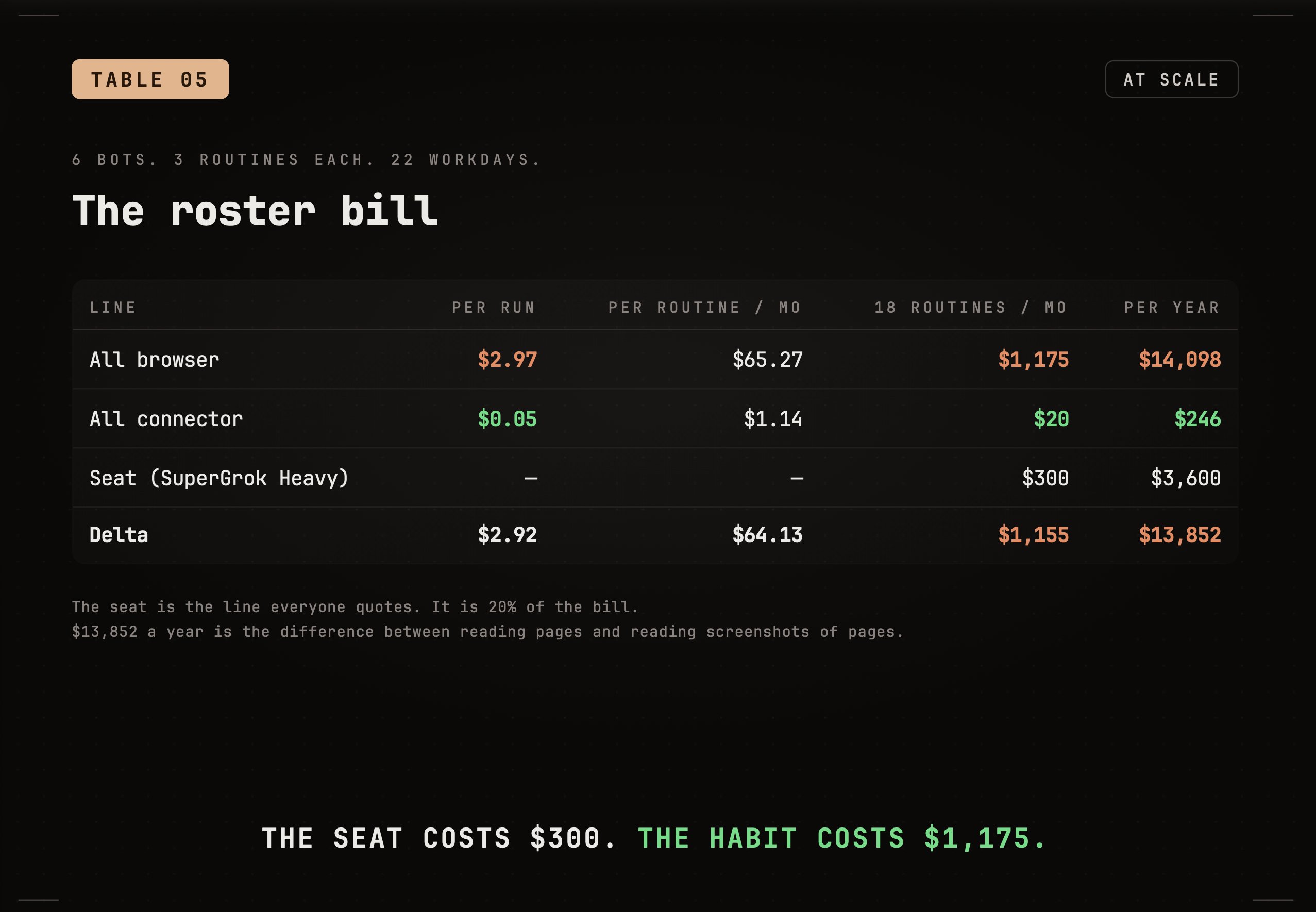
18 browser routines add $1,175 a month to a $300 Grok Bot seat.
The seat price is the only number anybody quotes. It is 20% of the bill. Grok 4.6 posts at $2 per million input and $6 per million output under a 200k prompt. Every tier ships a weekly allowance, then
Article
Job breakdowns
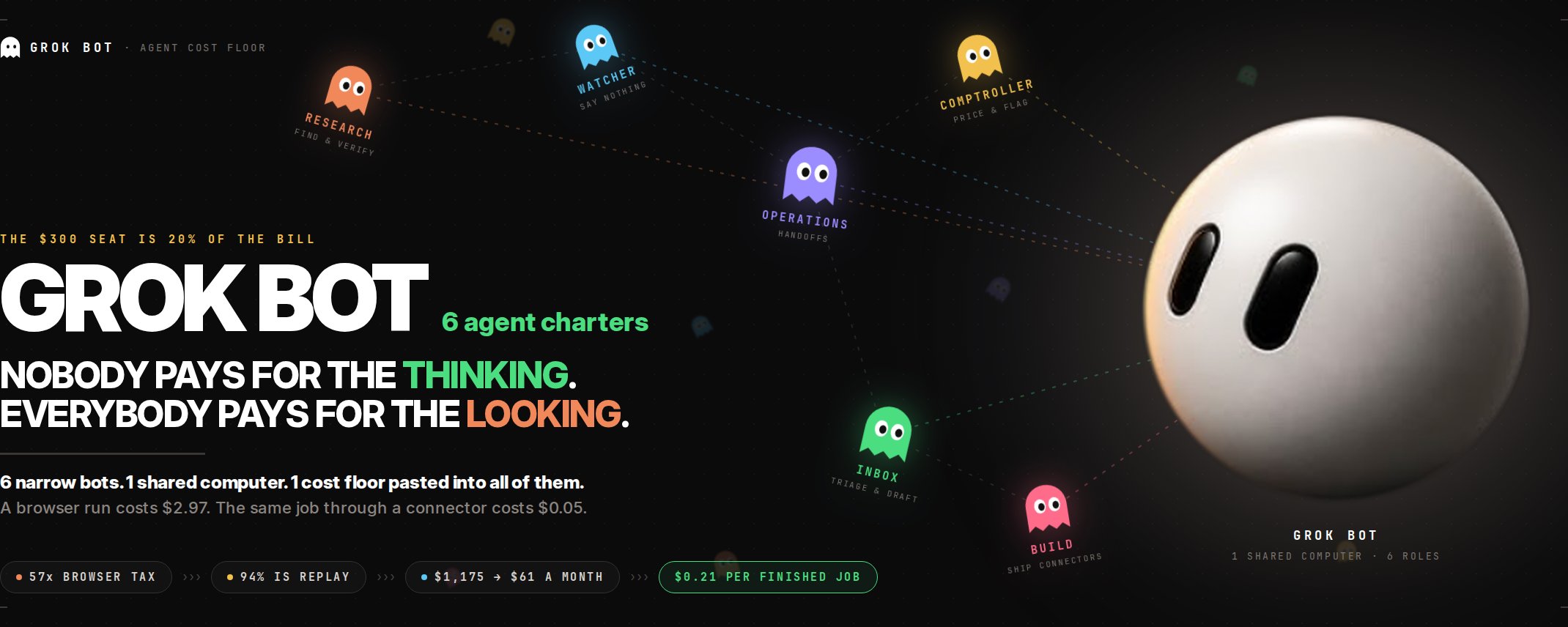
The seat price is the only number anybody quotes. It is 20% of the bill.
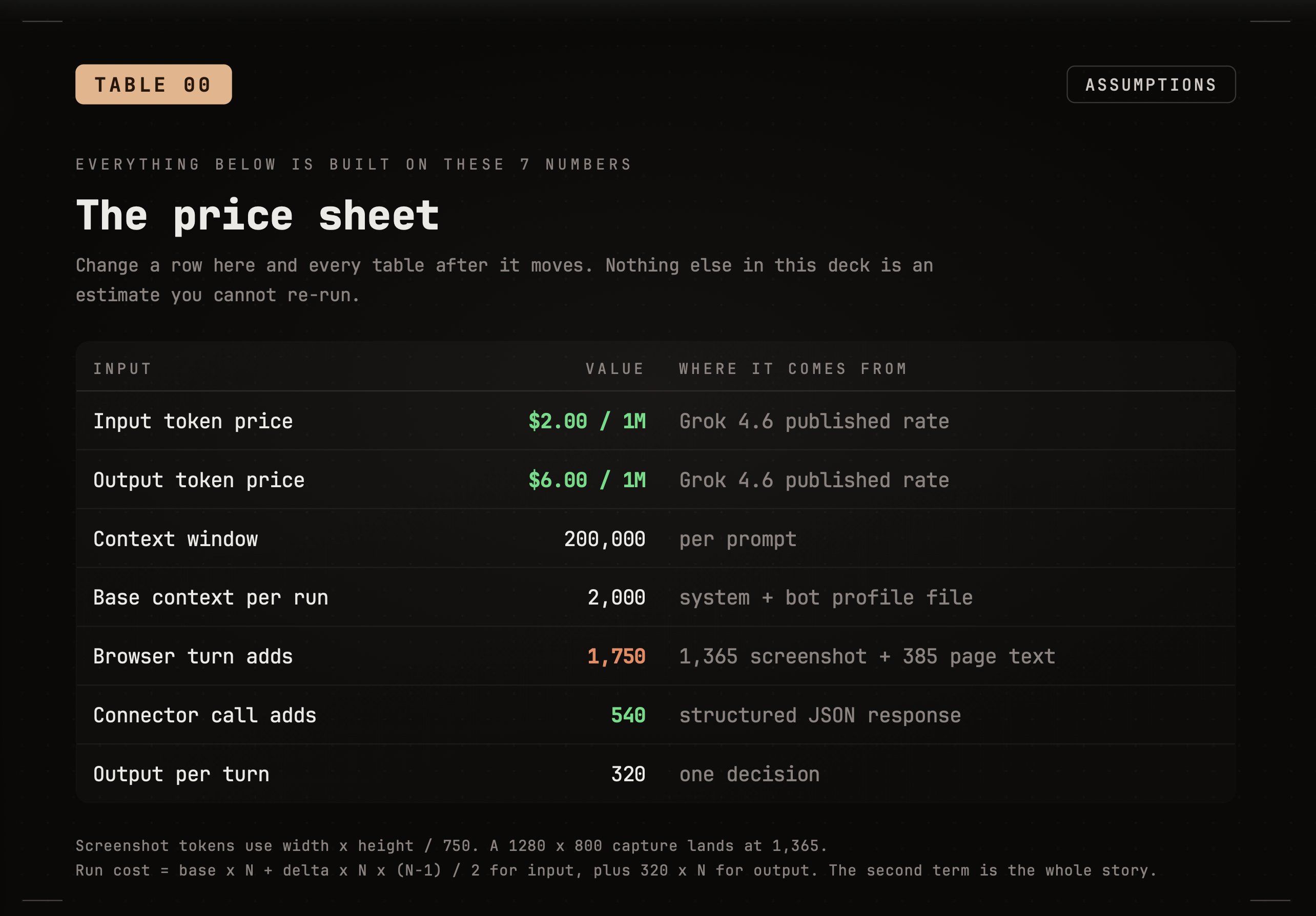
Grok 4.6 posts at $2 per million input and $6 per million output under a 200k prompt. Every tier ships a weekly allowance, then bills on demand. There is no documented spend cap. One early tester put it plainly: more tokens this month than in the 5 years before it.
Everyone is tuning prompts. Nobody is pricing turns.
Here is the full arithmetic, 9 tables, and the 6 bot charters that cut 94.8% off the bill.
THE 4 THINGS YOU ACTUALLY BUY
A bot has 4 ways to spend money, and only 1 of them is thinking.
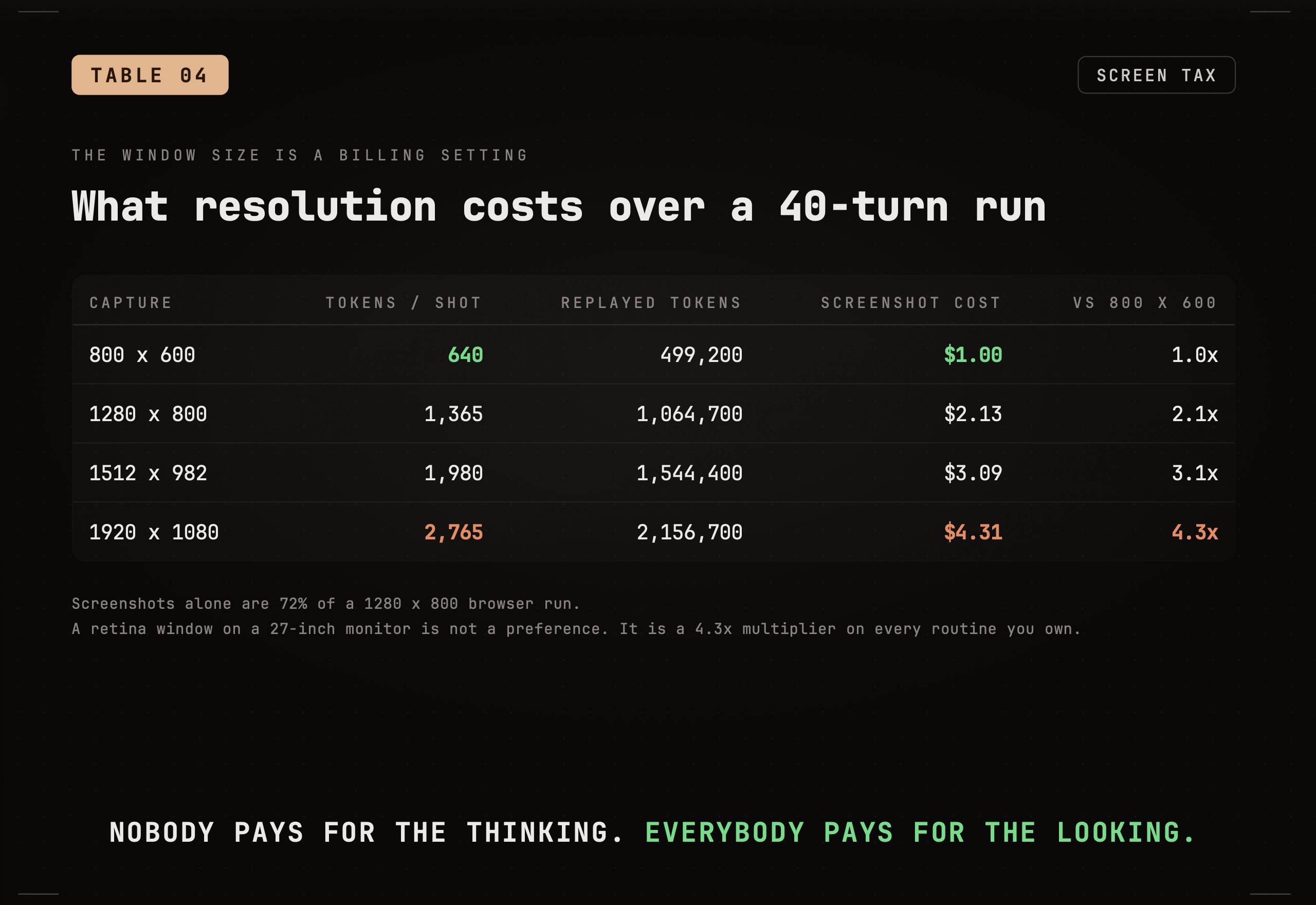
Screenshots. Every browser step is an image the model reads before it can click. Tokens run width x height divided by 750, so a 1280 x 800 capture lands at 1,365.
Page text. Another 385 tokens of DOM nobody asked for.
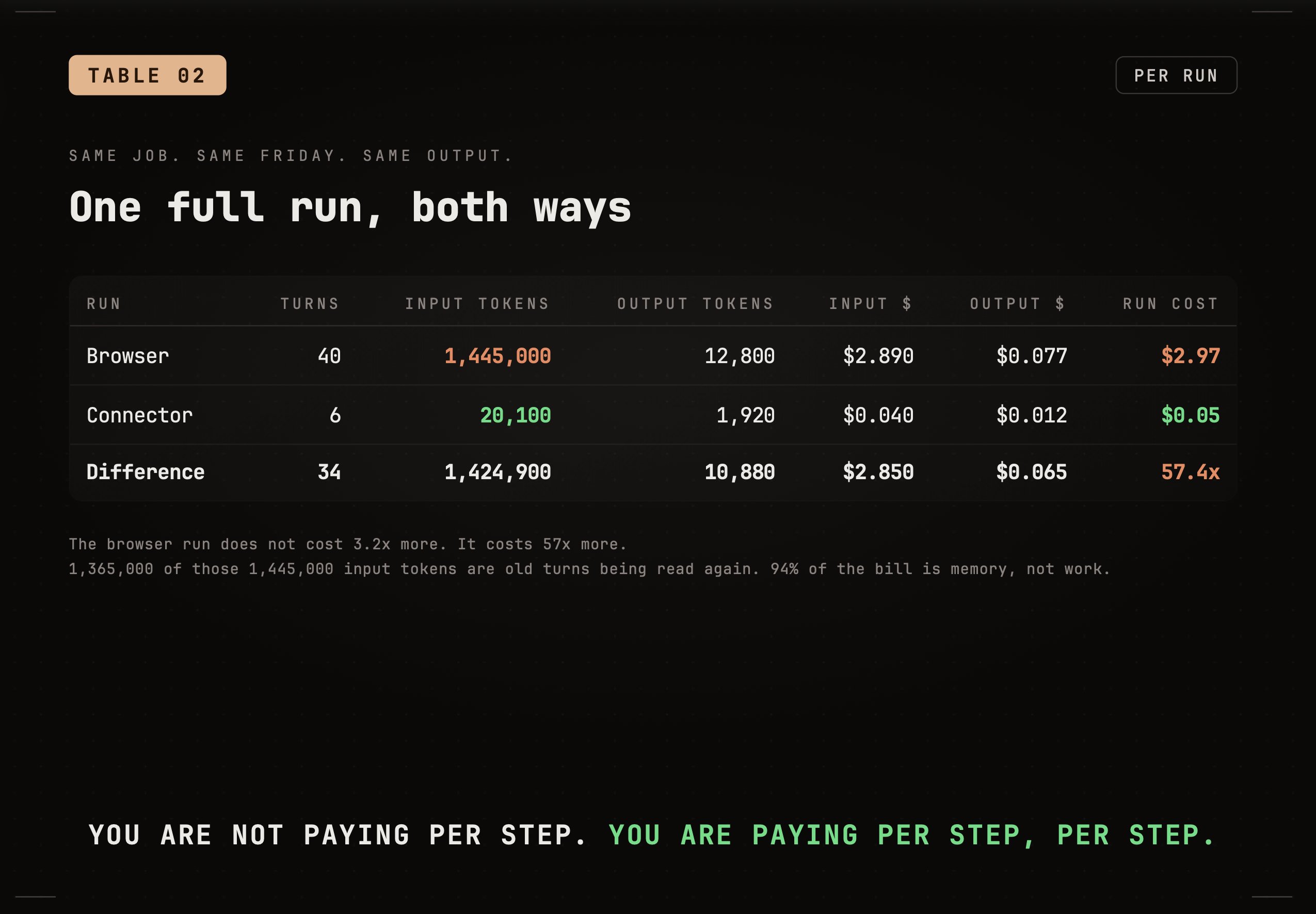
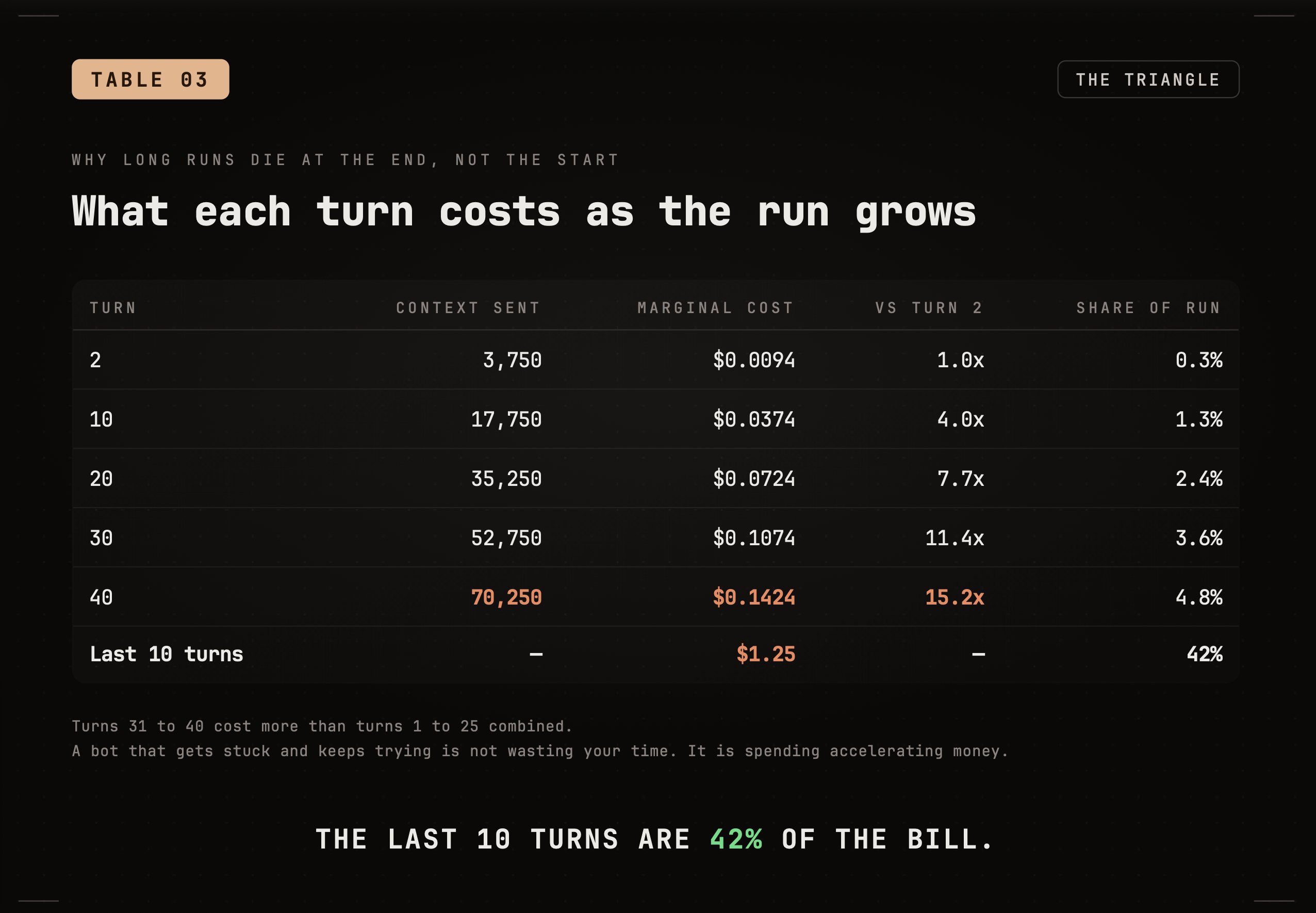
Replay. Turn 40 resends turns 1 through 39. The cost of a run is not linear. It is triangular.
Output. The cheapest line on the invoice. 320 tokens of decision per turn.
Run cost = base x N + delta x N x (N-1) / 2 for input, plus 320 x N for output.
That second term is the entire article.
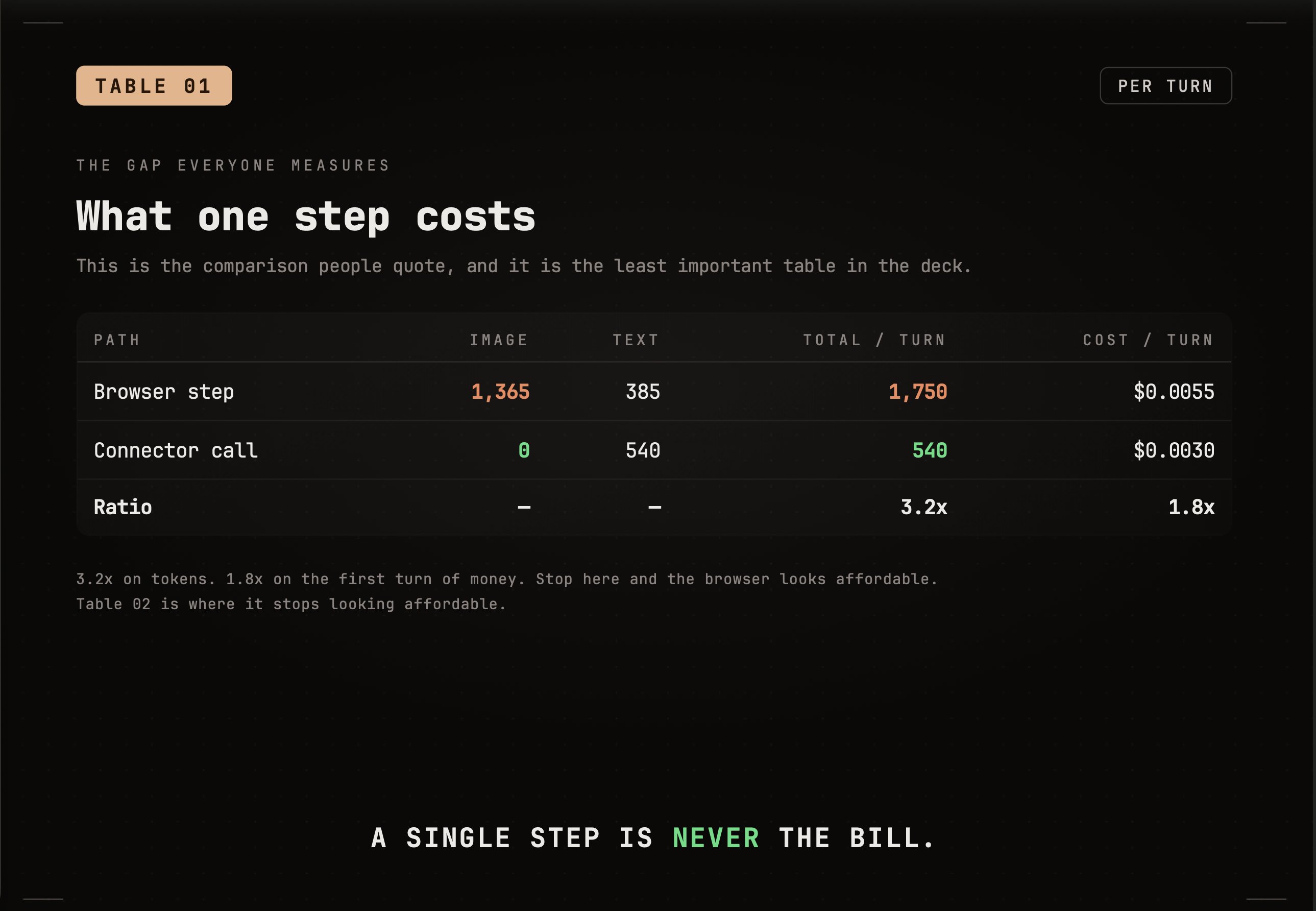
One step, two paths:
One full run:
The triangle:
The screen tax:
The roster:
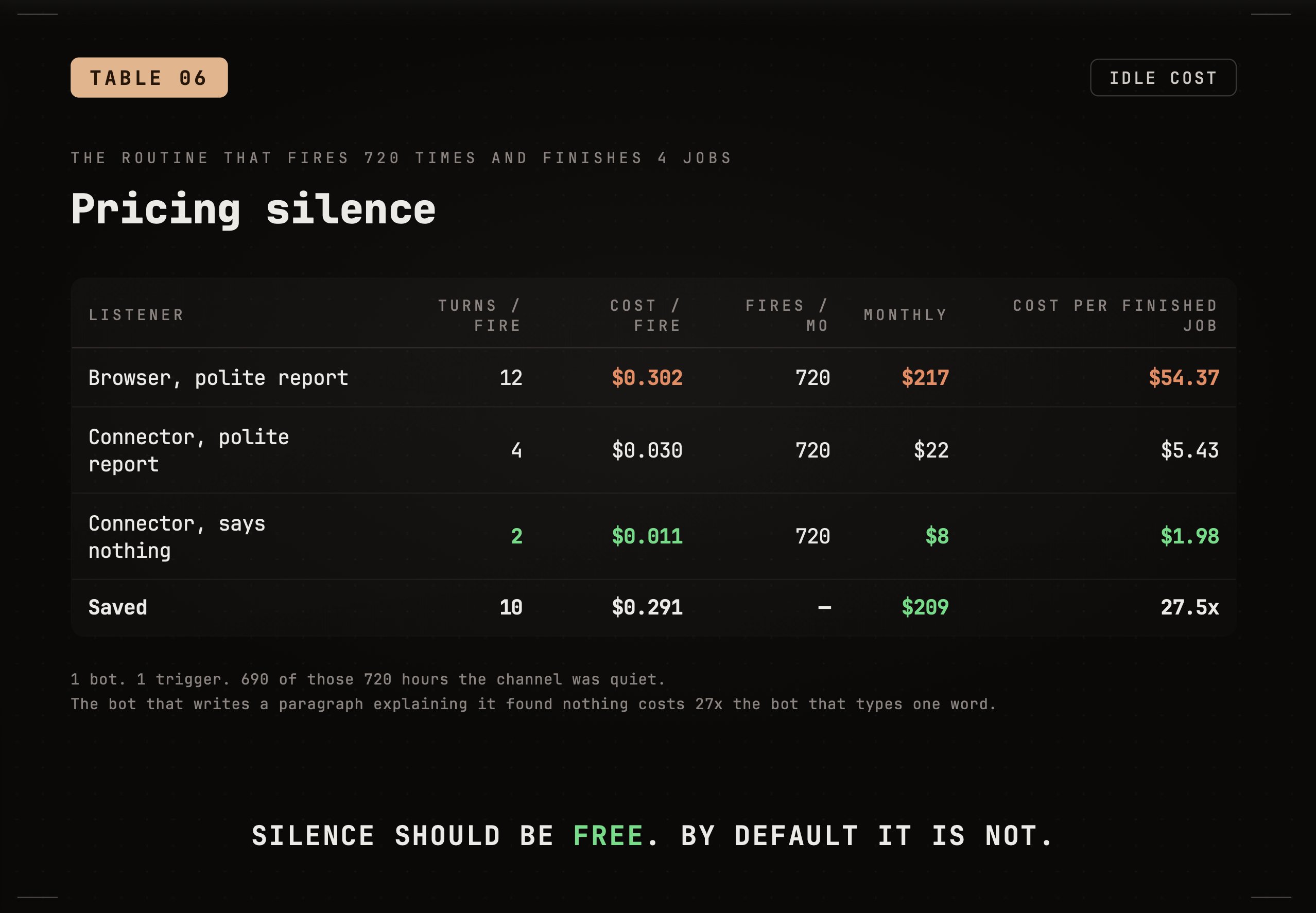
Pricing silence:
THE PARAGRAPH THAT GOES IN ALL 6
Every charter below ends on the same block. Paste it last, every time, unchanged.
COST FLOOR - applies to every task, no exceptions.
Check for a connector, MCP server or CLI before you open the browser. Open the browser only when no structured path exists, and say in one line why you had to.
Never screenshot text you can fetch as data. Run the browser at 800 x 600 unless a step fails at that size.
Hard limit 25 turns. If the job is not done, write the state to /workspace/state/[job].md, stop, and report the turn count. Do not start over. Resume from that file.
Batch every write to the end of the run. Never post progress.
If there is nothing to report, reply "nothing" and end the run. Never explain what you did not find.
BOT 1 - Comptroller
The first bot you create, before any bot that does work.
BOT 2 - Research
Cheapest bot on the roster when it is built right, worst when it is not.
BOT 3 - Inbox
The one that pays for the seat by itself.
BOT 4 - Watcher
The bot that fires 720 times a month and must cost $8, not $217.
BOT 5 - Operations
BOT 6 - Build
THE ORDER TO CREATE THEM
Paste this into the general bot before you create anything.
Act as my Chief of Staff. Interview me 1 question at a time until you know: the outcome, how often it repeats, which tools are involved, and what "finished" looks like.
Then return a Mission Contract with 7 fields: Outcome, Inputs, Output, Frequency, Definition of Done, Constraints, Approval Gates.
Reject any standard written as "good" or "useful". Replace each with a check I can verify in under 60 seconds.
For every step in the contract, name whether it runs through a connector or the browser, and estimate the turn count.
Do not create any bots yet.
If the plan needs 40 browser turns, it needs a connector, not a bot.
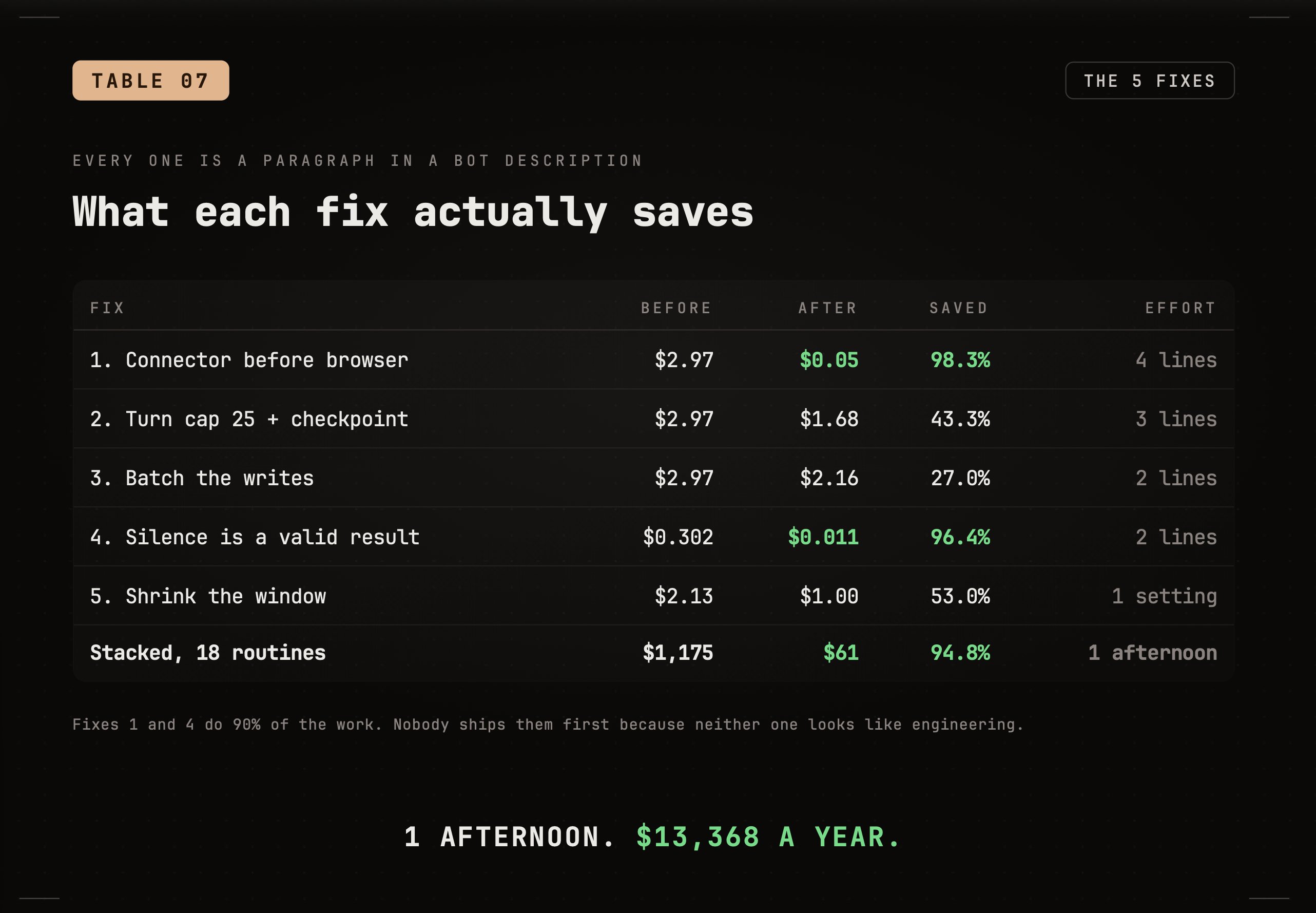
What each fix saves:
The realistic 30 days:
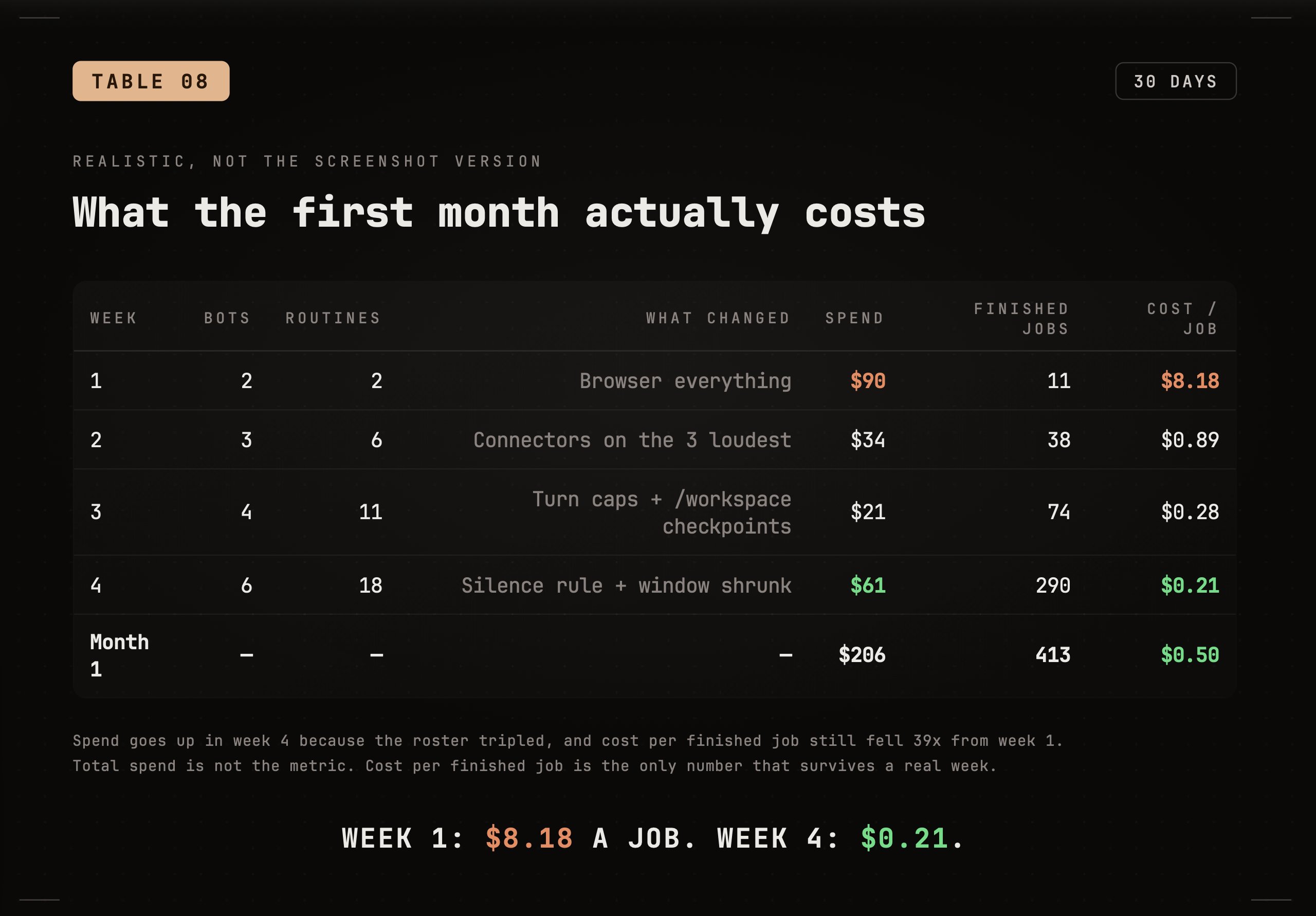
Spend rises in week 4 because the roster tripled. Cost per finished job still fell 39x.
Nobody hits 18 routines on day 1, and the people posting screenshots of 12 bots are paying for 12 bots to stare at screens.
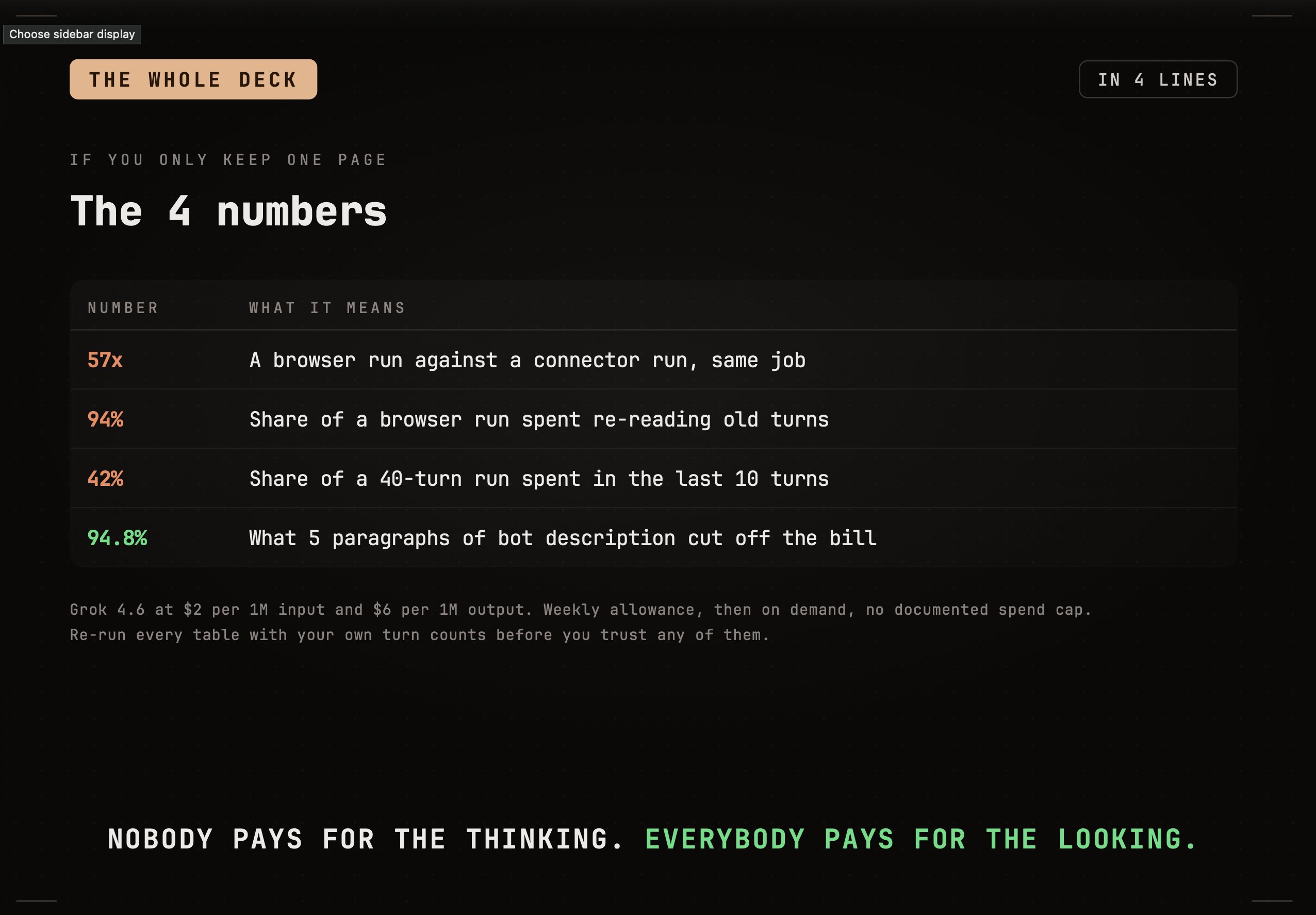
Nobody pays for the thinking. Everybody pays for the looking.
Published on grokbot.sh. Cite the public log, not a prompt pack.